
.svg)


Choosing between B2B and B2C SaaS services involves more than just picking a business segment; you must also match your product, marketing strategies, sales processes, and customer service to the right target market.
Did you know that the software as a service (SaaS) market is predicted to reach $1228.87 billion by 2032, up from $317.55 billion in 2024?
Seems impressive, huh!
Choosing the best course of action is crucial for success in a competitive environment because every model presents different opportunities and challenges.
Thus, how can you pick a model that aligns with your goals and vision?
Let's explore!
What is B2B SaaS?
Business-to-business, or B2B, refers to businesses that target other businesses as clients. Software as a Service (SaaS) is a business selling software goods or services online. Therefore, a B2B SaaS company sells digital software to other businesses.

Examples of famous B2B companies include:
- Slack
- Oracle
- Hubspot
- Microsoft
- Salesforce
B2C SaaS: What is it?
Business-to-consumer, or B2C, refers to a business whose target market is consumers. SaaS offers customers software products or services online without an intermediary.
B2C products provide answers to the problems that B2C clients frequently encounter. Individual customers who potentially benefit from the product or service are the target market for business-to-consumer (B2C) marketing, which is carried out according to their requirements, desires, and objectives to persuade them to purchase it.
B2C SaaS prioritizes engaging experiences, user-friendly features, and simple interfaces to add value for regular consumers. B2C products are offered through low-cost, easily adoptable subscription models and frequently address common customer issues.

Some popular B2C companies include:
- eBay
- Meta
- Uber
- Netflix
- Spotify
The Differences Between B2C SaaS and B2B SaaS
The following areas demonstrate how B2B and B2C SaaS differ from one another:
Churn Rates
Even while both B2C and B2B SaaS are costly to develop and achieve product-market fit, it is a little bit simpler to do so with a B2B SaaS company since you can charge more, your average revenue per user (ARPU) is higher, and your clients are less likely to leave.
Additionally, you can eventually achieve the elusive point of net negative churn, where your current paying clients increase in number and income over time.
On the contrary, B2C SaaS users tend to be more price-sensitive, pay significantly less, and have higher churn rates. Additionally, B2C SaaS does not have net negative churn, as the rate of the number of users you lose equals the rate at which you gain new users.
Sales Cycle
The sales cycle length is one of the main differences between B2B and B2C sales.
HubSpot says the typical B2B SaaS sales cycle lasts 84–104 days, although business clients frequently need more time.

The B2B sales process is longer since companies must sign up for a free trial when considering a product or service. After recognizing the value, the necessary individual must obtain authorization from senior management or the group leader, as they cannot decide independently.
Moreover, B2C clients frequently make impulsive purchases of goods or services. In contrast to the more rational B2B sales process, the B2C sales process may entail more feelings that come from desires.
Marketing Automation
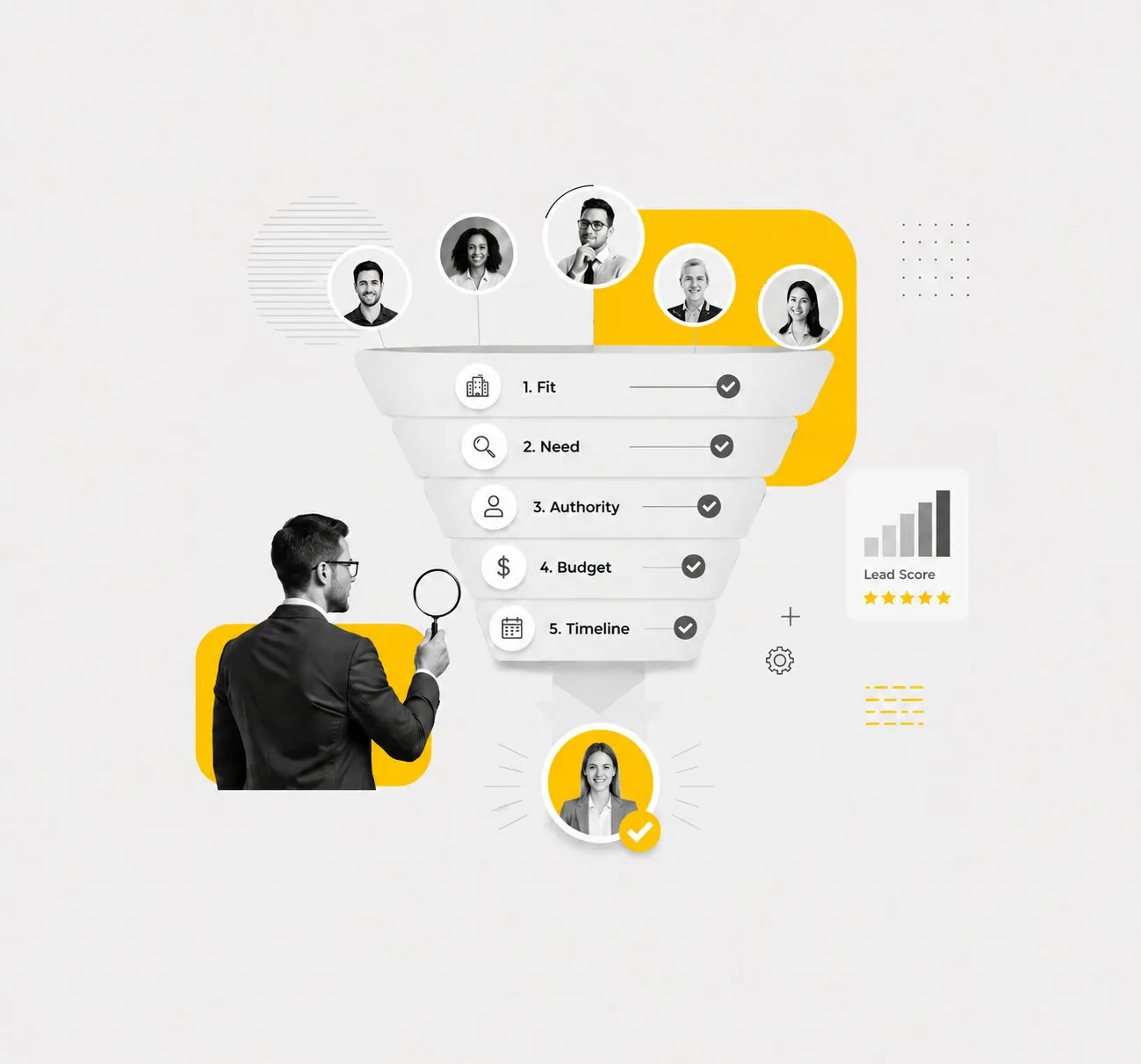
B2B marketing automation uses email workflows, targeted campaigns, and lead scoring to find possible clients and nurture prospects over time. On the other hand, B2C SaaS automates high-volume, lower-value transactions and usually concentrates on re-engagement initiatives, promotional offers, and cart abandonment notifications.
According to 91% of marketers, automation helps achieve the company's objectives. Furthermore, 77% of users report higher lead conversion rates when using marketing automation.

Relationship Management
B2B SaaS providers have established longstanding connections with their clients. In specialized industries such as finance or investment management, businesses often rely on SaaS tools to manage regulatory requirements, including frameworks like Qualified Client vs Qualified Purchaser, which help classify investors under U.S. securities regulations. Some of the effective relationship management they have implemented include dedicated account managers, tailored onboarding procedures, frequent check-ins, and individualized support.
B2B SaaS clients must have confidence that their service providers are partners in their success.
In contrast, B2C SaaS relationship management relies on customer service representatives and easily available resources. It ensures that users can easily use the product and feel supported whenever needed. Although it is less personal, the relationship needs to be consistently good.
Promotional Product Marketing
B2B SaaS marketing usually aims to establish expertise, provide a certain return on investment (ROI), and win over decision-makers. This frequently entails events communicating authority and expertise, case studies, whitepapers, and content marketing.
In contrast, B2C SaaS employs marketing strategies that speak directly to customers' needs and emotions. B2C advertising depends more on eye-catching visuals, exclusive deals, and personalized communication that clearly conveys the advantages of using their product.
Marketing
In marketing, B2B marketers adopt a marketing strategy focused on generating leads and engaging customers, but B2C marketers use their funds to optimize brand building.
B2B product marketing strategy focuses on maintaining a marketing agenda that manages interactions with potential customers to improve customer acquisition.
Since B2C consumers are more likely to base their decisions on their emotions while purchasing, it becomes a means of integrating data to increase brand engagement.
Furthermore, the language they choose in their marketing outlets is counterproductive. For example, social media marketing is common in B2C and B2B industries, but B2B product marketing always uses a specific and serious approach.
Because of the emotional impact, B2C marketing does not go too far. It uses everyday language in short, easy-to-understand sentences to help its audience relate to it.
When it comes to social media, the following platforms are common for the different models:
1. 94% of B2B marketers use LinkedIn to share content, making it the most popular platform for B2B SaaS enterprises.

2. More than 51% of B2C marketers say Instagram and Facebook are essential for connecting with their target audience, making them the most popular platforms for B2C SaaS companies.
Customer Service
The customer gets what they desire, whether it's B2B or B2C. However, there are still some significant differences, particularly in customer service.
First, the audience determines how complex the issues are. In general, problems in the B2B sector are more complicated and take longer to resolve since the customer service staff needs to offer adequate support to establish a lasting connection that will ultimately surpass the client's expectations.
Since the problems in the B2C industry are typically simple, this method adopts a more independent and self-service-oriented approach. Because of this, using a tool rather than a customer service team makes more sense. For instance, it is more important to use frequently asked questions (FAQs) and blog posts to help your audience quickly find answers than to call or video chat to handle a little query or problem.
Customer Success
The size of the customer base makes all the difference in customer success. B2C has a far larger consumer base than B2B due to the tendency toward emotional purchases.
However, because B2C companies are too expensive to assign a customer success manager to a specific customer group for more individualized service, their recurring revenues are significantly lower than those of B2B businesses.
Additionally, the fact that B2C companies are expected to provide a more automated procedure impacts the length of the client journey. For instance, customer onboarding and product uptake must be quick, easy, and automated because of the many customers they acquire.
The customer journey slows down in B2B since the procedure is longer and more time-consuming. However, this is advantageous for B2B firms because they depend on an emotional bond with their clients to keep them around by preserving a tight but professional relationship.
Marcus Gullberg, Co-founder of the B2B SaaS platform Feedbucket, shares:
“In B2B SaaS, customer success isn’t just about activation, it’s about partnership. We’ve seen firsthand that a human-first onboarding process combined with timely, contextual feedback loops helps build long-term trust. Automation helps scale the journey, but it’s those personalized touchpoints that turn clients into long-term partners.” Tools that support this kind of ongoing collaboration, such as annotation tools for websites can make it easier for SaaS teams to collect actionable feedback during onboarding and beyond.
Leveraging The Hybrid Approach
Many founders believe that you either have a B2B or B2C SaaS product. But this is not true. Many of the most successful SaaS businesses have both.
Below are some B2B SaaS businesses that also have a consumer base.
- Dropbox
- Trello
- Canva
- Castos
- Squadcast

A hybrid strategy has many benefits if it can be implemented, such as:
- A more steady growth curve: There are a stable number of businesses at higher price points with lower turnover and many small customers paying less with greater churn rates.
- Increased brand visibility: The business's B2C aspect attracts many customers. This implies that you can develop a sizable brand following and profit from word-of-mouth advertising on a massive scale.
- Greater ARPU: Compared to a conventional B2C SaaS, your ARPU figures are greater due to the customer mix. Thus, you have more money to spend on marketing and sales.
Building a B2C or B2B SaaS has no right or wrong answer, but as a firm that is mostly or entirely financially independent, the economics of B2B are far more favorable.
Final Thoughts
Assess your company's and clients ' demands to ensure you select the SaaS model that will best support your success. Your growth objectives, product vision, and target market will influence your choice.
If you are a B2B company looking to grow, we can help you.
Here at AI bees, we leverage AI to help businesses like yours generate more leads, which translates to higher revenue.
Is it something you need for your business?
Book a demo today, and let us scale your company.
FAQs About B2B SaaS vs B2C SaaS
1. What is the main difference between B2B SaaS and B2C SaaS?
The main difference is in the target audience and its buying behavior.
Business-to-business SaaS sells to businesses and usually involves longer sales cycles, higher pricing, multiple stakeholders, and personalized onboarding. B2C SaaS targets individual consumers, focuses on ease of use, emotionally driven buying, low-cost subscriptions, and faster decision-making.
2. Can a SaaS product serve both B2B and B2C customers?
Yes, a lot of highly successful SaaS companies use a hybrid model. That means they sell solutions to either businesses or consumers. Examples include Dropbox, Canva, Trello, Castos, and Squadcast. This provides greater brand visibility, higher ARPU, and diversified customer bases.
3. Why do B2B SaaS companies typically have lower churn than B2C SaaS?
B2B SaaS churn is lower because businesses rely on software to operate, invest more in onboarding, and benefit from long-term contracts. They also require stability and ongoing support.
B2C SaaS customers are more price-sensitive, make impulsive decisions, and tend to cancel quickly if the value is not immediate, contributing to higher churn rates.
4. How does the sales cycle differ between B2B SaaS and B2C SaaS?
Because of the demos, trials, and budgetary and internal approvals, B2B SaaS sales cycles run longer: an average of 84-104 days.
B2C purchases of SaaS happen fast; they're often emotional and within minutes, since it usually involves a single consumer making a personal decision.
5. What type of marketing works best for B2B SaaS vs B2C SaaS?
B2B SaaS marketing relies on ROI-focused content, educational resources, case studies, webinars, a presence on LinkedIn, and relationship-driven nurturing.
B2C SaaS marketing relies on beautiful visuals, simplicity in messaging, emotional triggers, social proof, and social media networks such as Instagram and Facebook, where consumer behavior is driven toward faster conversions.

Make Loss Impossible
with Performance-Based Marketing

Personalized Campaigns with
Precisely Selected Prospects
.svg)
Analysis From Your Dedicated
Account Manager

with a Team of Growth Hackers
we Develop your Tailor-Made Strategy
.webp)

%201.svg)
.svg)


.svg)
.svg)


.webp)