
.svg)


.webp)


Every B2B team considers inbound and/or outbound lead generation to be a religion. They choose one and worship it to death, all the while leaving their pipelines parched.
You have likely heard these conversations. Inbound extremists are adamant that cold outreach is dead. Outbound enthusiasts counter that a strategy of waiting for leads to come to you will build a slow path to obsolescence. They each have proof in support of their side.
But this is what never gets talked about: these companies aren't taking sides. They're all doing both.
The inbound vs. outbound lead generation conundrum has fostered a false dichotomy, and it’s costing B2B companies millions in missed opportunities. As marketing teams debate which side gets the budget, their competitors are working towards developing hybrid engines that not only seize demand but also make demand.
“If your pipeline is unpredictable, feast one quarter, famine the next, you have a problem with your strategy. You have been advised to pick a lane when, in fact, the money is being made by people who are building all of the roads.
Let's walk through why pick-and-choose is harming your progress and see what the leaders are doing in these areas.
What Is Inbound Lead Generation?
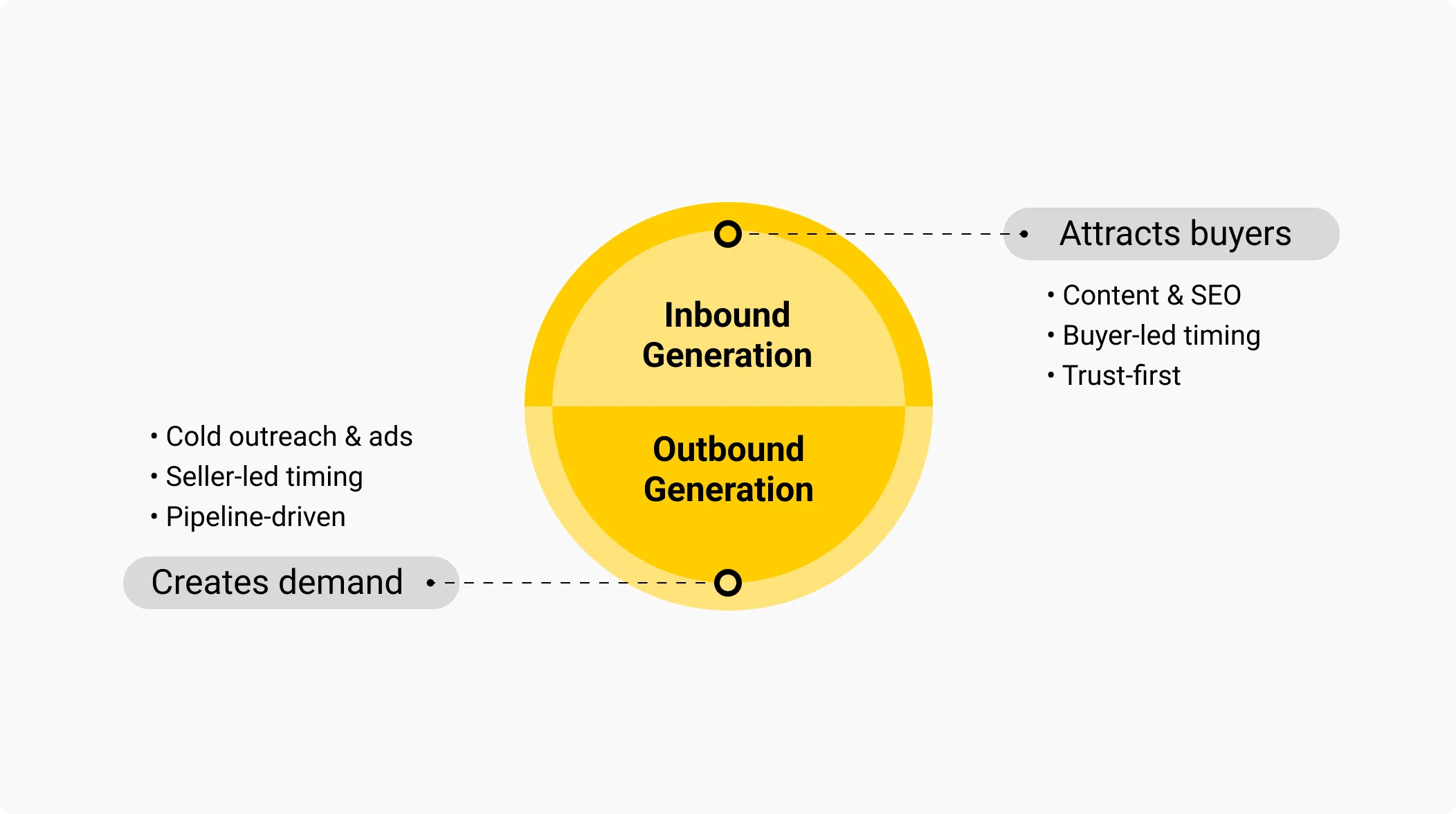
Inbound lead generation is a marketing approach that brings prospects to your business using content with high utility, SEO, and other organic methods. Instead of making an effort to reach prospects, your content, blog posts, webinars, and case studies are so appealing that they attract them when they are searching for a solution. To put it simply, it’s pull marketing because you aren't hunting leads but rather attracting them.
The critical factor with inbound? The buyer determines when.
They find your brand when they have a problem to solve. They interact with your content when they are ready to learn. They reach out with their interest when they want to connect. Your role is to be present, helpful, and relevant through all phases of this process.
Trust is established before a sales call takes place, which is a big part of why leads from inbound have a higher conversion rate and a shorter sales cycle.
Some of the common methods used in inbound lead generation include:
- Content marketing (blogs, guides, ebooks)
- Search engine optimization (SEO)
- Social media marketing
- Webinars and podcasts
- Lead magnets and gated resources
- Email newsletters
When properly utilized, these methods will provide a continuous flow of qualified leads with an existing awareness of your benefit.
What Is Outbound Lead Generation?
Outbound lead generation is a proactive approach in which your team will directly contact potential customers via cold email, LinkedIn outreach, cold calling, and targeted ads. You open up the contact with the prospects that may not yet know that they need your solution. Think of it as push marketing: you're not waiting to be found, you're starting the conversation.
The important difference with outbound? You control the timing.
You choose which companies are your ideal customer profile. You decide when to contact and through which channel. You create demand instead of waiting for it to emerge. Your task is to break in and get attention, to generate interest, and to get people interested-even when prospects are not actively looking.
This way, you can target high-value accounts with precision and grow out the pipeline more quickly without having to depend on organic traffic and brand awareness.
Common ways that lead can be generated to visit a website include:
- Cold email campaigns
- Cold calling
- Outreach and social selling on LinkedIn
- Paid Adverts (LinkedIn ads, Google Ads, display)
- Direct mail and gifting
When done correctly, these channels provide you with a predictable control over your pipeline and its ability to scale revenue on your timeline-not your prospect's.
Inbound vs Outbound Lead Generation: Key Differences
Understanding the difference between inbound and outbound lead generation isn't just academic; it's the basis for every pipeline decision you'll ever make.
Which channels should be your priority for the budget? How should you organize your sales team? What does a realistic timeline to ROI look like? The answers all depend on the extent of your understanding of these two approaches, and where you can see them fit in your growth strategy.
There are inbound and outbound that generate leads, but both operate on fundamentally different principles. One attracts. The other pursues. One builds momentum slowly. The other is creating opportunities on demand.
Here's how they compare:
Let's break this down further.
Inbound is a long game.
You invest a lot of money up front in content, SEO, and brand building - and reap compounding returns over time as organic grows. The leads that do come through are generally warmer because they've already had interaction with your content and self-identified as being interested.
However, inbound needs patience. You don't see any significant results for months, sometimes longer. And you're ultimately at the mercy of algorithms, search trends, and your audience's willingness to find you.
Outbound delivers speed and precision.
You can start a campaign today and schedule meetings this week. The trade-off? These prospects haven't raised their hand yet, so they are more in need of nurturing if they are to be converted. However, you get to hand-pick who gets into your pipeline.
The problem with outbound is sustainability. It requires a consistent effort; every month is at zero unless you keep the machine going. And if your targeting or messaging is off target, then you'll burn through lists quickly with little to show for your efforts.
So which approach wins?
That's the wrong question, and it's where most B2B teams go astray.
Inbound without outbound, waiting and hoping the right prospects find you. Outbound without inbound means that every conversation is cold, with no content to build credibility and nurture leads who aren't ready to buy.
The fundamental difference is one of control. Inbound allows prospects to come to you on their terms. Outbound, you're in front of them on yours. Neither is inherently better-but knowing when to use each is what makes the difference between struggling pipelines and thriving pipelines.
The smartest teams don't choose sides. They architect the systems in which both approaches are mutually reinforcing.
The Problem With Choosing Only Inbound Lead Generation
Inbound marketing has had its time in the B2B playbook and deservedly so.
It builds trust by giving something of value before asking for anything in return. It builds authority by establishing your brand as a thought leader in your space. And it delivers leads who already know what you've got to offer because they have taken your content, looked at your solutions, and decided to engage on their own terms.
For many B2B companies, inbound seems like the "right" way to market. It's educational, not pushy. It honors the journey of the buyer. It is in line with the way modern decision-makers want to research and buy.
But here's the uncomfortable truth: when an inbound-only approach is your only strategy, cracks start to show. What works as one pillar of your growth engine becomes a liability when it's the whole foundation.

Here's what inbound-only teams eventually realize:
1. The ramp-up is painfully slow
Inbound isn't a strategy that brings overnight wins. Most companies require 3-6 months at the very least before content marketing and SEO efforts will have any meaningful traction. For start-ups that need revenue now, or sales teams with aggressive quarterly goals, that kind of timeline can be a dealbreaker.
You're basically investing today for leads that may come in next quarter or the following quarter. And if leadership is asking where the pipeline is, "we're building organic traffic" isn't the answer they want to hear.
2. You have zero control over timing
Once your pipeline gets thin, it's not a matter of just switching a switch and bringing in more inbound leads. You're at the mercy of when prospects decide to search, engage, and convert. If the market slows down or your content stops ranking, you are stuck waiting with no lever to pull.
This lack of control is particularly painful during slow seasons, economic downturns, or when you're trying to achieve an aggressive growth target. Inbound couldn't care less about your quarterly goals.
3. Algorithms dictate your reach
Google rewrites its search engine algorithm thousands of times yearly. Organic reach is always crippled to promote paid solutions by social platforms. Something that had worked six months ago may not be visible today.
A single algorithm update will overnight tank your traffic. Your material can be buried in just one platform update. You are laying your whole pipeline on rolling dice that you do not own when you start to depend on the channels that you cannot control, and the dice always turn out to be fair in the long run.
4. You attract researchers, not always buyers
The inbound has a broad net cast, that is, you will get a good many leads that are only browsing. They will download your ebook, read your blog, watch your webinar, and never even reply to sales outreach.
Dashboards are very nice with high traffic and form fills, but this is not always revenue-generating. Your sales force will be wasting time going after leads that were not buyers at all, frustrating both parties.
5. The content battlefield is crowded
Everyone is producing content. Your rivals are blogging, starting podcasts, developing SEO efforts, and competing with you on the same keywords. The entry barrier has never been lower, which translates to difficult standing out.
Breaking through the noise takes a greater amount of investment, greater experience, and greater consistency than it would have five years ago. And even though there is no assurance that your dream prospects will discover you first before discovering another.
6. Scaling is unpredictable
As a marketer, increasing the volume of your content does not imply increasing its leads as the content moves inbound. Compounding of results with time is not linear or predictable. You could post 50 blog posts and grow by 10,000, or you could go viral once and then grow a month before stabilizing.
This uncertainty renders it almost impossible to predict, and the sales teams do not know what is going to come down the pipeline.
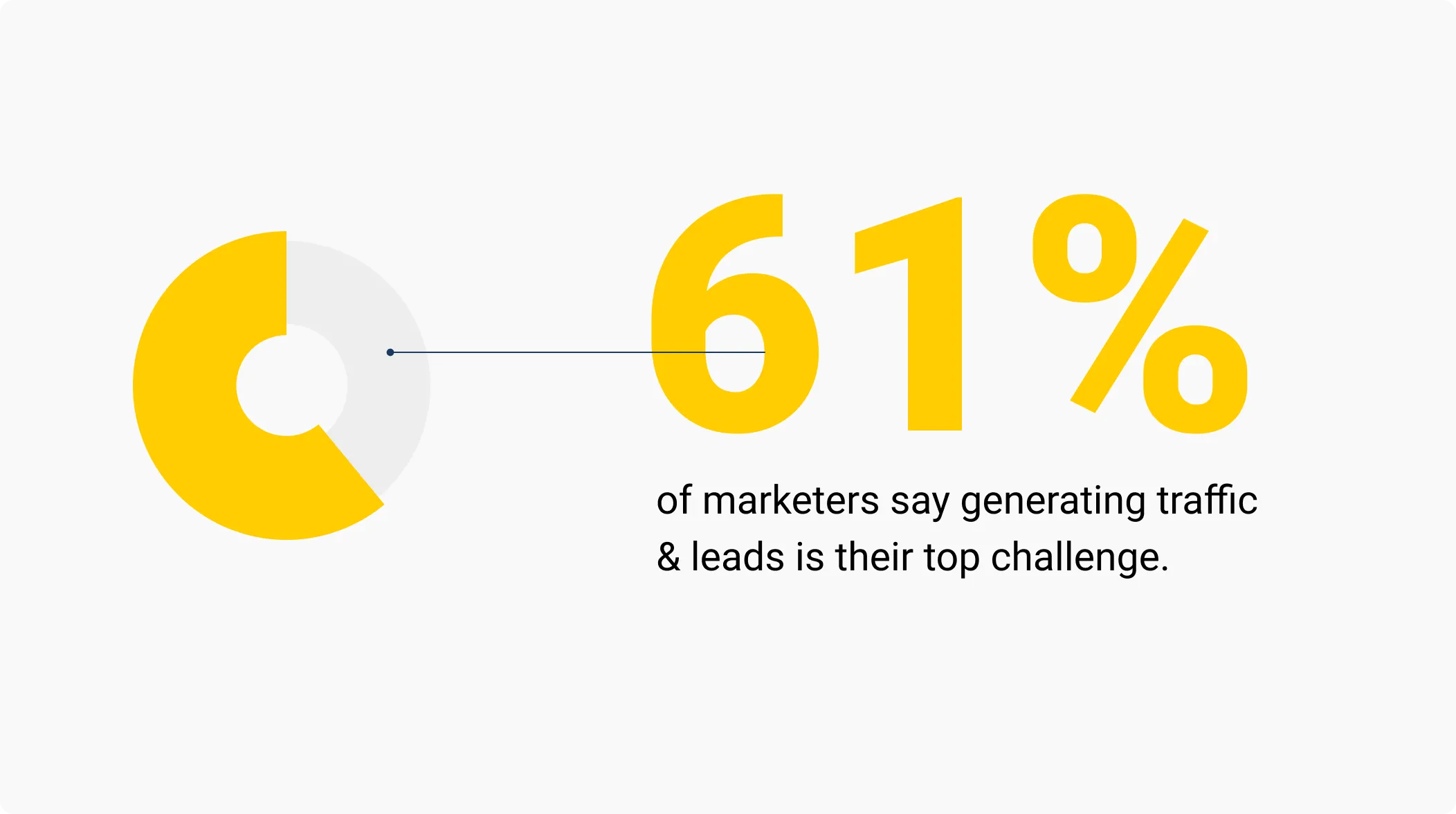
It is no wonder that 61% of marketers report that their biggest challenge is to create traffic and leads. The playbook that used to be an inbound competitive advantage is now table stakes, and the businesses that are still keeping it as their competitive advantage are losing.
A purely inbound approach of waiting until you get leads works well until your competitors come over and snatch them away with direct outreach.
When your whole pipeline is resting upon one of your prospects being able to find your content at the right time, you are not creating a growth engine. You're building a hope engine. And hope doesn't hit quota.
The most dangerous part? Inbound strategies tend to be productive. Your team is working on content creation, page optimization, and metric tracking. However, being active is not an equal of the outcomes, and by the time you will see that a pipeline is not performing as it should, you are months down the road.
The Problem With Choosing Only Outbound Lead Generation
Outbound lead generation is a potent growth tool in your arsenal, and with reason.
It puts you in control. It is up to you who to contact, when, and in what position to locate your offer. It provides speed that inbound could not possibly match. On Monday, you can start a campaign and make reservations on Friday. Outbound seems like a natural solution to companies that require a pipeline at present.
And in many ways, it is. Outbound will enable you to go after high-value accounts on your time, move into new markets in your time, and make opportunities, rather than waiting. It is quantifiable, concrete, and measurable.
However, this is the ugly reality here; when outbound is all you have to do, then you are making your house in a new place that requires reconstruction. The victories are actual, yet there are some unseen costs that increase with time.
The eventual discovery of outbound-only teams is as follows:
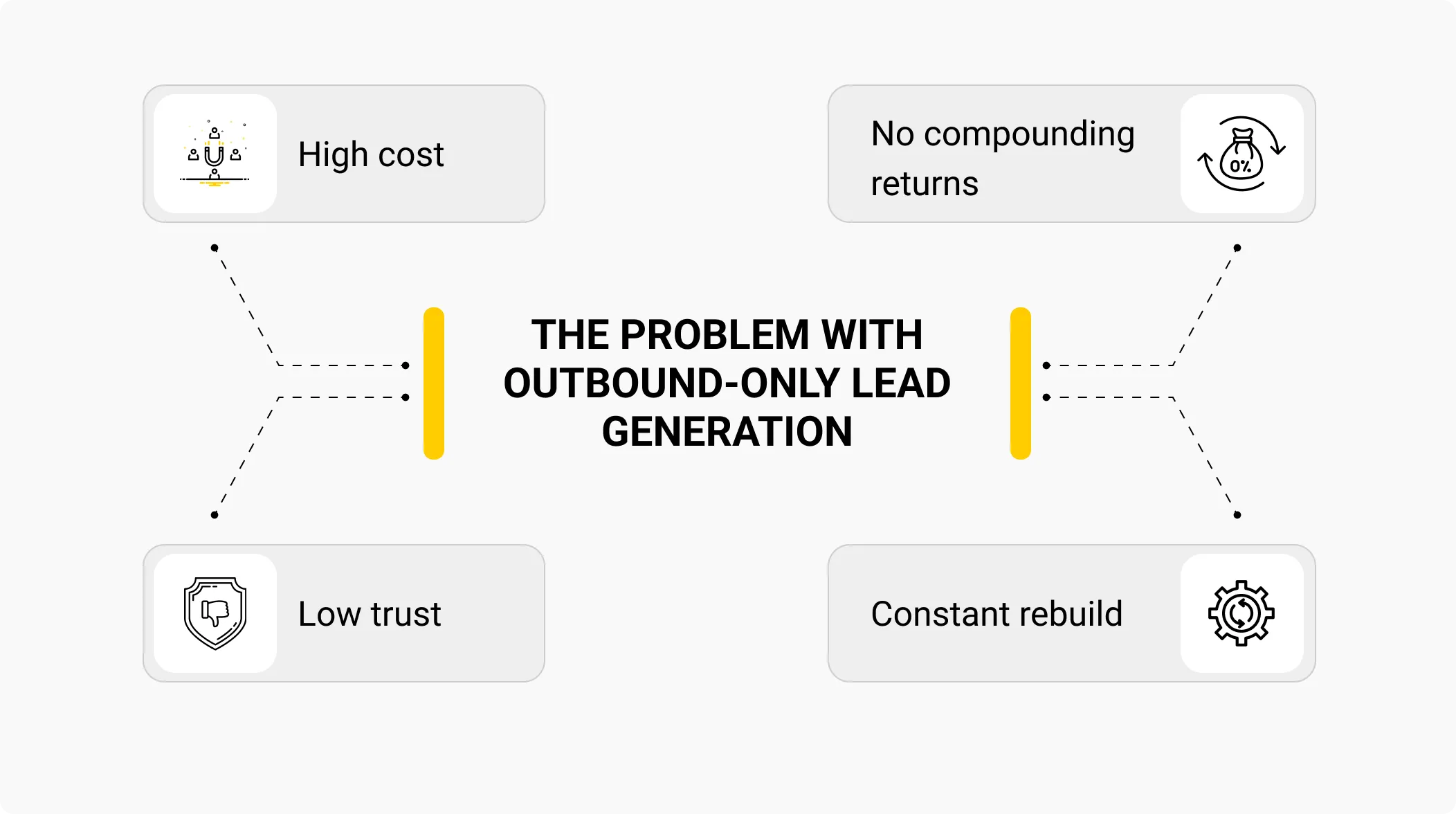
Here's what outbound-only teams eventually discover:
1. The cost per lead adds up fast
Outbound isn't cheap. The cost of SDR salaries, sales engagement platforms, data providers, and paid advertising amounts to the cost in a short period. All leads imply a hard cost, and unlike inbound, they do not go down with time.
Your pipeline will not fill should your outbound machine break. No inorganic push to lean back on, no working in the background. You are paying for each and every opportunity, each and every month.
2. Deliverability is a constant battle
Cold email is also among the best outbound channels, but this remains true until your domain is flagged. Send excessive emails, strike too many spam filters, or be struck by a handful of recipients, and you can see your deliverability drop overnight.
Heating up new areas, shaking inboxes, and outsmarting spam filters are all full-time occupations. A single misplaced move may end up incinerating months of preparation and finding your outreach email in spam folders rather than in mail.
3. You're starting every conversation with skepticism.
The future is becoming more cautious. They have been inundated with cold emails, spammed on LinkedIn, pushy sales calls, etc. Indifference towards unsolicited outreach is now followed by mistrust.
Every discussion begins at zero without brand recognition or content that will build your credibility. You are selling yourself to listen to you, as well as to sell your solution. It is a big mountain to climb with every one of the prospects.
4. There are no compounding returns
Inbound, a blog post that you wrote 2 years ago can continue to generate leads to date. In outbound, all campaigns begin afresh. The emails that were received last month are not beneficial to this month's pipeline. The calls in the last quarter did not heat up the prospects in the present quarter.
You have a treadmill that you can never get off. As soon as you slow down, your pipeline slows up. No equity-building in the background, it's continuous output equal continuous results.
5. Scaling kills personalization
Outbound works since it is focused and applicable. However, it is almost impossible to preserve such quality once you become a big organization. Increased volume implies increased templates, reduced research, and generic messages that are lost in the noise.
The individual approach that made your initial outreach successful is watered down as you pursue more. And the minute your e-mails begin to sound like those of other people, the response levels sink. You find yourself burning your total addressable market quicker than you are converting it.
6. You're always one channel away from disruption
Regulations change. Policies are revised on platforms. LinkedIn does not allow a lot of automation. Google punishes cold email. When you have just one or two channels on which you are going to market your products outbound, then one policy change can put your growth on its deathbed within a single night.
This is usually learned by outbound-only teams who have no other channel to fall back on once they find that their main channel is not working.
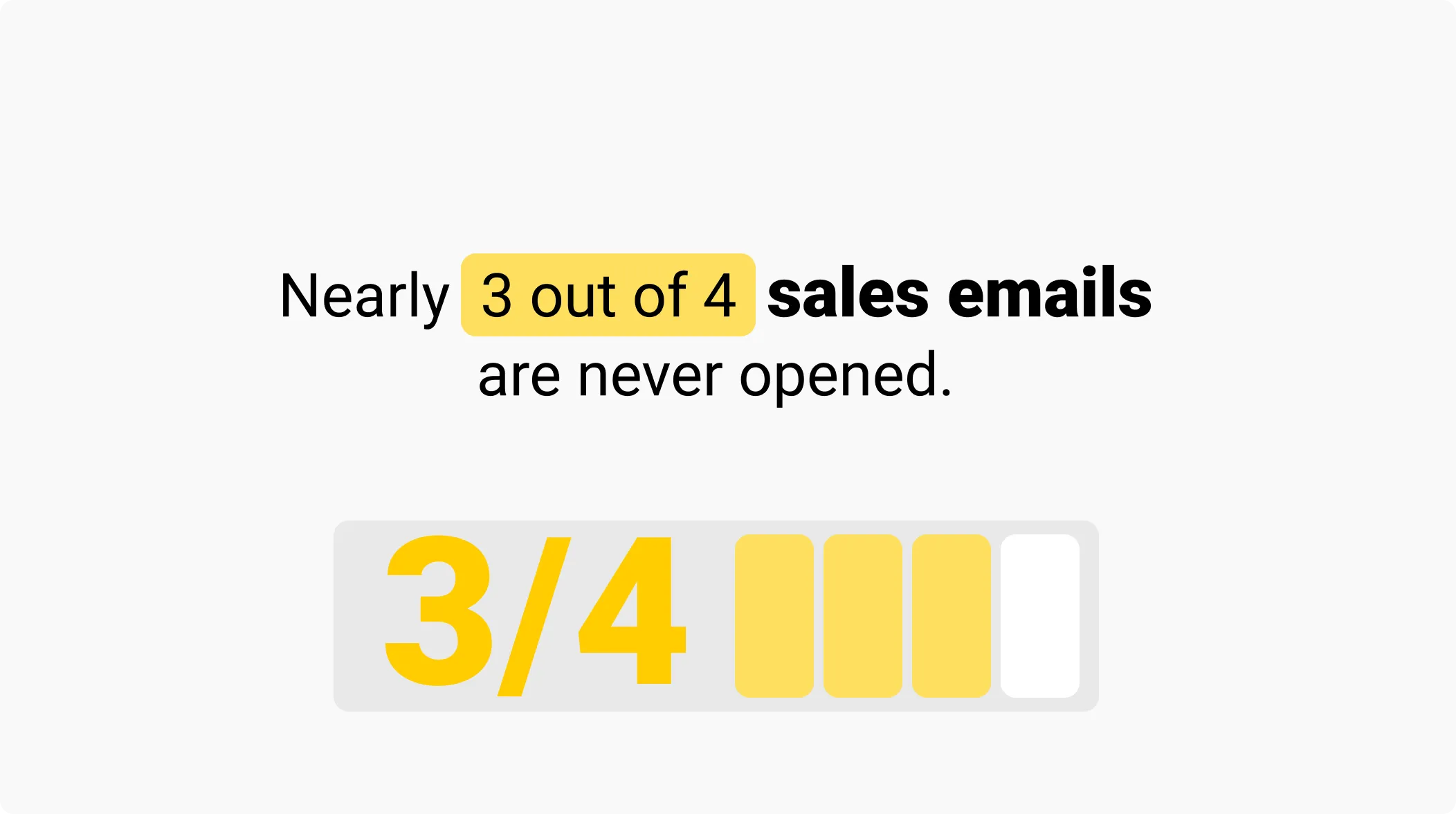
The statistics are eloquent: only 24% of sales emails are opened. That is three of four prospects are not even exposed to your well thought-out message. And of those responding only a fraction will answer. In absence of brand awareness behind your outreach, you are on an uphill battle with each send.
Pure has you full of meetings, but with no brand awareness, you’re always selling new.
When you have to explain yourself every time you talk to someone, what you do, and why you are credible, you are losing deals even before you begin. Your rivals who invested in inbound are already making calls to prospects who already have confidence in the;, you are yet to be known.
The most dangerous part? Strategies based on outbound can be scalable. Additional SDRs, additional emails, additional calls, that must translate to additional pipeline. But you can only go as high as you go without inbound supporting your efforts, which is scaling effort, not efficiency. And at length the numbers come to their end.
Why the Best B2B Teams Use Both: The Hybrid Approach
Those who argue that it is inbound vs outbound lead generation presuppose that you must make a choice. However, the companies that are regularly succeeding in B2B have outgrown this fallacy.
They have found that there is something that the either/or camps lack: the best B2B-based lead generation strategy is neither inbound nor outbound but a hyb
rid model in which a channel makes the other channel more productive.
When you keep the two strategies as a combination, you do not simply add the results of the two strategies. You multiply them. The difference between approaches seals the gaps that the other techniques leave in its wake, producing a pipeline that is more predictable, resilient, and more efficient than either could deliver individually.
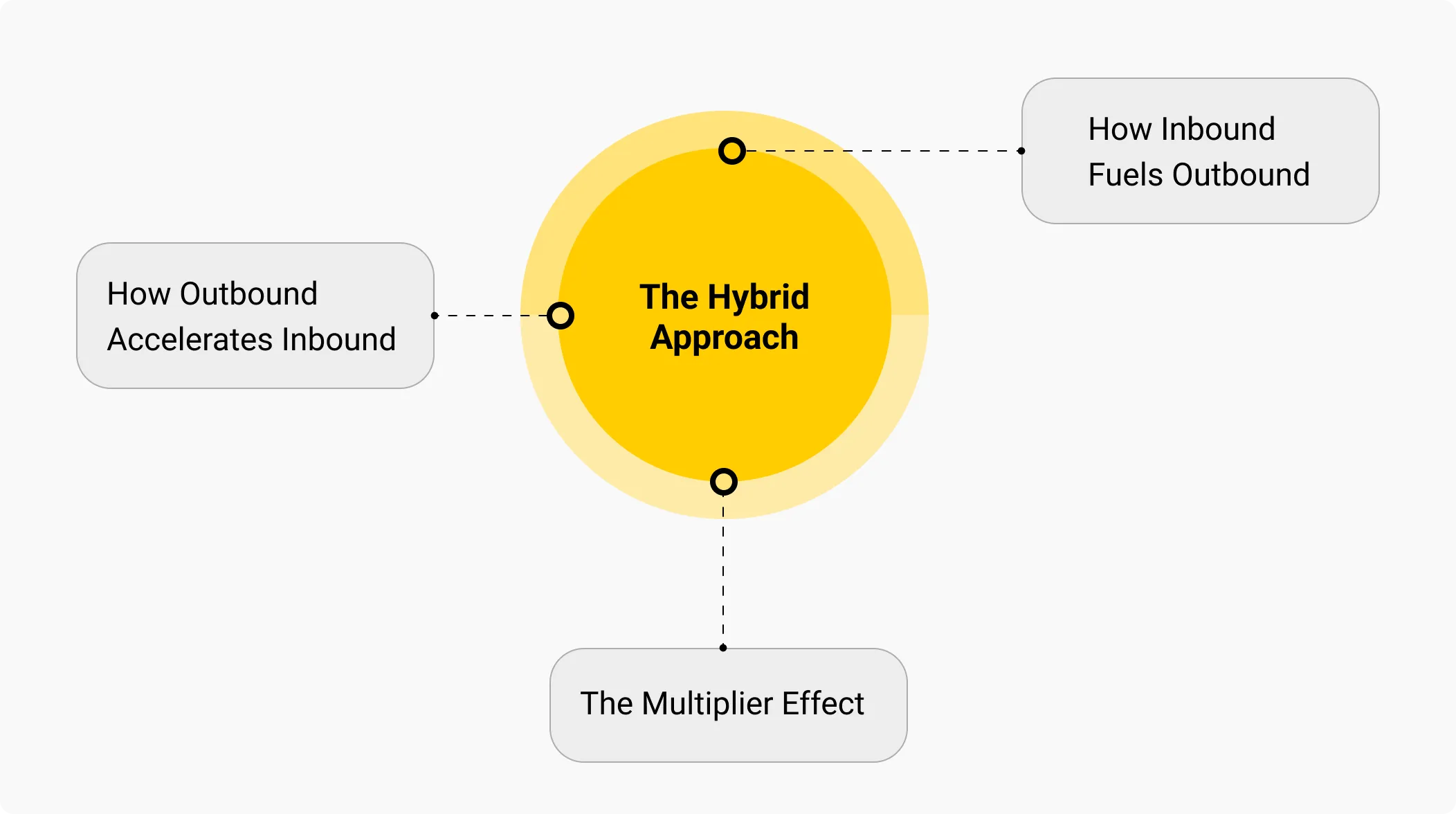
This is how the smartest teams can make it work:
How Inbound Fuels Outbound
That is not just that your content pulls organic traffic, but also that your outreach efforts become much more effective with it.
Meanwhile, content warms the prospects even before you get in touch.
Whenever the prospect gets your cold email, he or she Googles your company. In case they discover something of value, case studies, and thought leadership, you have already gained credibility. In case they discover nothing - or even a generic site that has no content at all - you have lost them even before they begin the discussion.
Case studies and blogs become outreach assets.
Your SDRs do not have to send you a generic email with a pitch: instead, they can send you up-to-date information or content that addresses the challenges of the prospect:
- A CFO concerned about cost effectiveness? Send your ROI case study.
- VP of Sales who has a problem with the pipeline? Post your blog about lead generation models.
This makes cold outreach a warm and value-based interaction.
SEO builds the credibility that makes cold emails convert.
The ability to rank in the major terms in your industry is a sign of authority. When the prospects encounter your name in search results, they will believe your outreach. Your outbound efforts have a trust advantage because of what you bring in that your competitors who do not have any content cannot offer.
How Outbound Accelerates Inbound
Outbound is not an isolated pipeline. It is an active contributor to your inbound engine.
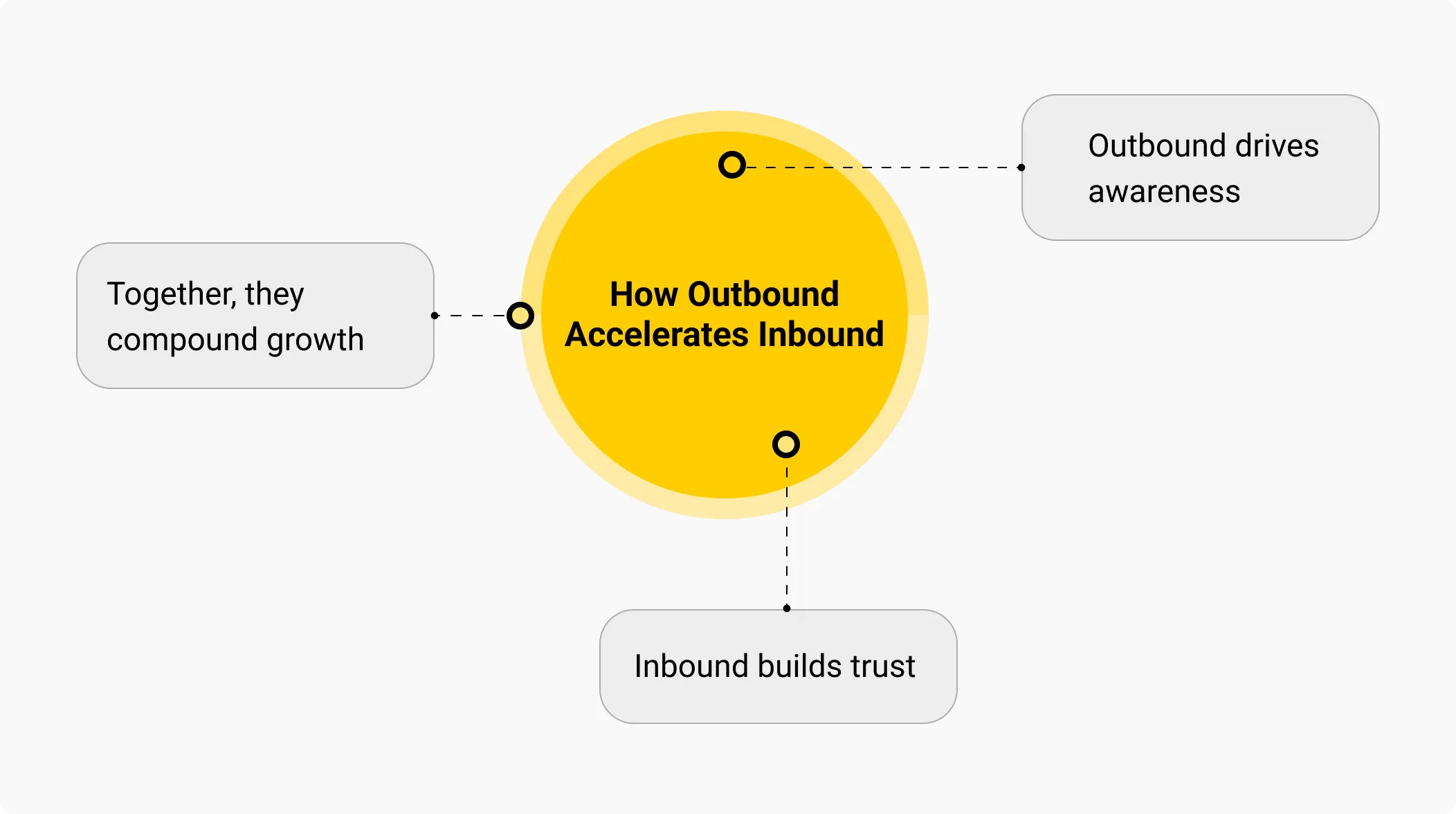
Outreach is a way that brings traffic to your content.
Any email, LinkedIn message, or cold call gives you a chance to expose your content to perfect prospects. Although they may not respond instantly, you are creating awareness and leading traffic to resources that will develop them in the long term.
Outbound data reveals what messaging resonates.
Your SDRs are in the front office, proving the value propositions, and listening to the objections in real-time. It is gold to your content team:
- The pain points that attract interest: Blog topics.
- Frequently asked questions: FAQs and manuals.
- Questions prospects are going to ask: Educational resources.
Whatever you write about should be informed by the conversations you have on the calls.
Direct conversations inform better content topics.
Inbound marketers tend to make assumptions about what their audience is interested in. The outbound teams are aware of it, having hundreds of conversations every month. Incorporating this understanding into your content strategy makes sure that you have resources being created that are, in fact, answering what your market is thinking in terms of.
The Multiplier Effect
The outcomes are compounded when inbound and outbound collaborate, which is impossible when they work separately.
Together, they shorten sales cycles.
A prospect that has read your blog, viewed your LinkedIn post, and then received a personalized email is much more likely to respond and much more willing to buy. You're not starting from zero. You are carrying on with a conversation they have been having with your brand.
Prospects who see your content AND get your outreach convert faster.
Various touchpoints on various channels create familiarity and trust. When they get on to a discovery call, they have already read your content and know how you operate and perceive you as someone they can trust to do business with, not another commercial.
The data proves it.
At AI bees, we have witnessed with our own eyes how hybrid strategies are superior to single-channel strategies. Clients that integrate focused outbound campaigns with powerful content assets will always experience:
- More response to cold outreach.
- Reduced sales cycles between first touch and close.
- More qualified meetings with decision-makers.
A single customer raised the ratio of meetings to opportunities by 34 percent when we added inbound content to their outbound sequences- because when prospect callers came to calls, they already had the education and pre-sale.
This is the multiplier effect in action.
Inbound alone is slow. Outbound is in itself tiring. However, when combined, they form a self-perpetuating mechanism of content that has each piece of content confirming your outreach and each outreach point of contact confirming your content.
The firms that have the upper hand in their markets are not arguing about whether it is inbound or outbound. They are creating machines that do both- and are gathering in the compounding benefits.
When to Use Inbound vs Outbound Lead Generation
It is one thing to know whether a particular is inbound or outbound. Strategy and execution meet where one knows when to use each.
The reality is that each of the two approaches has some ideal situations. It all depends on the correct one to suit your situation at the moment. The only thing you need to do is not to simply follow one and think it did it to someone else, and a marketing expert on LinkedIn claimed so.
The weight that each approach should have at any specific time depends on your development stage, time, budget, as well as the market. This is a rough model to follow:

Use Inbound When:
- Runway 6+ months to develop pipeline. Inbound requires time to take off. SEO does not occur within a day, and content must build up before it can generate regular traffic. When you are able to invest and gain on compounding returns in the future, then wait.
- The purchasing of your product needs to be educated. Complicated solutions must be fostered. When your buyers must learn the problem before they can see the value in your solution, then the content fills that gap. Guidelines, tutorials, and detailed manuals do all the heavy lifting prior to any sales being involved.
- You desire a cheaper version of cost-per-lead in the long term. Inbound is more expensive at the start-ups, such as content creation, investment in SEO, and waiting. Prices of but leads become lower as your content library expands and organic traffic grows. The blog post that you write today can leave leads for years.
- You are creating brand authority in the long run. Inbound makes you the expert to call in case thought leadership and market positioning are important in your domain. You would like the prospects to think of you when they think of your category.
Use Outbound When:
- You need a pipeline now. Socketed in need of no time to wait? Meetings can be created through outbound in a few days. Outbound is the quickest when the demand is high and quarterly targets are approaching.
- You are going after a list of accounts (ABM). In cases where you are very certain about your target audience, outbound puts you at the front line of decision-makers. Waiting to have them find you, you find them.
- You are putting a new product off with no awareness. Nobody is seeking something without knowing its existence. Outbound establishes demand where none existed and presents your solution to those who were not aware that they needed it.
- You are well-defined in terms of ICP. The more your ideal customer profile, the better the outbound targeting will be. Outbound becomes a scalpel and not a sledgehammer when you are able to define your ideal customer to the extent of job title, company size, and pain points.
So, Which Should You Choose?
The real answer? Combine both- but you will change the ratio depending on your stage and objectives.
The optimal percentage of inbound and outbound is not a fixed value, as it changes with your company. Fast growth start-ups that have tight goals and little brand awareness tend to rely more on outbound to fill the pipeline rapidly as their inbound engine stampsede in the background. The balance may shift to inbound as the brand awareness increases and content begins to create organic leads.
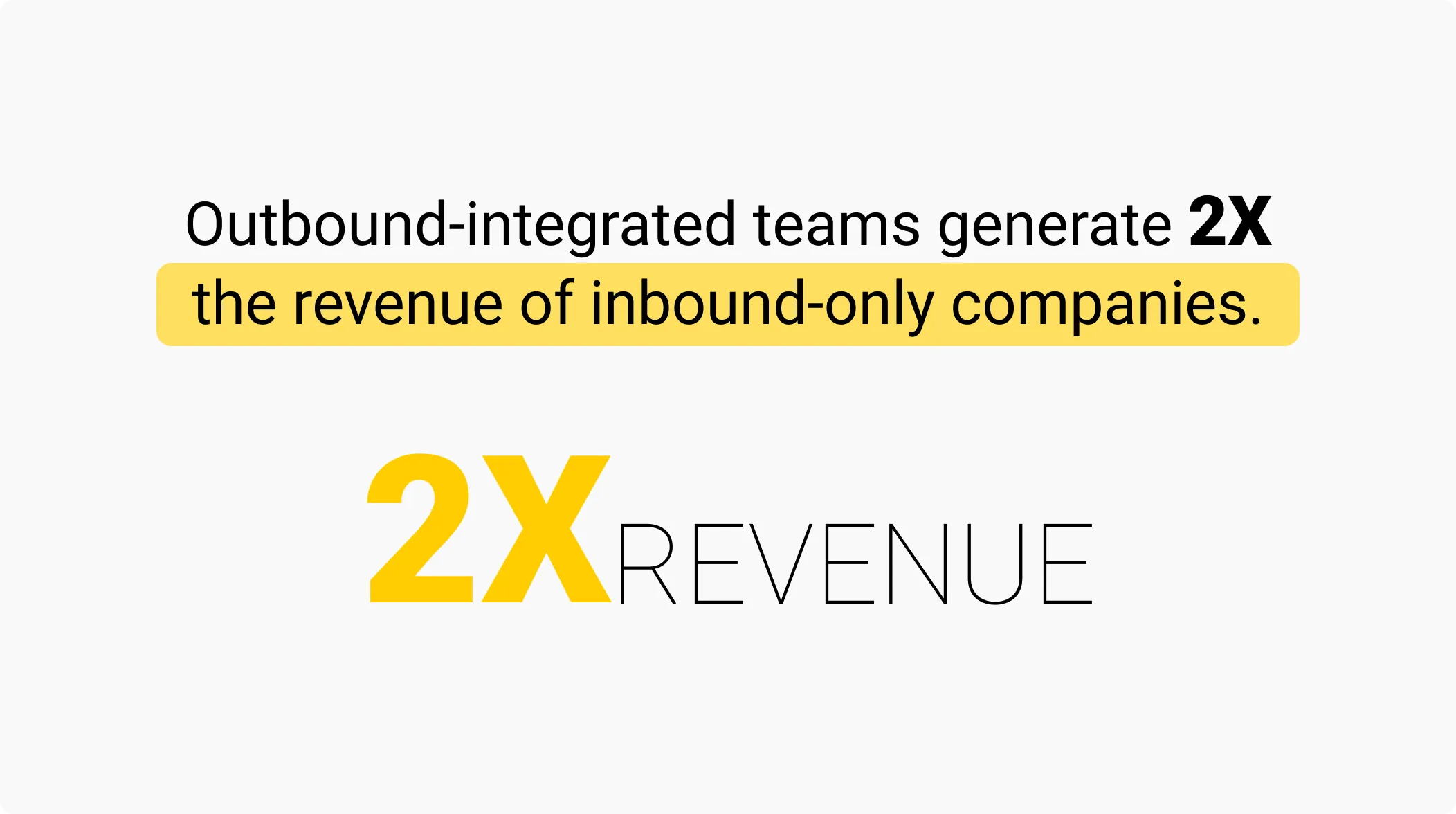
It has been reported that outbound integrating companies in the strategy generate 2 times more revenue as compared to inbound organizations. The winning step is not taking one, but rather balancing the scales as your business grows and your presence on the market is increasing.
How to Build a Hybrid Lead Generation Strategy
It is one thing to understand why hybrid works are written. Most teams get stuck after knowing how to build it.
The good news? You do not have to completely transform your whole marketing operation in a single night. A hybrid lead generation strategy is formulated in strata- each supporting the other. Begin with the pillars, then expand what is effective.
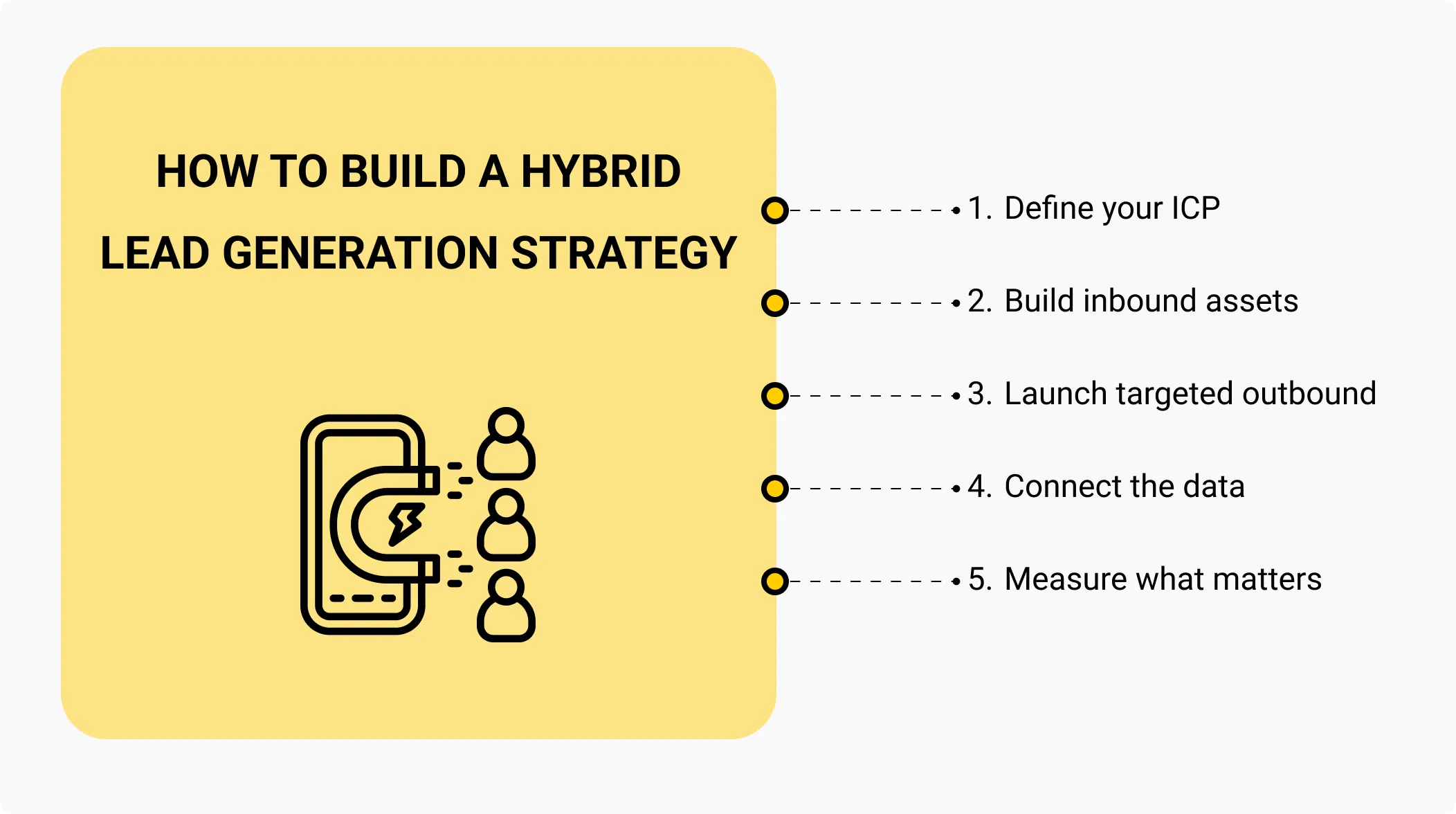
The following stepwise model will help do it:
Step 1: Define Your ICP
Inbound and outbound fail without targeting. When you are unsure of who you specifically target to reach, your content will end up in the wrong readers and your outreach will end up in the wrong inboxes.
Creation of an Ideal Customer Profile with:
- Firmographic: Industry, size of the company, revenue, and location.
- Behavioural data: Technology, recruitment trends, content usage.
- Psychographic information: Suffering, objectives, motivation for decision-making.
The more precise your ICP, the more effective every piece of content and every outreach message becomes. This is exactly why AI bees uses AI-powered targeting that combines all three data layers, because generic personas lead to generic results.
Step 2: Build Inbound Assets First
Before you start outbound, you have to have the content to back it. Your inbound is what gives authority to your cold outreach.
Focus on:
- Cornerstone Content: In-depth guides, industry reports, and case studies that demonstrate your expertise
- Search intent optimization: refers to the process of optimizing your search terms to target the search keywords that your ICP is actually looking for, those keywords that are searched by
- Lead capture infrastructure: includes forms, gated content, newsletters, signups, and chatbots used for turning visitors into known leads.
These are your 24/7 salespeople. They educate, qualify, and warm up leads, even when you are asleep.
Step 3: Launch Targeted Outbound
Now that you have content to reference, your outbound becomes infinitely more valuable. You're not just pitching, you're providing.
Make it work:
- Apply content as outreach hooks: It is always better to create value instead of a sales pitch. "Oh, you are doing the research on [topic]? We have written this guide that would be of use.
- Make it personal to the ICP cues: Mention personal areas of pain, current events in the company, or the trends of the industry that are pertinent to each potential client.
- Test messaging and refine: Monitor the ones that receive a response and those that go flat. Go all the way with what works.
The optimal outbound does not look like outbound. It comes across as an advising suggestion of someone who knows the world of the prospect.
Step 4: Connect the Data
This is where most teams drop the ball. They run inbound and outbound in silos, missing the insights that make both strategies smarter.
Build a feedback loop:
- Track which content inbound leads engage with. What are they reading? What are they downloading? What pages do they visit before converting?
- Use those insights to improve outbound targeting. If your best inbound leads all read your pricing guide before booking a demo, send that guide in your outbound sequences.
- Create continuous feedback between sales and marketing. What objections does sales hear? What questions keep coming up? Feed that intel back into content creation and outreach messaging.
When your data flows both ways, your entire pipeline gets smarter over time.
Step 5: Measure What Matters
Vanity metrics won't tell you if your hybrid strategy is working. Track the numbers that actually tie to revenue.
Inbound metrics:
- Organic traffic growth
- Marketing Qualified Leads (MQLs)
- Content engagement (time on page, downloads, shares)
Outbound metrics:
- Reply rates
- Meetings booked
- Conversion rates by channel
Hybrid metrics (the ones that really matter):
- Pipeline velocity (how fast leads move through stages)
- Cost per opportunity (not just cost per lead)
- Sales cycle length (shorter = strategy is working)
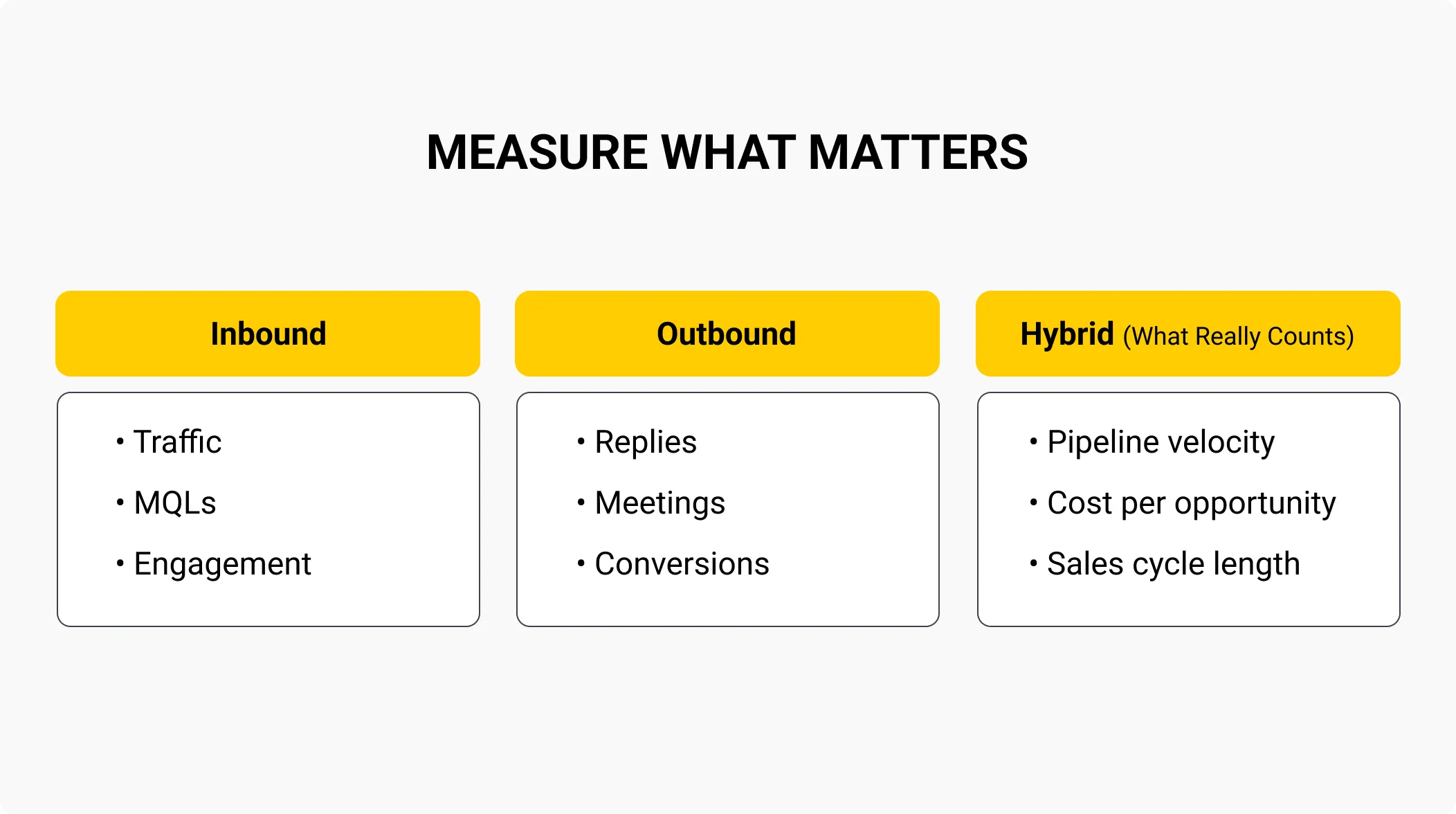
The point isn’t to maximize inbound or maximal outbound. Instead, it is to maximize the overall system, and this is measured by contributions to closed revenue.
A hybrid approach requires planning, and that doesn’t have to require a tremendous amount of time. Begin with a sound ICP, develop valuable content to share, initiate outreach that delivers worth, and connect the dots with data. The companies that do all this right are producing not more leads, but better ones, and getting them much faster.
Ready to Fix Your Pipeline?
If your pipeline is like a rollercoaster, strong one quarter, starving the next, don’t blame your team’s work. It’s your strategy.
Picking and choosing just the inbound side means waiting for the leads to come to you, crossing your fingers that your content is ranked high enough, and hoping that the conversion happens in time for your competition to reach the prospect first. Picking and choosing just the outbound side means starting from the very beginning with every conversation and exhausting your list with every email you send.
Neither approach is broken. But choosing one over the other is.
The winning companies in the B2B arena have ceased to make inbound versus outbound lead generation a form of debate. They have created mechanisms by which they operate the two strategies together; content generates trust, outreach generates opportunities, and data ties it all together.
That is what distinguishes a pipeline that lives and one that grows.
We assist B2B companies in developing hybrid growth engines at AI Bees that are predictable. With our AI-based targeting, outbound campaigns that we have tested in battle, and a performance-based model, you guarantee that you get meetings with decision-makers without putting money on one channel.
Ready to stop taking sides?
Schedule a demo and let's build a pipeline that actually works.
FAQs About Inbound vs Outbound Lead Generation
1. What is the difference between inbound and outbound lead generation?
Inbound lead generation is prospective customers attracted to content, optimized for search engines, and other organic means, who find you. Outbound lead generation is where you directly connect with them through cold emailing, calling, and LinkedIn. It is up to you to find them. The inbound method is a push strategy in which leads dictate timing, and the outbound is a push strategy in which timing is dictated by you.
2. What are the two types of lead generation?
There are two kinds of leads. One is inbound, and the other is outbound. Inbound leads are generated through attracting customers who are searching actively through content marketing, search engine optimization, or social marketing. Outbound leads are generated through actively reaching out to those who fit your customer profile.
3. What is outbound lead generation?
The outgoing lead generation involves proactive efforts from your team to connect with potential consumers via cold emails, LinkedIn outreach, cold calls, and even advertisement postings. You are the one who extends the invitation to potential consumers whodo not event recognize the necessity for the solution offered by your business. The results are faster compared to the previous one.
4. What is inbound lead generation?
Lead generation for inbound marketing is where you lure potential clients with high-quality content, SEO, and other organic methods. You do not have to prospect for clients because you develop tools, such as blogs and webinars, that will lure them when they're searching for a solution. It is cost-effective in the long run because of the cost per lead.
5. Should I use inbound or outbound lead generation?
Leverage both. Organizations that leverage both inbound and outbound see 2 times revenue growth compared to single-channel efforts. Utilize inbound for building credibility and creating warm leads. Utilize the outbound method when you need it fast or if you are speaking to an enterprise. This is how you mix both.

Make Loss Impossible
with Performance-Based Marketing

Personalized Campaigns with
Precisely Selected Prospects
.svg)
Analysis From Your Dedicated
Account Manager

with a Team of Growth Hackers
we Develop your Tailor-Made Strategy
.webp)


%201.svg)
.svg)


.svg)
.svg)


.webp)