
.svg)


How's your email marketing game shaping up for 2026?
Are you ready to stay ahead of the curve and drive real results from your campaigns?
You are in the right place.
Email marketing remains one of the most powerful tools in your marketing arsenal. But the thing is this: what worked last year simply may not be effective this year. The digital landscape continues to change faster than ever, and your email marketing strategy needs to go along with it.
Consumer expectations have changed. Inboxes are more crowded. Standing out now requires more than just a catchy subject line. Because of that, staying current with email marketing trends is not a nicety, but rather an essential part of competitiveness.
In this article, we are examining the best email marketing trends that will dominate 2026. We will discuss the strategies that make the needle move, whether it is AI-based personalization or interactive experiences that could transform passive readers into active customers. These trends will be useful whether you are seeking more open rates, more conversions, or you are seeking to improve your relationship with your customers.
Businesses need to be ready to transform their email marketing strategy. Let's dive in.
Top Email Marketing Trends for 2026
Email marketing is ever-evolving. Email trends, however, take some time to have an effect when compared to, for instance, social media trends. But email marketing is steadier and long-lasting. Thus, it changes less frequently. When it does change, the changes are significant and far-reaching.
Naturally, other minor changes and global design and marketing processes also affect email marketing. It is important to remember what is relevant and apply it to today's scenario.
In 2025, about 4.5 billion people were using email. This number is expected to grow to more than 4.8 billion in 2027.
.webp)
Besides this, email marketing returns an average ROI of between $36 and $42 for every dollar spent.
This means that more companies will want to take advantage of it. In the future, email marketing will bring greater opportunities, major problems, and tougher competition.
This, of course, has its effect on people across the globe as they feel the ripples of the global economic landscape. Your audience may reduce spending while other businesses compete for attention with newsletters.
So here are some of the current trends you should be aware of.
Hyper‑Personalization Using AI
Personalization in email marketing isn't new, but AI is taking it to a whole new level.
39% of professionals in email marketing think that in the next few years, AI-driven hyper-personalization will be the biggest driver of change for email automation campaigns. And indeed, the statistics prove it.
Businesses that have integrated AI into their email marketing strategies have noticed a spike in click-through rates of 41% and an increase in conversion rates of 20%. Personalized emails can even deliver six times higher transaction rates compared to non-personalized ones.
.webp)
What sets hyper-personalization apart from traditional segmentation is that AI analyzes individual behavior patterns in real time and makes dynamic adjustments to content, timing, and offers based on the preferences of each recipient.
We're talking about emails that change their content based on browsing history, purchase behavior, patterns of engagement, location, device usage, and even when someone is most likely to open their inbox.
It goes way beyond inserting someone's first name in the subject line. AI makes true one-to-one personalization, at scale, possible; something that would be impossible to do manually. Modern email automation tools now handle this heavy lifting behind the scenes, applying these insights automatically so marketers don't have to.
The good thing about AI-powered personalization is that it learns and improves over time. The more data it processes, the better it will get at predicting what each subscriber wants to see.
Want to take your email personalization to the next level? See our email automation guide to find out how AI can transform your campaigns.
Predictive Behavioral Targeting
The days of guessing what your subscribers want to see are gone.
Predictive behavioral targeting applies AI to analyze how subscribers interact with your emails and your website to predict what they will do next.
Marketing emails triggered by behaviours drive 10 times more revenue than other marketing email types. Brands using predictive behavioural targeting to anticipate customer intent are improving CTRs by as much as 40%.
.webp)
Here's how this works: AI tracks browsing history, past purchases, e-mail engagement, and cart abandonment. Next, it predicts what content or offers each subscriber is most likely to respond to.
Instead of sending the same message to all, you are actually triggering emails based on a certain action. A person who browses winter coats three times receives a different email than one who just bought running shoes.
The real power? This happens in real-time, making every message feel timely and relevant.
Omnichannel Strategy Integration
Email marketing no longer exists in a vacuum.
The most successful brands are integrating email with social media, SMS, mobile apps, websites, and even in-store experiences to create a seamless customer journey.
Companies that have omnichannel customer engagement strategies retain 89% of their customers, whereas single-channel approaches retain only 33%. Marketers who use three or more channels in one campaign see a 287% higher purchase rate than those with single-channel campaigns.
.webp)
Here's how it works: Your customer is browsing products on your website, abandons their cart, gets reminded via email, clicks through from Instagram, and finally completes the purchase on their mobile app. Each touchpoint works with the others to move them toward conversion.
The key is consistency. Whether someone interacts with you from email, to social media, to your website, your messaging, branding, and customer experience should feel unified.
First‑Party Data + Privacy‑Driven Targeting
It's over: the era of buying email lists, tracking users across the web.
With the disappearance of third-party cookies and a tightening of privacy regulations around the world, businesses will have to rely on first-party data-information that is collected directly from your customers and with their explicit consent. Brands with strong first-party data strategies saw revenue from email surge 30% year-over-year while cookie-dependent competitors crawled at just 5%.
Here's the thing: consumers aren't opposed to sharing their data. 65% of consumers say they will share personal information if they see clear value delivered in return.
.webp)
First-party data comes directly from your owned channels, website behavior, email engagement, purchase history, preference centers, and surveys. This data, being more accurate and reliable, is fully compliant with the privacy regulations of both GDPR and CCPA.
The key to success? Build trust through transparency. Be clear about what data you're collecting and why. Give subscribers control over their preferences and frequency of communications. Make opt-outs easy.
Email Accessibility & Inclusive Design
Creating emails that everyone can read and interact with isn't just the right thing to do; it's smart business.
Over 1 billion people-15% of the world's population-have some form of disability. That is a huge audience that you cannot afford to ignore.
And here is the wake-up call: 71% of disabled customers will leave a site that is not accessible, and the same applies to emails.

Accessible email design allows visually, audibly, motorically, or cognitively impaired people to read and interact with your content via screen readers, keyboard navigation, and assistive technologies.
Basics are as follows:
- Use sufficient color contrast between text and backgrounds
- Add alt text that describes all images
- Structure your content by applying proper heading hierarchy.
- Ensure links are clearly recognizable (not through color alone)
- Keep your language clear and concise
- Ensure your e-mails work without images enabled
The good news? Accessible design improves the experience for all subscribers, not just people with disabilities. A clear hierarchy, readable fonts, and a simple layout improve the experience for all subscribers.
Fueling Email Innovation with B2B Intelligence
To fully realize the potential of AI-driven email trends like hyper-personalization and predictive targeting, marketers need a foundation of reliable, high-quality data. ZoomInfo provides the B2B intelligence and real-time intent signals required to power these advanced automation strategies at scale. By integrating deep company insights and professional contact data directly into marketing workflows, it enables teams to move beyond generic messaging and focus on high-value prospects. This ensures that every automated email is backed by accurate firmographic data, allowing for the level of precision needed to engage today’s decision-makers and build a more predictable sales pipeline.
Gamified Email Experiences
Want to turn passive readers into active participants?
Add a little fun to their inboxes. Gamified emails involve interactive components such as spin-to-win wheels, scratch cards, quizzes, puzzles, and progress bars that turn your emails from something to read into something to play.
Gamified emails can lead to engagement rates of up to 48% and can spike your open rates by as much as 30%.
.webp)
The following are some gamification concepts to be tried:
- Spin-the-wheel offers or gifts.
- Scratch-to-reveal offers
- Online quizzes with individual feedback.
- Loyalty bars or goal bars.
- Limited Offers Countdown Timers.
- Easy riddles or trivia.
The psychology is easy: people enjoy rewards, competition, and having a sense of accomplishment; gamification can access these instincts, enabling clicks and interaction, which leads to conversions.
The trick is to make it applicable to your brand and your audience. A play scratch card can help a retail brand, whereas a professional quiz can be used in B2B firms.
The key is keeping it relevant to your brand and audience. A playful scratch card might work for a retail brand, while a professional quiz fits better for B2B companies.
AI‑Generated Dynamic Content Blocks
Imagine sending one email that's going to display different content for each subscriber automatically. That's the power of AI-generated dynamic content blocks.
A dynamic content block is part of your email that changes with subscriber data, such as location, purchase history, browsing behavior, or preferences. AI takes this further by automatically generating and optimizing these blocks in real time.
Image generation using AI in emails increased by 340% in the year 2025 compared to 2024.
Here's what AI-powered dynamic content can do:
- Display different product recommendations based on browsing history.
- Display location-specific offers or store information
- Adjust imagery and messaging to customer preferences
- Change content based on where subscribers are in the customer journey.
- Personalize pricing or promotions based on loyalty status
The beauty of dynamic content is efficiency: instead of creating multiple email versions targeted at different segments, you create one template that will automatically adapt. AI handles the heavy lifting by analyzing the data and generating relevant content at scale.
Micro‑Segmentation for Engagement
How well do you really know your email subscribers? Basic segmentation-grouping people by age, location, or purchase history-is just the tip of the iceberg for 2026. The brands that are seeing real results are taking it to the next level with micro-segmentation.
Think of micro-segmentation as traditional segmentation, amped up a million notches. Instead of sending one campaign to "people who purchased in the last 30 days," you're creating hyper-niche groups based on real-time behaviors and engagement patterns.
According to Campaign Monitor, marketers have found as much as a 760% increase in email revenue from segmented campaigns.
.webp)
This is how micro-segmentation would look:
- Those subscribers who had repeatedly watched a product category without purchasing.
- Recently opened email customers who have not clicked within 30 days.
- New customers who have not been able to come back after a certain period.
- The customers who are loyal and have decreasing engagement patterns.
- Those who had left their carts at one price.
The micro-segmentation beauty is that it allows you to meet the subscribers where they are in their journey. Whenever one receives an email that directly addresses their actions and interests recently, it does not feel like advertising but assistance.
The bottom line? The narrower your segments, the stronger your output.
Storytelling as a Retention Strategy
Wish to retain subscribers in your inbox? Stop selling and tell stories.
In 2026, the most successful email marketers will not simply be selling products, but they will create narratives that make their subscribers feel like they are part of something larger. Customer journeys, behind-the-scenes peeks, founder stories, and real user experiences create emotional connections that promotional blasts simply can't match.
92% of consumers want brands to make advertisements that feel like stories.
Here's what storytelling in email can look like:
.webp)
- Customer success stories and transformation sharing
- Taking subscribers behind the scenes of your process or team
- Serialized content that keeps readers anticipating the next email.
- Personal founder or team member stories to humanize your brand
The key is authenticity. Your stories do not have to be dramatic, but they really need to be real. When subscribers are emotionally tied into your brand's narrative, they're not just opening your emails-they're invested in what comes next.
Cross‑Platform Email + Social Pollination
Why choose between email and social media when you can make them work together?
In 2026, the smartest marketers aren't treating email and social as separate channels; they're creating a seamless ecosystem where each platform feeds the other. Use social media to grow your email list, then use email to drive engagement back to your social content.
Email marketing generates $36 for every $1 spent, while social media generates $2.80 for every $1 spent.

Here's how cross-platform pollination works:
- Drive sign-ups with unique email content promotion on your social channels
- Repurpose high-performing email content into social posts
- Extend your reach by using social sharing buttons in your emails.
- Tease email-only offers on social to reward subscribers.
The key is in the consistency. Whether it is done right, both channels work together to make each other stronger: transforming casual followers into subscribers taking action and email readers into community members that do.
Voice‑Activated Emails & Smart Device Optimization
"Hey Alexa, read my emails." Sound familiar? More subscribers are now consuming email content through voice assistants and smart speakers, and your emails need to be ready.
With over 8.4 billion voice assistants in use worldwide and 35% of U.S. adults owning smart speakers, it is no longer optional to optimize your emails for voice. When someone asks their device to read an email, cluttered formatting, image-heavy designs, and vague subject lines fall flat.
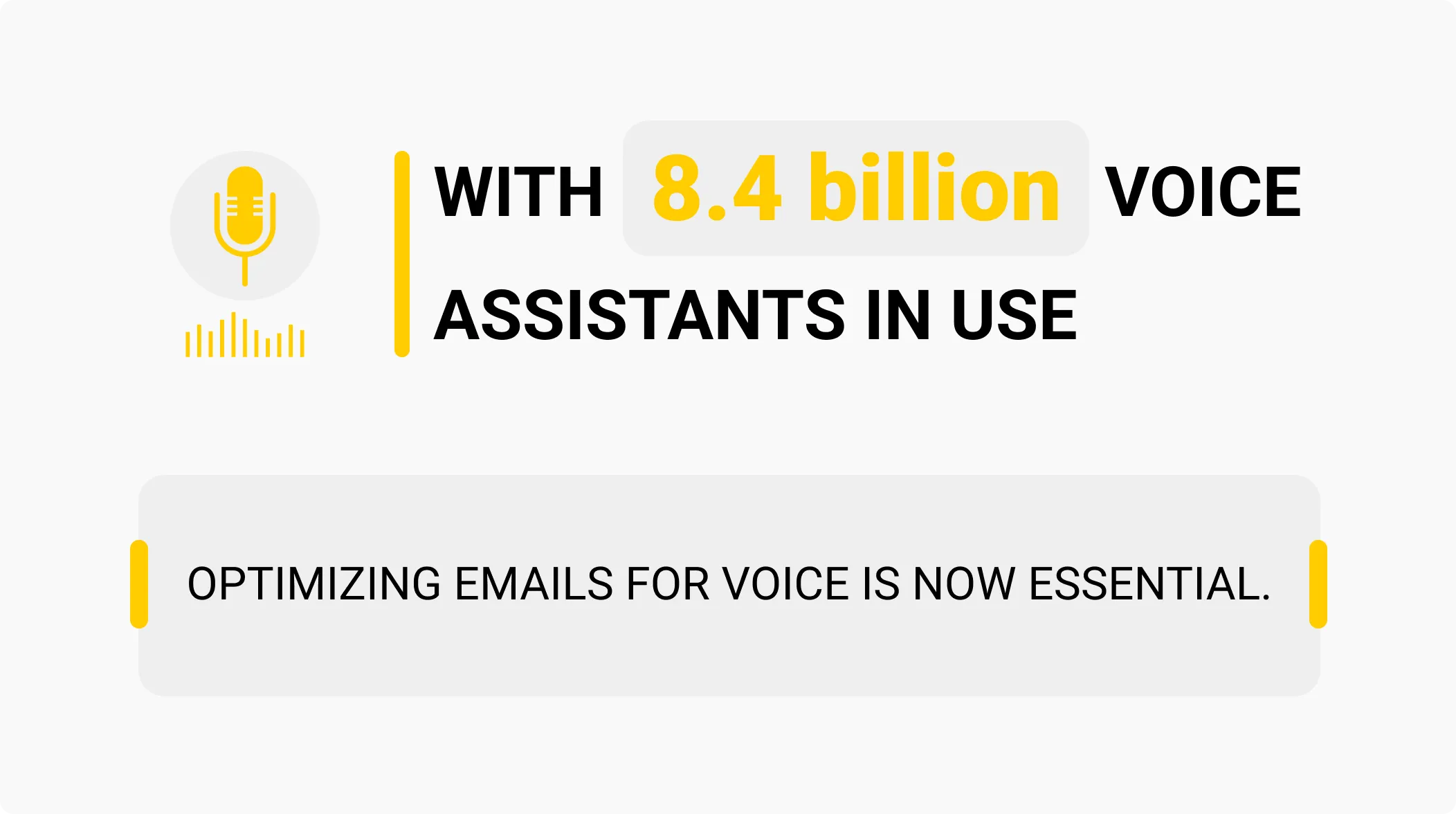
More than 1 billion voice searches occur monthly in the world.
Here's how you can optimize emails for voice and smart devices:
- Create subject lines that are simple and easy to read aloud.
- Key information read out in front: voice assistants tend to read out the first few lines.
- Keep the text plain and easy to scan instead of using designs that are heavy on images.
- Add alt text to all pictures, which should be a description.
- Make CTAs action-oriented and simple - voice users are unable to click.
The goal is to make your message just as compelling when it's heard as it is when read. And with voice technology continuing to grow, brands that adapt their email strategy now will stay ahead of the curve.
Real‑Time Email Personalization
Forget "Hi [First Name]", that's not personalization anymore. In 2026, real-time personalization means your emails adapt dynamically based on when, where, and how subscribers open them.
Real-time personalization uses live data to alter email content at the moment it is opened. That could mean displaying different product recommendations based on current browsing behavior, updating pricing or inventory in real-time, or adjusting offers based on the subscriber's location or local weather.
Here's what real-time personalization can do:
- Show live inventory or pricing updating at open
- Show location-specific offers or store information
- Adjust content based on current weather conditions
- Update the countdown timers of flash sales in real time.
- Serve product recommendations based on recent browsing.
The shift from static to dynamic is a game-changer because instead of sending one single email to everyone, hoping it is still relevant when opened, real-time personalization lets every subscriber see content tailored to their exact moment of engagement.
Dark Mode Optimization
Nearly 82% of smartphone users have enabled dark mode. If your emails aren't optimized for it, you're sending broken designs to most of your audience.
.webp)
The problem is that most email templates are built for light backgrounds. When a subscriber opens up that email in dark mode, the results can be disastrous: logos disappear, text becomes unreadable, and carefully chosen brand colors invert into something unrecognizable.
The fix isn't complicated, but it does require some intentional design choices: swap out solid backgrounds with transparent PNGs; swap out pure white for off-white or light gray; add in some subtle strokes around images and text so that they don't disappear against dark backgrounds. And most importantly-test every email in both modes before hitting send.
Dark mode isn't a trend anymore; it's how people use their devices. Brands that adapt will deliver a seamless experience no matter how subscribers choose to view their inbox. Those that don't? They'll keep wondering why engagement is dropping.
Modular Email Design & No‑Code Templates
What if you could cut your email production time in half, without sacrificing quality? That's exactly what modular email design and no-code templates deliver.
Think of modular design like building blocks: you create reusable components (headers, footers, product grids, CTAs) once and then mix and match to assemble complete emails in minutes. Oracle Marketing Consulting reports that teams using modular email design reduce production time by 25% to 40%. No more starting from scratch for every campaign.
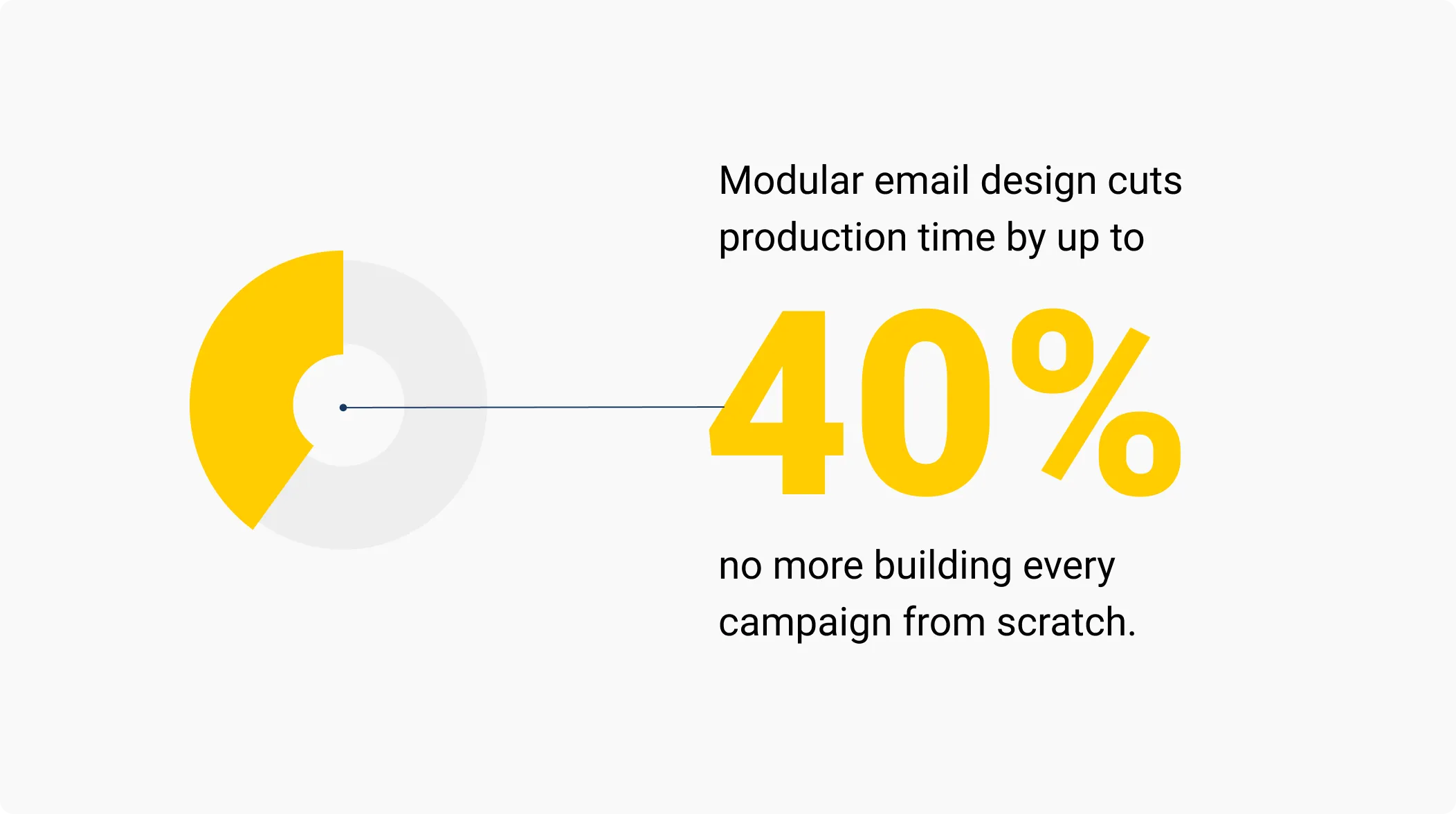
With the rise of no-code drag-and-drop builders, this is accessible for all users, not just developers. Some key benefits include:
- Speed: Construct campaigns with pre-tested modules rather than creating them.
- Brand consistency: Each module is built according to your standards: emails should always appear on-brand.
- Easy updates: Add or remove to a promotion or multiple products, just edit one module.
- Scalability: Support increased volumes without scalding your staff.
The winners in the inbox in 2026 will not be those that have the largest design teams, but rather those that have been smarter with modular systems.
Email as a Customer Experience Tool (CX over CTA)
What if your emails were more about making customers feel valued and less about pushing sales? That's the shift that happens when brands think of email as a customer experience channel rather than a conversion machine.
The numbers back this up: 86% of buyers are willing to pay more for a great customer experience, and 72% of customers will switch brands after just one negative interaction. Every email you send shapes how people feel about your brand, not just whether they click.
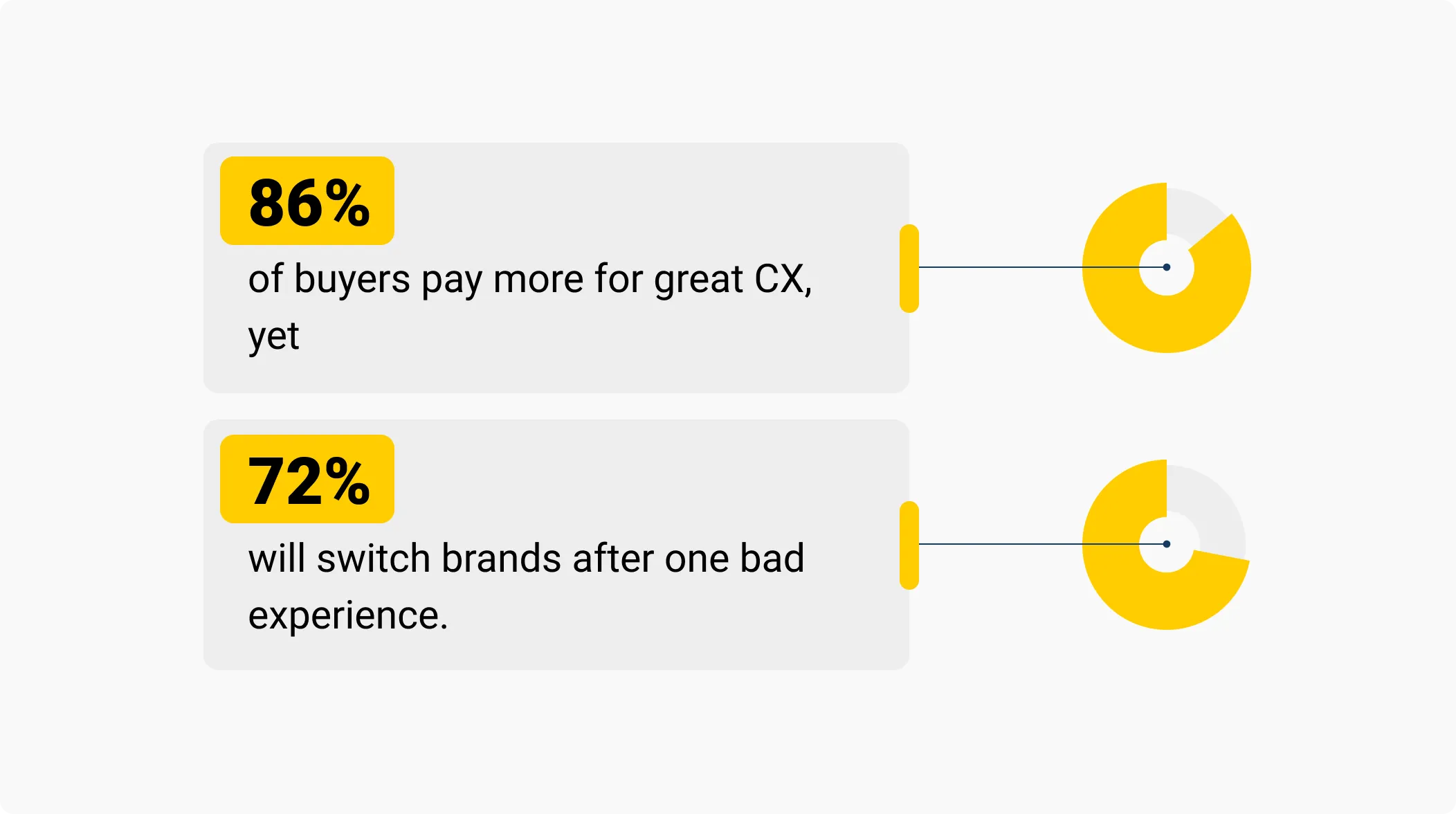
That means rethinking your e-mail strategy:
Rethink your e-mail strategy
- Value over volume: Send emails that educate, entertain, or help—not just sell
- Journey-focused messaging: Match the content to where customers are, not just what you want them to buy.
- Two-way communication: Invite feedback, questions, and replies instead of broadcasting
- Consistent experience: Email tone and quality should be identical in every other brand touchpoint.
By 2026, the brands that will have lasting loyalty aren't the ones with the smartest CTAs; they're the ones making every interaction in the inbox a positive experience.
Enhanced Deliverability with BIMI & TLS
What if your emails could instantly signal trust before subscribers even read the subject line? That's the power of BIMI and TLS-two authentication standards that are becoming table stakes for serious email marketers.
BIMI displays your verified brand logo directly in the inbox next to your sender name. Gmail even shows a blue checkmark for verified senders. TLS, or Transport Layer Security, encrypts your emails in transit to protect them from interception and avoid those trust-killing "unsecured message" warnings.
Why this matters in 2026:
- Visual trust signals: Your logo appears before the open, building recognition instantly
- Better deliverability: Both protocols improve sender reputation with inbox providers. Email deliverability tools can help monitor these factors and identify potential delivery issues.
- Protection against phishing: Authentication can make it more difficult for fraudsters to impersonate your brand.
These technical upgrades will translate directly to opens, clicks, and conversions in an era where inbox trust means everything.
Omnichannel email marketing
What happens when email stops working in isolation and starts working in harmony with every other channel? You get omnichannel marketing, and the results speak for themselves.
According to a research, companies with strong omnichannel strategies retain 89% of their customers, compared to just 33% for companies with weak omnichannel engagement. Google research also shows omnichannel shoppers have a 30% higher lifetime value than single-channel customers.

In 2026, email becomes the connective tissue across your entire marketing ecosystem.
- Unified messaging: Coherent brand experience regardless of the customer contact method through email, SMS, social, or in-store.
- Smarter data: Interacting with email tells your social targeting, and your behavior on the site triggers relevant emails.
- Customer-led experiences: Reach subscribers in the channel of their preference at the most appropriate time.
- Fluid transitions: Text in mail, chat in WhatsApp, end in-store.
Email is no longer a channel, but the center, the place where your customer experiences all comes together.
A/B testing for AI personalization
What if AI could run your A/B tests faster and smarter than ever before? That's exactly what's happening in 2026.
Instead of having to manually create two variants of an email and then wait for results, AI can immediately generate multiple variants, different subject lines, content blocks, and CTAs, then predict the winners before tests have even completed. It learns from every send and will continuously optimize future campaigns without you having to lift a finger.
Stop guessing. Let AI do the heavy lifting, so you can focus on strategy.
Mobile-first Email Design
What if you designed every email for the smallest screen first, then scaled up? That's the mobile-first mindset-and it's no longer optional.
Most subscribers will view your email on their phone before anything else, and if it doesn't look good there, they will delete it within seconds. Mobile-first design flips that on its head: instead of retrofitting desktop emails for mobile, you start with the experience on the phone and scale up.
Key principles for mobile-first design:

- Single-column layouts: Easy to scroll, no pinching or zooming required
- Thumb-friendly buttons: Large, tappable CTAs placed within easy reach
- Concise copy: Get to the point fast-mobile readers skim.
- Fast-loading images: Compressed visuals that don't drain data or patience
In 2026, the attention-winning brands are building for the palm of your hand from the very first draft.
Shift From Opens to Engagement Metrics
Are you still measuring success by open rates? It's time to move on.
Apple's Mail Privacy Protection pre-loads email content, rendering open rates unreliable. According to Litmus, nearly 50% of all email opens come from Apple devices, and those emails appear "opened" even when they're never actually viewed. By 2026, smart marketers will shift focus entirely to metrics that reflect real engagement.
What to measure instead:
- Click-through rate: What kind of subscribers are clicking your links?
- Conversion rate: What number completed action-purchased, signed up, downloaded?
- Bounce rate: What is the percentage of emails that did not get to the inbox?
- List growth rate: Is your audience going up or down?
- Revenue per email: How much do emails actually earn?
Opens tell you someone might have seen your email. Engagement metrics tell you if it actually worked.
Smarter Email Automation with AI
What if your automated emails could think for themselves? In 2026, AI is transforming basic drip campaigns into intelligent, adaptive journeys.
Traditional automation is rule-based: if person X does Y, then send email Z. It works well but is somewhat inflexible. AI-powered automation goes further-it learns from subscriber behavior, predicts optimal send times, dynamically generates content, and determines the next message a person needs. Instead of relying on a predefined script, this AI analyzes thousands of live data points and determines the best next step for each individual subscriber.
The difference is like going from a recorded voicemail to actually having a live conversation. AI doesn't just react-it anticipates. It recognizes when someone's patterns of engagement change, determines the content they are most likely to click, and adjusts the entire journey on the fly.
How AI makes automation smarter:
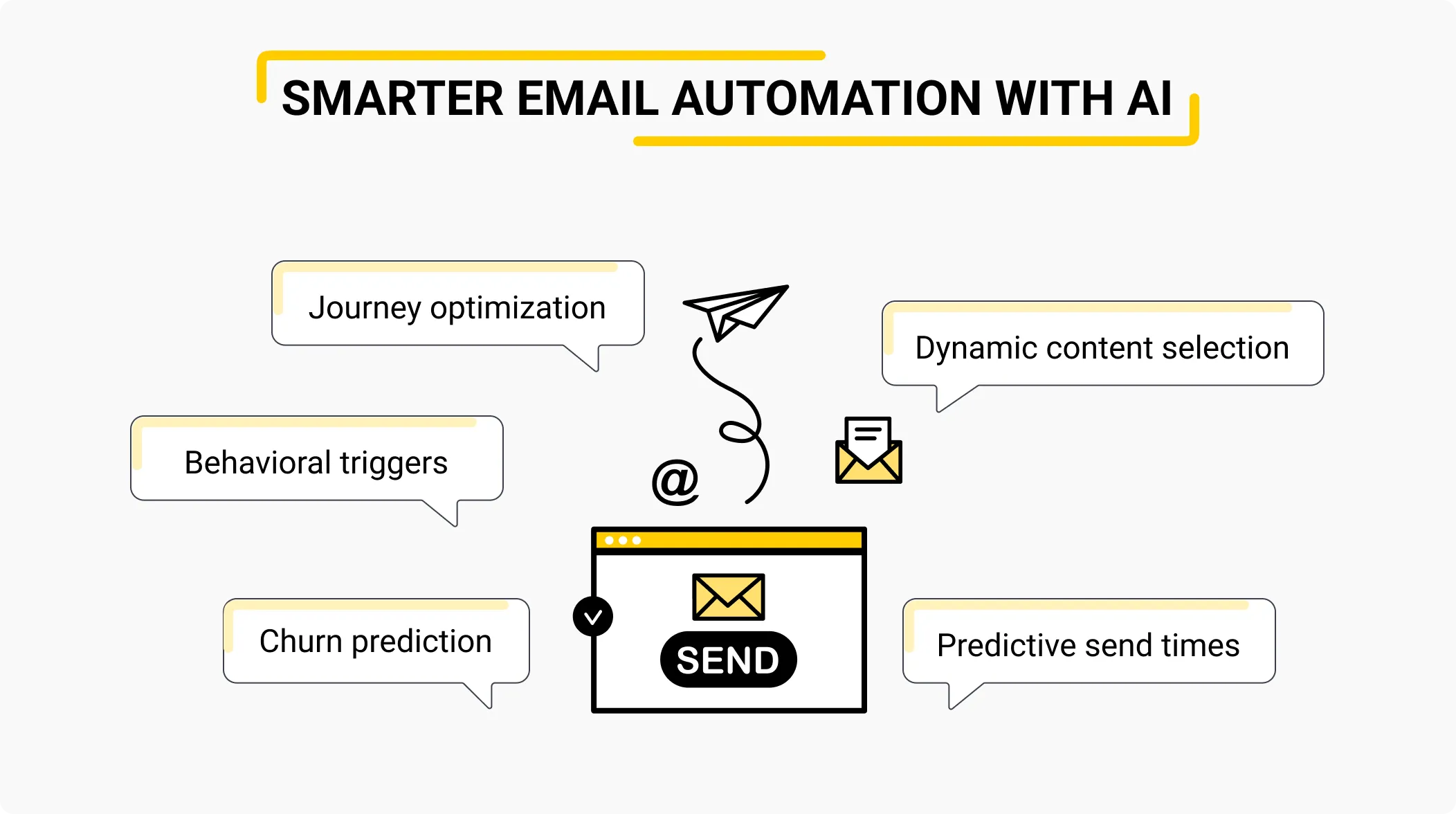
- Predictive send times: AI can calculate when each subscriber is most probable to do this.
- Dynamic content selection: Blocks of content automatically change based on personal preferences.
- Behavioral triggers: Respond to either overt or subtle behaviors.
- Path finding: AI is in the process of experimenting and improving routes, but it does not require human intervention.
Churn prediction: Predict subscribers at risk and initiate re-engagement before going. The result? Computerized emails that are less robotic and more of a friendly assistant who knows what to say all the time.
Use of Artificial Intelligence
AI in email marketing has moved from experimental to essential. Today, close to 63% of marketers use AI tools in running email campaigns, which is more than double the adoption rate compared to just a few years ago.
In 2026, AI isn't just helping marketers work faster-it's helping them work smarter. Writing subject lines and body copy, creating images, and finding the perfect send time or cadence: AI does the heavy lifting, freeing creative teams to focus on high-level strategy. Industry research shows AI-powered personalization in email leads to a 41% increase in revenue and a 13.44% boost in CTRs.
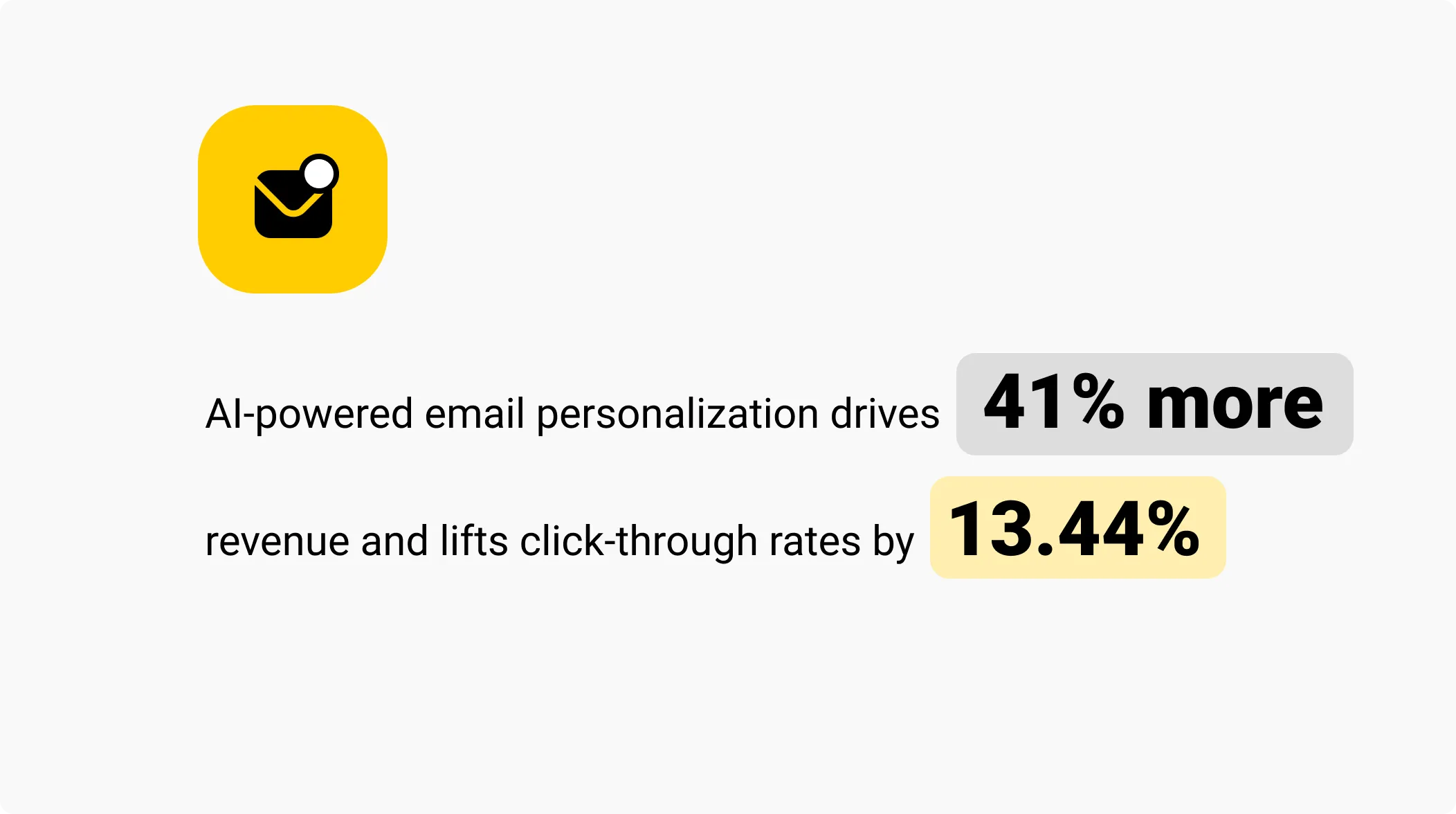
How Marketers Are Using AI for Email:
- Content creation: Create subject lines, email copy, and visuals in minutes, not hours.
- Personalization at scale: Tailor messages to individual preferences without manual segmentation.
- Send time optimization: Let AI determine when each subscriber is most likely to engage.
- Predictive analytics: Determine which subscribers are most likely to convert or churn
A/B testing: Automatically create multiple variations and test them all simultaneously. The best part? AI levels the playing field: small teams on a shoestring budget can now launch sophisticated, personalized campaigns rivaling enterprise operations. In 2026, AI isn't replacing email marketers-it's making them unstoppable.
Email and social will cross-pollinate
What happens when you stop treating email and social media as separate channels? You unlock this powerful feedback loop that amplifies both.
Smart marketers, in 2026, are blending these channels seamlessly: using social media to grow their email lists and email to drive social engagement. Exclusive content is previewed on Instagram, leading to newsletter signups, and email campaigns encourage subscribers to share on social; user-generated content from social gets featured in emails.
The key is audience portability. Social followers can disappear with an algorithm change-but once they're on your email list, you own that relationship. Cross-pollination turns casual followers into loyal subscribers, and subscribers into brand advocates.
Frictionless Opt-in Experiences
How many would-be subscribers have you lost to clunky sign-up forms? In 2026, every extra field is a hurdle, and smart marketers are removing them.
Frictionless opt-in makes joining your list a breeze. Single-field forms asking only for an email. One-tap signups via social login. Smart pop-ups at the right moment, not the annoying ones. Progressive profiling amasses data over time, not demanding it up front.
The goal is simple: reduce friction, increase conversions. When subscribing feels easy, more people say yes-and that's where the relationship begins.
Investment in newsletters
It is not as though newsletters are surviving in 2026, but they are flourishing. With the decline of third-party cookies and the unpredictability of social algorithms, brands are losing their second hand in the only channel that they actually own.
Studies have shown that 81 percent of B2B marketers rely on email newsletters as the main content marketing channel. The second type of email utilized is newsletters, of which 46 percent of marketers consider them part of a strategy.

Why the renewed focus? Newsletters build relationships that algorithms can't disrupt. They create value over and over, keeping your brand top of mind while nurturing subscribers that aren't ready to buy. When they are ready, you're already in their inbox.
Newsletters are owned real estate in a world of rented audiences, and smart brands are investing accordingly.
Storytelling in email marketing
What if your emails didn't just inform, but actually made people feel something?
That's the power of storytelling. Stories cut through the noise in a world of overflowing inboxes simply because they're wired into how we process information. People are 22 times more likely to remember facts when delivered in a story than as bare data. And that also has a real business impact, with storytelling helping improve conversion rates by about 30%.
Here's how to bring storytelling into your email marketing:
- Lead with narrative, not features: Set up with a relevant scenario or customer journey up front; then lead into product details.
- Make your customer the hero: Position your brand as the guide helping them solve a problem or achieve a goal.
- Use real stories: Publish customer testimonials, case studies, or behind-the-scenes moments that humanize the brand.
Create emotional hooks: joy, curiosity, surprise, emotions create action far more than mere logic. Facts tell, but stories sell. The brands that will be winning inbox attention in 2026 are those that will make subscribers feel something worth remembering.
Augmented reality (AR) technology
What if your subscribers could try on your product right from their inbox?
Augmented reality is moving beyond social media filters and retail apps into email marketing. By embedding AR experiences directly in emails, brands enable customers to visualize products in their space, virtually try on items, or interact with 3D models before clicking through. The impact of that is real: using AR in e-commerce can increase conversion by 94%.
Here's how AR is transforming email campaigns:

- Virtual try-ons: Enable customers to see how glasses, makeup, or accessories look on them before making a purchase. For beauty brands, makeup AR can make this experience more specific by letting shoppers preview cosmetic products in real time before moving from email engagement to purchase.
- Product visualization: Enable subscribers to visualize placing furniture, decor, or appliances in their own space.
- Interactive Demos: Let people see how products work through 3D models they can rotate and explore.
- Gamified experiences: Create engaging AR scavenger hunts or reveal campaigns that drive clicks.
The brands that stand out in crowded inboxes in 2026 will be the ones turning passive readers into active participants.
Predictive marketing metrics
What if you knew how your email would perform before you hit send?
That is no longer wishful thinking; that's predictive analytics. Instead of the old 'send-and-see' approach, AI and machine learning now analyze subscriber behavior, past interactions, and engagement patterns to forecast the results prior to your campaign going live. The technology scores subscribers on how likely they will open, click, or convert, removing the guesswork and trial-and-error approach.
And the rate at which it is being adopted is accelerating fast. According to Litmus, 41% of companies will leverage AI-driven analytics by the end of 2026, and marketers say that by that time, up to 75% of their email operations will be AI-powered.
By 2026, the smartest email marketers won't just react to metrics-they'll anticipate them.

Inbox-specific Personalization Algorithms
What if your email had to impress not just your subscriber but their inbox, too?
This is the fact in 2026: the large email operators such as Gmail, Apple Mail, or Yahoo are now employing AI-supported algorithms to curate, screen, and prioritize the content subscribers view. These systems examine patterns of engagement, the reputation of the sender, as well as the behavior of an individual, to determine what emails will be surfaced and buried. Your perfectly crafted campaign might never get seen if the algorithm doesn't think it's relevant.
This means personalization now works on two levels: you're tailoring content for the subscriber, but you're also optimizing for the inbox algorithms that control visibility.
Here's how to stay ahead:
- Make engagement indicators a priority: Clicks, replies, and time to read each feed into inbox algorithms. Write e-mails to act.
- Divide and conquer: Sending the right content to the correct audience will ensure that the engagement rates are high, and spam complains are minimized.
- Clean your list on a regular basis: Inactive subscribers damage your sender reputation, and it is closely monitored by algorithms.
- Check it all: Everything is optional: BIMI, SPF, DKIM, and DMARC are all getting table stakes to inbox visibility.
Personalization in 2026 is not only about making your subscribers feel heard, but it will be about demonstrating that your emails are worth seeing to AI gatekeepers.
Modular email architecture
What if you could build emails like snapping together Lego blocks?
That's the promise of modular email architecture, and in 2026, it's no longer optional for high-volume teams. Instead of building every email from scratch, you create a library of reusable, pre-designed blocks: headers, product grids, CTAs, footers, and testimonials. When a new campaign needs to go out, you simply select, arrange, and customize.
That's huge in terms of time savings. In fact, a study involving 3,000 marketers found that the average rollout for a single email takes one full week, whereas execution actually requires 8-10 hours of working time. Where's the gap? Bottlenecks, approvals, and rework. Modular design cuts through all of those obstacles: some teams can reduce their email production time by a factor of five.

Here is why modular architecture wins:
- Speed: Build campaigns in hours, not days, even at the last minute.
- Consistency: Every email maintains brand standards down to the pixel.
- Scalability: Launch more campaigns without adding headcount.
- Flexibility: Swap modules for different audiences, offers, or seasons in an instant.
In 2026, the brands sending the most emails will not be the ones with the biggest teams; they will be the ones working smarter with modular systems.
Use of AMP for in-email preference updates
What if subscribers could update their preferences and never have to leave their inbox?
This is achieved through AMP for email. This open-source technology, which is now enabled by Gmail, Yahoo, and other large service providers, allows you to put fully functioning forms and preference centers directly within your emails. The subscribers may also change their frequency of emails or the content they want to see, as well as their profile, after clicking on the message rather than accessing a landing page.
The difference can be enormous: 60% of the target audience is more inclined to engage with interactive emails with AMP, and this prompts a 5-fold increase in the rate of clicks. As long as subscribers have the freedom to change their preferences within a few seconds, instead of several clicks, they are much more likely to tailor their experience instead of dropping out altogether.
Come 2026, the brands that make it easy to stay in control will be the ones holding subscribers longest.
Use of agile email marketing
What if your email team could respond to market changes in days, not weeks?
This is what agile email marketing promises. Borrowed from software development, the agile approach substitutes the classical linear processes with planning, copywriting, design, and development in a sequence, with a more dynamic, quicker process model. Teams operate in short sprints, have tasks running in parallel, and test small increments very fast instead of waiting to have the perfect campaign.
The reason why the shift is important is that conventional email processes only allow most teams to launch campaigns within two weeks. With the agile approach, you create on the basis of ongoing roughs, you iterate continuously on the basis of live data, and you pivot immediately when the situation shifts, whether it is a flash sale opportunity or a sensitive news story that necessitates a change in your tone.
Agile email marketing has its core ideas: inclusive, informative, and innovative. It's all about selling less and adding more value, testing what really connects, and evolving with your audience. In 2026, the teams that move fastest-but don't sacrifice quality-will win the inbox.
Dark Mode-compatible emails
What if nearly half your subscribers are viewing your emails on a dark background-and your design isn't ready for it?
Dark mode is no longer considered a niche. A majority of people (more than 82 percent) currently use the dark mode on their smartphones, and nearly 40 percent of all email opens are made in dark mode environments. However, it is only optimized by 63% of marketers in their emails. That disconnect translates to disjointed logos, no text, and designs that appear amateurish to a very large segment of your viewers.
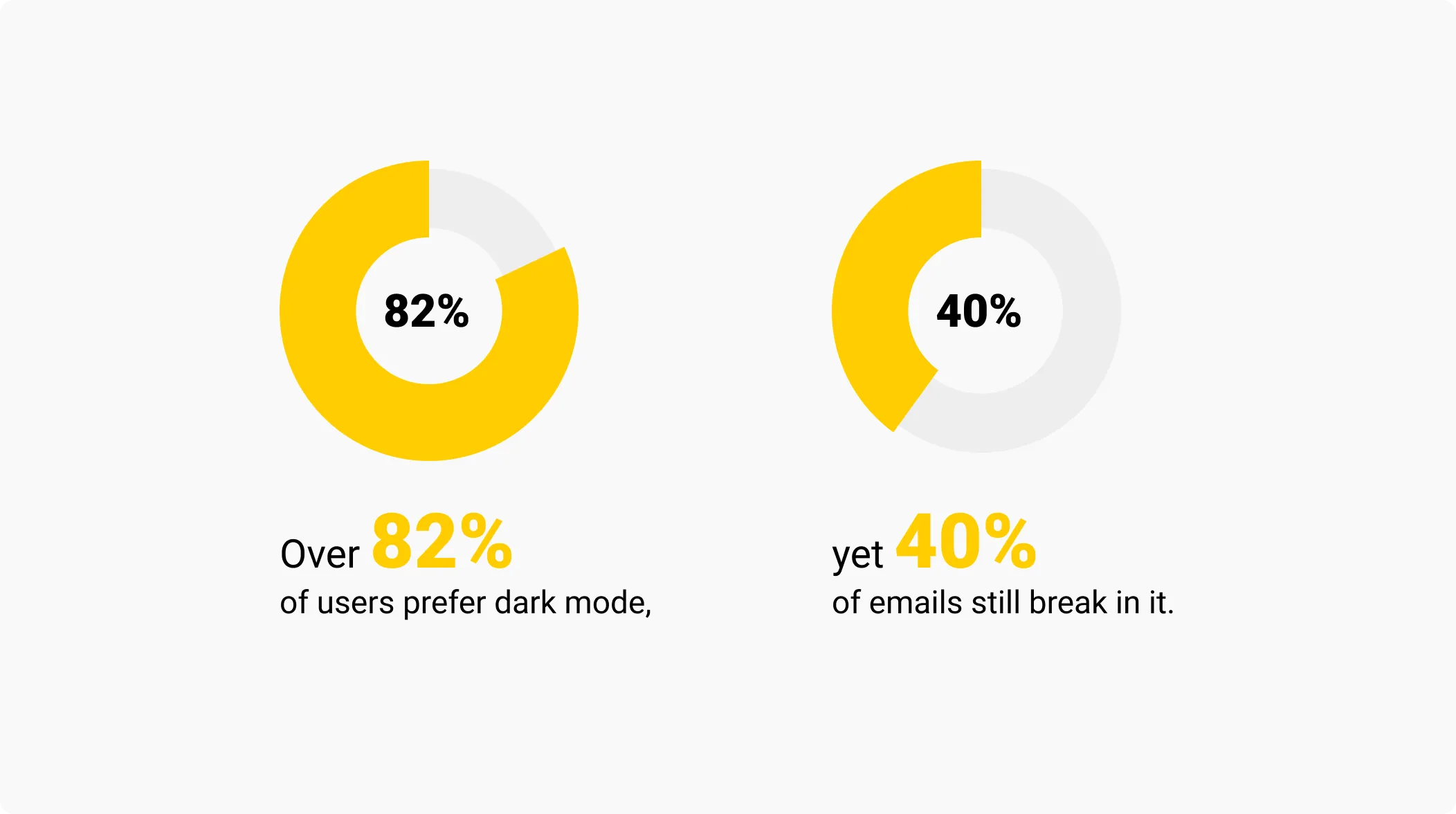
Here's how to make your emails dark mode ready:
- Use transparent PNGs for logos: Add a light outline or glow so that your logo doesn't disappear against dark backgrounds.
- Test across email clients: Dark mode is handled differently between Gmail, Outlook, and Apple Mail, with some inverting colors completely, others partially, and some not changing anything whatsoever.
- Color Contrast: Use colors with high contrast so that text remains easily readable, even when a background is present. The color contrast should be at least 4.5:1 between the text (or images of text) and the background.
- Don't combine images on background colors: This is to avoid having white boxes appearing awkwardly around your visuals.
- Preview before sending: Always test your email in both light and dark mode before sending it.
In 2026, dark mode compatibility is no longer an option. It's as important as mobile responsiveness was ten years ago.
Incorporation of BIMI in email marketing
What if your logo appeared right next to your sender name, before subscribers even open your email?
That's exactly what BIMI offers: Brand Indicators for Message Identification. This email standard allows authenticated senders to display their brand logo in the inbox, building instant recognition and trust. And it's no longer a novelty-it's quickly becoming essential. Over 50% of email marketers have either implemented BIMI or plan to do so in the near future.
The advantages extend beyond aesthetics, however. BIMI builds consumer confidence, increases open rates, and shields your brand from phishing and spoofing attempts since only fully authenticated emails qualify to display your logo.
The momentum is undeniable. Gmail in 2024 made BIMI also accept Common Mark Certificate to implement it more easily, and Apple has implemented BIMI with its Branded Mail program. The playing field will soon have widespread adoption with the presence of Gmail, Yahoo, Apple Mail, and an increasing number of other providers.
In 2026, it is no longer a question of whether to adopt BIMI but how soon you can do so before the competition does.
ML for Subject Line Optimization
What if you could predict whether your subject line would work before you hit send?
This is achieved through machine learning. Rather than subjecting oneself to a hunch or unlimited A/B testing, ML-based tools consider thousands of subject line variations, previous performance data, and the trends in audience behavior to determine what will lead to an open. These algorithms are updated on a continuous basis, learning on a campaign-to-campaign basis and becoming wiser and more specific to your unique audience.
The impact is impressive: AI-crafted subject lines can lift open rates by as high as 22%, compared to human-written versions. That's because ML eliminates guesswork by identifying which emotional triggers, word choices, and character lengths resonate most with your subscribers.

These are the capabilities of the ML subject line tools:
- Variety: Within a moment, generate dozens of variations, all of which are founded on familiar patterns of language.
- Foretell success: You should mark the subject lines beforehand in order to know the ones that will do well.
- Optimize live: Conduct faster A/B tests and automatically select winners.
- Find outcomes: Each campaign will make the algorithm more accurate in sending in the future.
In 2026, the best subject lines will not come from brainstorming sessions; they'll come from machines that know your audience better than you do.
AI-Powered Platform Integrations
What if your email marketing platform, CRM, and analytics tools actually talked to each other intelligently?
That is the promise of AI-powered platform integrations. Instead of siloed systems requiring manual data transfers and giving fragmented views of the customer, AI now stitches your marketing stack into a single cohesive ecosystem. Your CRM feeds behavioral data into your email platform, which fires off personalized campaigns. Those, in turn, update the lead scores in real time-all without human intervention. While some email tools like AWeber require third-party CRM integrations, alternative platforms like SendPulse and GetResponse solve this natively by combining CRM and email marketing in one system.
By the year 2025, 81% of organizations will be using AI-powered CRM systems with seamless integrations in their marketing tools. It provides one unified customer profile, automates cross-platform workflows, and enables smarter segmentation by pooling insights from multiple sources simultaneously.
In 2026, the best email marketers won't just use great tools; they'll use tools that work together in harmony, powered by AI.
Why Email Marketing Trends Matter
First, keeping up with the latest trends in email marketing is crucial to staying ahead of the competition. In a crowded marketplace, you may have an edge and stand out by accepting the newest techniques and strategies.
But that's not all.
In today's fast-paced world, technologies and consumer behaviors keep changing day in and day out; email marketing also follows this trend. Hence, to remain updated and relevant, one needs to be in touch with fresh trends.
For instance, mobile optimization today is critical to the success of email marketing. Since most opens happen on mobile devices, it's no longer optional to ensure your emails are optimized for smaller screens; it's imperative. Emails that don't display properly on mobile get deleted almost immediately.
And that's not all.
Personalization and automation will be two of the biggest trends to affect your email marketing. The personal touch can help increase engagement and conversion. Personalized emails always outperform generic emails in opens and revenue generated.
Keeping up with the trends in email marketing will help your business succeed. And if you really want to stimulate your sales and connect with customers in a meaningful way, you can't afford to ignore the benefits of email marketing.
How to Implement the Trends Into Your Strategy
Feeling encouraged by reading this article, but unsure how to put these ideas into practice?
Start small. Choose one trend and devote time to researching and testing it before moving on to the next.
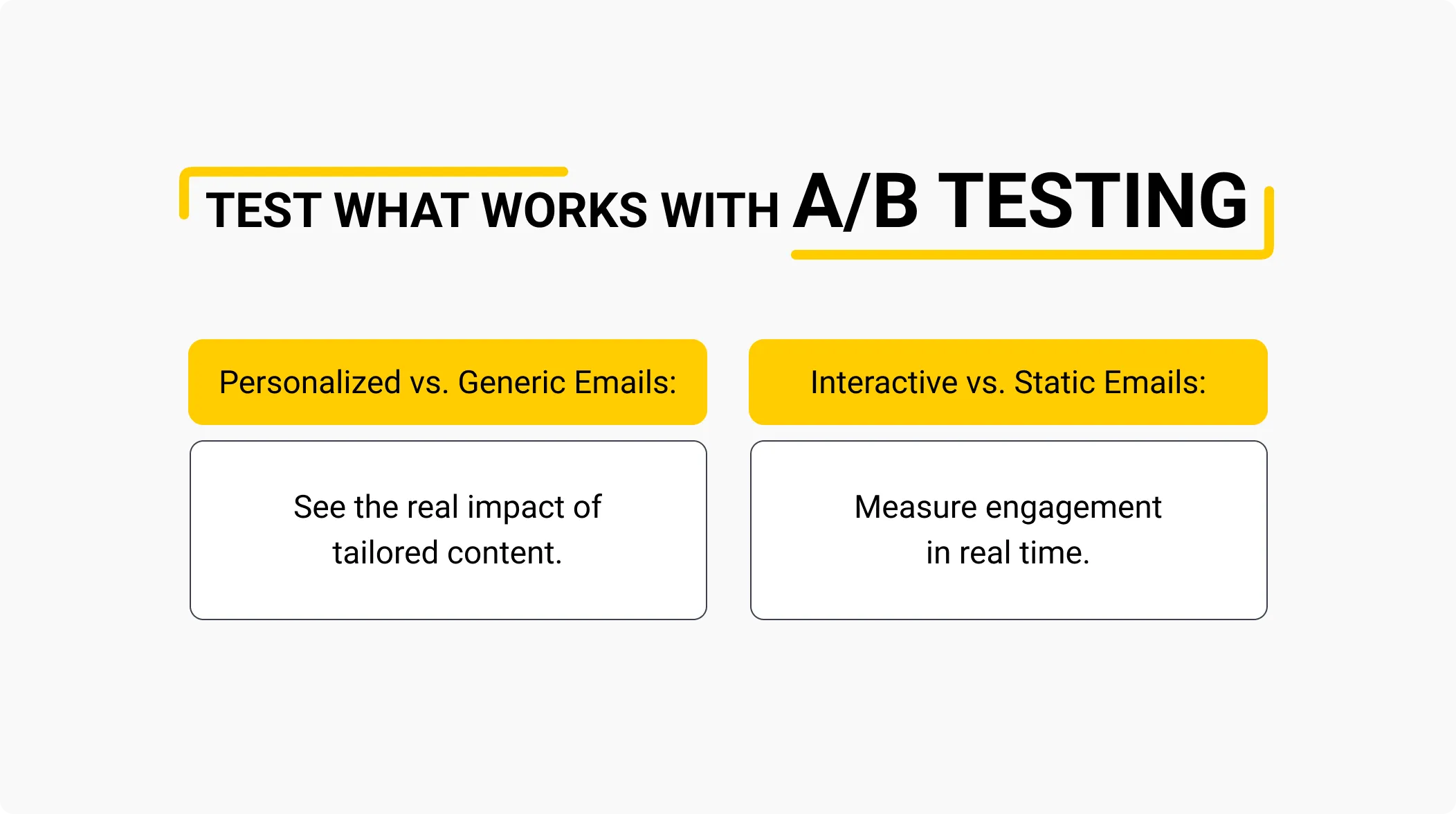
Employ A/B testing. This allows you to observe how effective your efforts are in real time:
- Want to appreciate the value of personalization? Compare a personalized email with a generic one.
- Wondering whether interactive content is worth the investment? Send one subscriber group an interactive email campaign and a standard version to another.
The data support this methodology: marketers who regularly A/B test their emails realize an 86% higher return than those who never test. That's almost a doubling of return, simply by taking the time to experiment.
Just remember to test one variable at a time. Change the subject line or the CTA or the design, but not all three at once. This way, you'll know exactly what's driving your results and can apply those insights to future campaigns.
Ready to Transform Your Email Marketing
The year 2026 will be full of both challenges and opportunities that make businesses stand out in their subscribers' inboxes. Adopting the trends above helps ensure that emails are opened to drive engagement, conversions that fuel business growth.
But trying to keep up with all of these changes while running your day-to-day marketing? That's the hard part.
That's where AI bees come in. We help businesses like yours personalize emails based on individual subscriber preferences, segment your list for targeted messaging, optimize campaigns using performance data and predictive insights, and run automated A/B testing to find what resonates with each audience segment.
By using the latest AI technology, you'll be able to spend less time guessing and more time seeing results: higher open rates, stronger engagement, and better conversions.
Ready to take your email marketing to the next level? Book a demo today to learn how we can help!
FAQs About Email Marketing Trends
1. What are the most important email marketing trends to watch?
The key trends in email marketing involve AI-powered personalization, interactive elements of email, dark mode optimization, collecting data in a manner that is privacy-first manner, and predictive analytics. Successful email marketers also focus on mobile optimization, authentication standards such as BIMI, and engaging through storytelling or user-generated content.
2. How does AI improve email marketing?
AI enhances email marketing through personalization of content for each subscriber, anticipation of optimal send times, improvement of subject lines, automation of audience segmentation, and prediction of campaign performance. This way, marketers can deliver more relevant messages at scale while saving manual work hours.
3. What is BIMI, and how does it help email marketing?
BIMI stands for Brand Indicators for Message Identification. It is an email authentication method that shows your verified brand logo next to your sender name in the inbox. It helps email marketing by building trust among subscribers, boosting open rates, and protecting your brand against phishing attacks.
4. Why is dark mode optimization important for emails?
It's important to optimize for dark mode because a large portion of subscribers have dark mode enabled on their devices. Emails not optimized for dark mode can then appear broken, unreadable, or less visually appealing. This leads to lower engagement and damaged brand perception.
5. How can A/B testing improve email marketing results?
A/B testing includes testing different versions of emails and finding what resonates the most with your target audience. You can do A/B testing of the subject lines, CTAs, design elements, send time, and many other things to make data-driven decisions that increase opens, clicks, and conversions.

Make Loss Impossible
with Performance-Based Marketing

Personalized Campaigns with
Precisely Selected Prospects
.svg)
Analysis From Your Dedicated
Account Manager

with a Team of Growth Hackers
we Develop your Tailor-Made Strategy
.webp)


%201.svg)
.svg)


.svg)
.svg)


.webp)