
.svg)


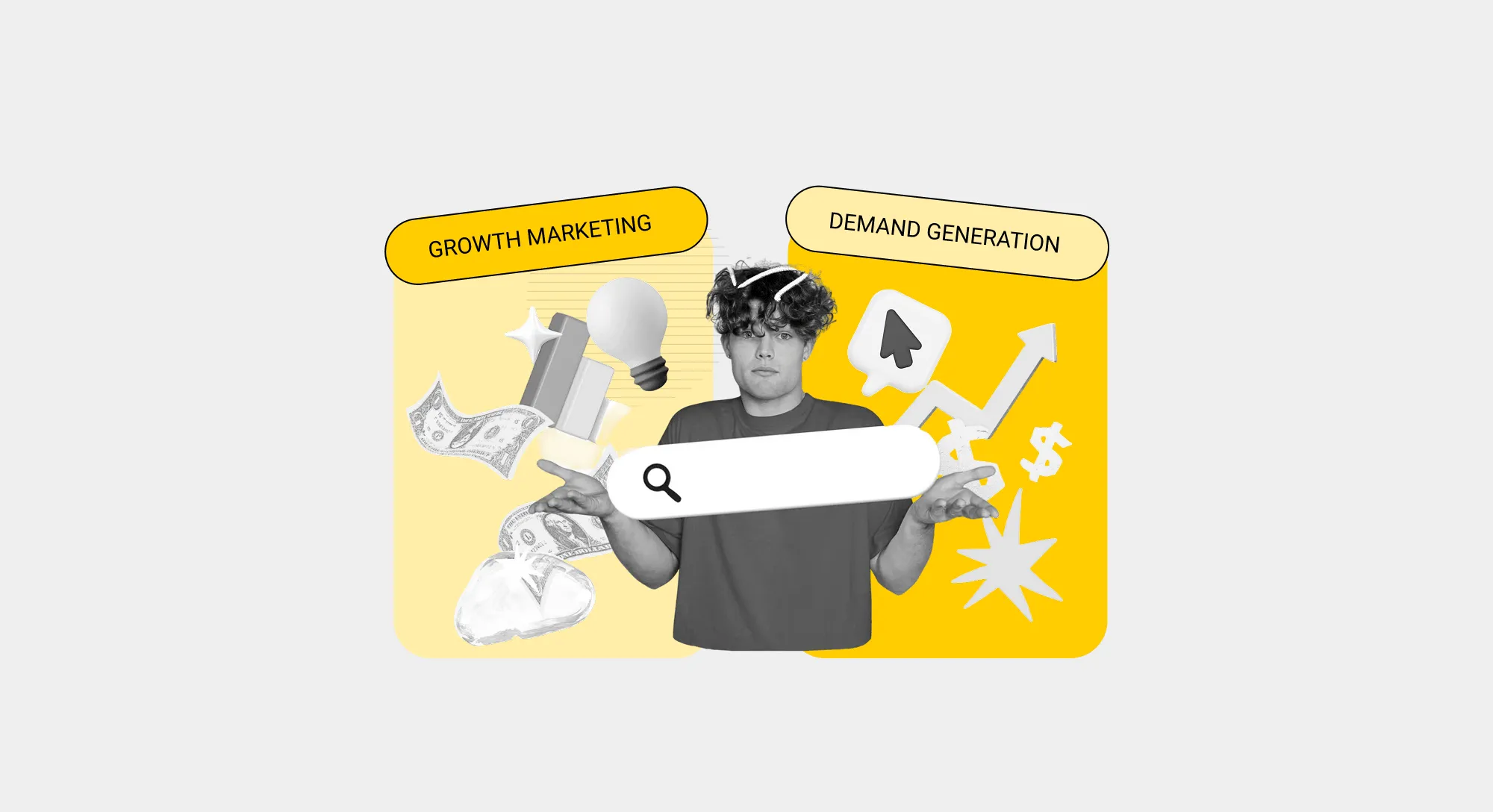


What makes demand generation different from growth marketing?
Get ready because we're about to go on a ride through the realm of marketing warfare.
Picture this:
Growth marketing relentlessly pursues sustainable growth while equipped with statistics, technology, and consumer psychology.
Demand Generation, in contrast, is an experienced strategist that captivates audiences with compelling content and enhances brand visibility.
This article will analyze their strategy's methods, objectives, and results.
We'll find the keys to maximizing the potential of your target market by navigating the minefield of customer acquisition, retention, and expansion. You can decide which route will lead your company to growth and profitability by the end.
Let the battle begin!
Understanding Growth Marketing
Growth marketing is not just about getting people to know your brand or generating more leads.
It is a comprehensive process that involves six steps called the "6 Levers of Growth," or AAARRR.
These six steps are:
- Awareness
- Acquisition
- Activation
- Revenue
- Retention
- Referral
The first three steps, awareness, acquisition, and activation, are about convincing people to believe in your brand and make a purchase. The last three steps, revenue, retention, and referral, are about maintaining their belief in and loyalty to your brand and getting new customers through referrals.
The core objective of growth marketing is to achieve growth, and everyone in the team works together towards this goal. They use data-driven insights to create a strategy to optimize the six steps.
Strategies and Platforms for Growth Marketing
Growth marketing is all about finding the best ways to achieve growth for a business. Growth teams do this in many ways and do not limit themselves to specific tactics or channels.
When deciding what to do, they only ask one question:
What is the best way to achieve our growth goals?
The most successful growth marketing teams focus on strategies that have a compounding effect over time rather than just one-off campaigns. For example, creating high-quality content can attract and convert leads today and for years to come. Conversely, running Facebook ads requires ongoing financial investment, and once the budget runs out, the leads stop coming.
That is why content is at the heart of most growth marketing strategies. Regular blog posts, SEO optimization, targeted and automated email marketing campaigns, repurposing content on social media, and creating lead magnets are all effective ways to achieve growth.
Growth teams focus on creating compelling content, building a loyal following, and achieving sustainable business growth.
Key Performance Indicators (KPIs) and Objectives for Growth Marketing
Regarding growth marketing, the most important thing is to achieve growth.
That is why growth teams focus on a metric called growth rate, which measures the rate at which the business grows.
However, achieving growth is not just about increasing the number of customers or revenue. It requires analyzing several key metrics that influence growth rates, including:
- Enhancing the number of people visiting your website
- Generating Marketing-Qualified Leads (MQLs), which are people who have shown interest in your business by downloading a lead magnet
- Transforming qualified marketing leads (MQLs) into sales qualified leads (SQLs) refers to converting individuals who have interacted with your business and are more likely to become customers.
- Retaining customers by reducing churn rates and increasing upsells and cross-sells
- Encouraging referrals from existing customers through direct referrals, testimonials, and case studies
By keeping a close eye on these metrics, growth marketing teams can identify areas for improvement and adjust their strategies accordingly. By consistently implementing these strategies, businesses can steadily grow and establish a group of devoted customers who will continue to support the organization.
This long-term approach helps to create stability and success for the business over time.
Growth Marketing Strategies
You might struggle to make enough money if you run an online store selling only a few products. The profit from each sale may not be enough to cover the costs of getting new customers. To solve this problem, you can suggest other products to your customers when they purchase or encourage them to purchase more items at once.
One approach is establishing a connection with your customers and encouraging them to return frequently.
Encouraging your customers to make repeat purchases can help reduce your advertising costs, as you won't need to constantly seek out new customers.
Email marketing provides an excellent opportunity to achieve this, enabling you to send tailored messages to your customers and showcase relevant products that align with their interests.
Focusing on selling more products to repeat customers is more effective than constantly acquiring new customers through advertising. Building a good relationship with customers and incentivizing them to return and make more purchases can lead to a loyal customer base.
Prioritizing Customer Retention
Do not forget about the customers you already have. They tend to be more receptive to purchasing from you since they have already demonstrated an interest in your product or service.
Furthermore, if the customers had a positive experience during their first purchase, they are more inclined to return for repeat business.
To ensure your customers keep coming back, examine your data and determine what is working and what is not. Building strong brand loyalty is critical to keeping customers engaged and generating more revenue. Implementing user-centric security features like Amazon passkeys can significantly boost retention by removing the barrier of forgotten passwords, making it easier for customers to return and interact with your brand.
Building strong brand loyalty is critical to keeping customers engaged and generating more revenue. This means focusing on making every interaction with your customers positive and providing top-notch customer service every time.
Highlight Attention-Grabbing Products
Some products are more popular than others and attract more customers. You must focus on these popular products to increase customers' chances of purchasing.
You can look at your product page analytics data to identify these popular products. Note which products get the most views and compare that to your sales data. The products that get many views but not many purchases are the ones to focus on promoting. Additionally, promoting products that complement each other well can be helpful.
In the long term, this can result in increased revenue and sales.
Refine Your Pricing Approach
Setting the right product price is crucial for attracting customers and generating sales. If customers perceive your prices as too high, they may choose not to purchase your products.
Conversely, if you price them too low, customers may believe they have poor quality and avoid them.
You can conduct tests to determine the best pricing strategy for your products. Try offering discounts and see how they affect your sales. With a devoted customer base that values your products, you can confidently increase your prices, capitalizing on their willingness to invest more in your offerings.
Growth Marketing Examples
Examples can be a great way to understand the difference between growth marketing and demand generation. In the following section, we will look at some real-life growth marketing campaigns.
These campaigns can achieve different goals, such as encouraging existing customers to refer others, engaging with new or potential customers, or engaging customers who are just starting to show an interest in your products or services.
Some examples of growth marketing campaigns include:
Dedication
The ultimate goal of your business is to keep the customers you have barely gained. In today's world, customers have numerous options on where and what to buy, making it crucial for brands to maintain customer loyalty. To increase customer loyalty, you must show them they are not just another name or dollar sign in your database.
You can offer various incentives to your membership program as a token of gratitude for their loyalty. Some examples of incentives include promoting exclusive access, sneak previews, and tiered status rewards.
By creating segmented loyalty campaigns, your brand can reinforce customer behavior based on historical conversions.
Word-of-Mouth Marketing
Marketers use their most effective advertising source, existing customers, to test and improve offers that can attract new users.
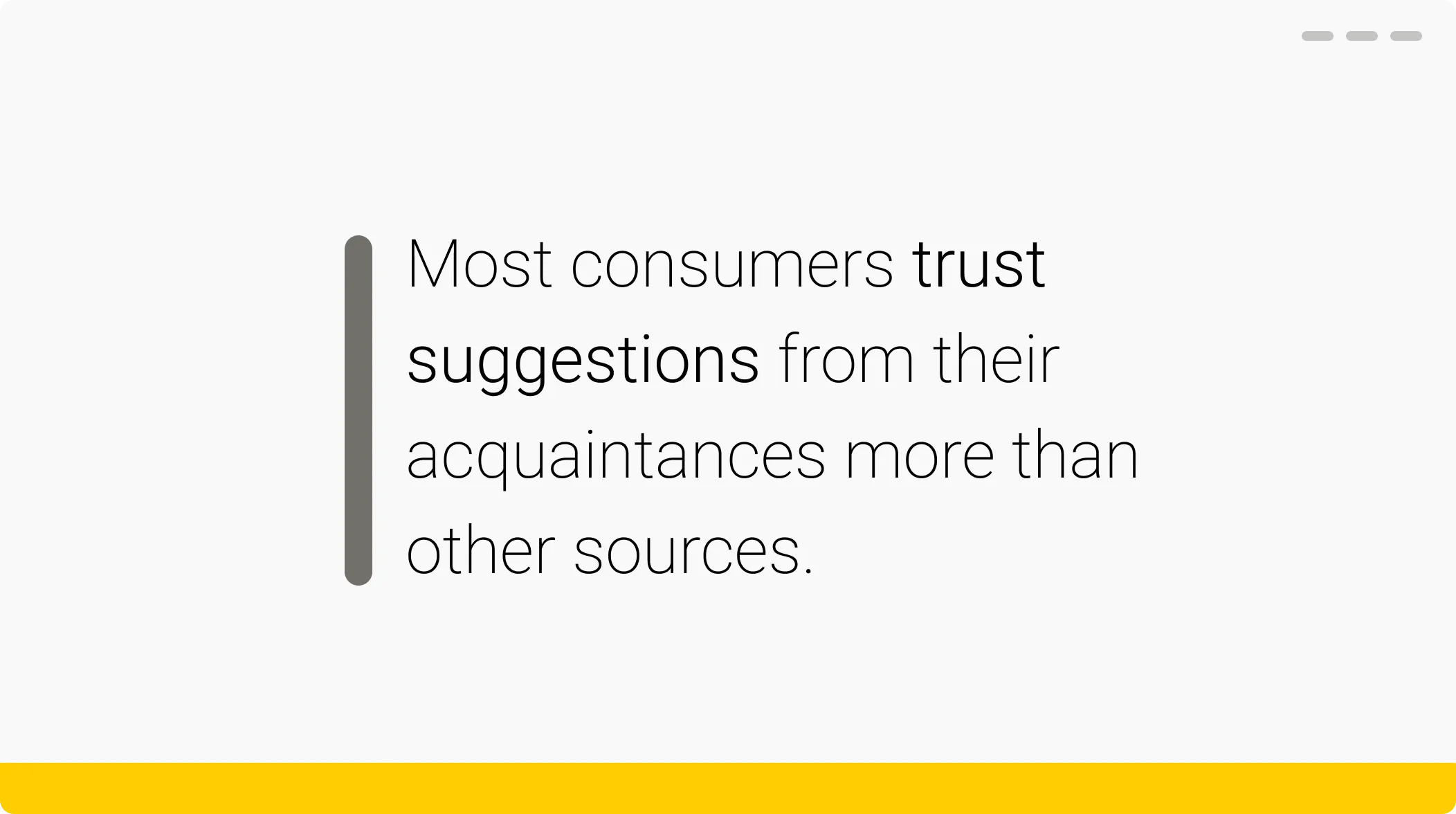
According to Nielsen’s global ‘Trust in Advertising’ study, around 88% of respondents said they trust recommendations from people they know more than other advertising channels. This strongly supports the idea that referrals (trusted social proof) can be a very effective way to engage new customers.
You should segment your audience and offer different incentives for their unique needs to get the most out of referrals. This helps to find the sweet spot that maximizes the number of referral conversions per dollar spent.
Successful SaaS companies provide excellent examples of referral programs that work. For example, Dropbox offers 500MB of free storage space to users who refer new users to their service.
This program helped Dropbox save on advertising costs and increase signups by a whopping 60 percent.
Onboarding Sequence
When a new customer registers for your product or website, you can learn more about them and provide a better experience. One way to do this is by setting up an onboarding sequence that guides them through the process and offers helpful content.
For example, you can begin with a friendly welcome message and questions about their interests and preferences. You could ask what products they are most excited about, or how they like to receive notifications.
Then, from their answers, you can continue the sequence and personalize future offers according to their particular needs and preferences.
Understanding Demand Generation
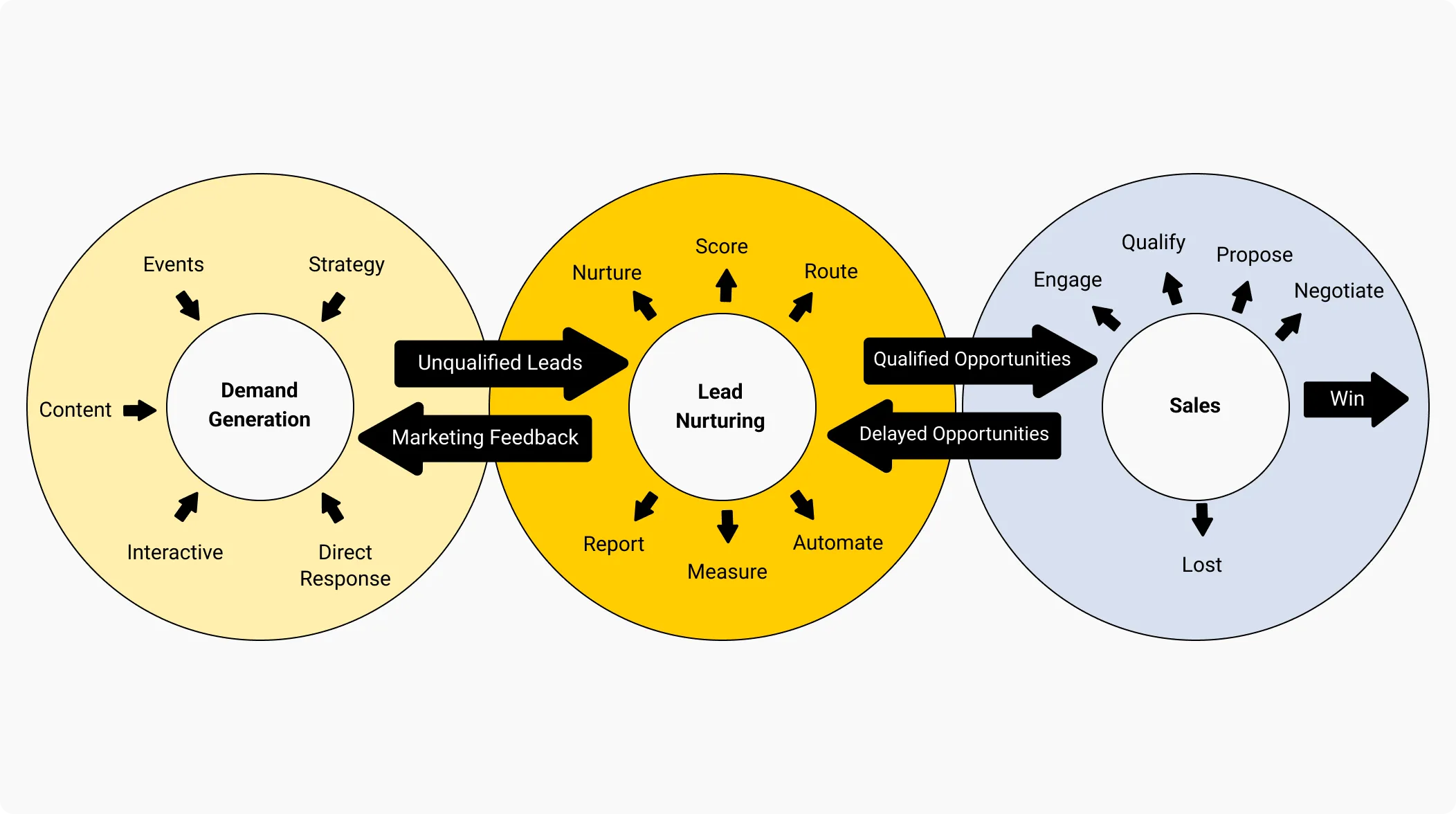
This marketing strategy uses data to generate interest and demand for a product or service.
It consists of the proper alignment of marketing and sales to capture potential customers and walk them through the sales funnel. This includes a variety of tactics and channels responsible for lead generation, nurturing, and conversion into paying customers. Similar to growth marketing, companies that use demand generation rely on data to inform their marketing decisions.
Strategies and Platforms for Demand Generation
Despite much overlap between growth marketing and demand generation strategies and platforms, one key difference exists. The fundamental difference is that demand generation involves the use of paid channels.
Some examples of these paid channels include:
- PPC and retargeting ad campaigns
- Paid social media ad campaigns
- Blog posts
- Creating a lead magnet or free tools, such as HubSpot's Website Grader
- Traditional and digital PR techniques
- Organic social media content
- Events
- Email marketing campaigns
You can use these paid channels to create demand for a product or service, while growth marketing focuses on more organic methods to attract and retain customers.
Key Performance Indicators (KPIs) and Objectives for Demand Generation
Demand generation strategies aim to generate revenue for a company.
While there are some overlapping goals between demand generation and growth marketing, they differ in their objectives.
Companies using demand generation strategies focus on metrics such as conversion rates, cost per lead, cost per acquisition, close rate, MQLs and SQLs, customer lifetime value, and average deal size.
Demand Generation Strategy
Let's look at demand generation strategies to help you better understand the difference between growth marketing and demand generation.
Simply put, a demand generation strategy is a plan to promote your products or services and attract new customers. The ultimate aim is to drive sales growth and propel the expansion of your business.
You should follow the following key steps to create a successful demand-generation strategy:
Raise Brand Awareness
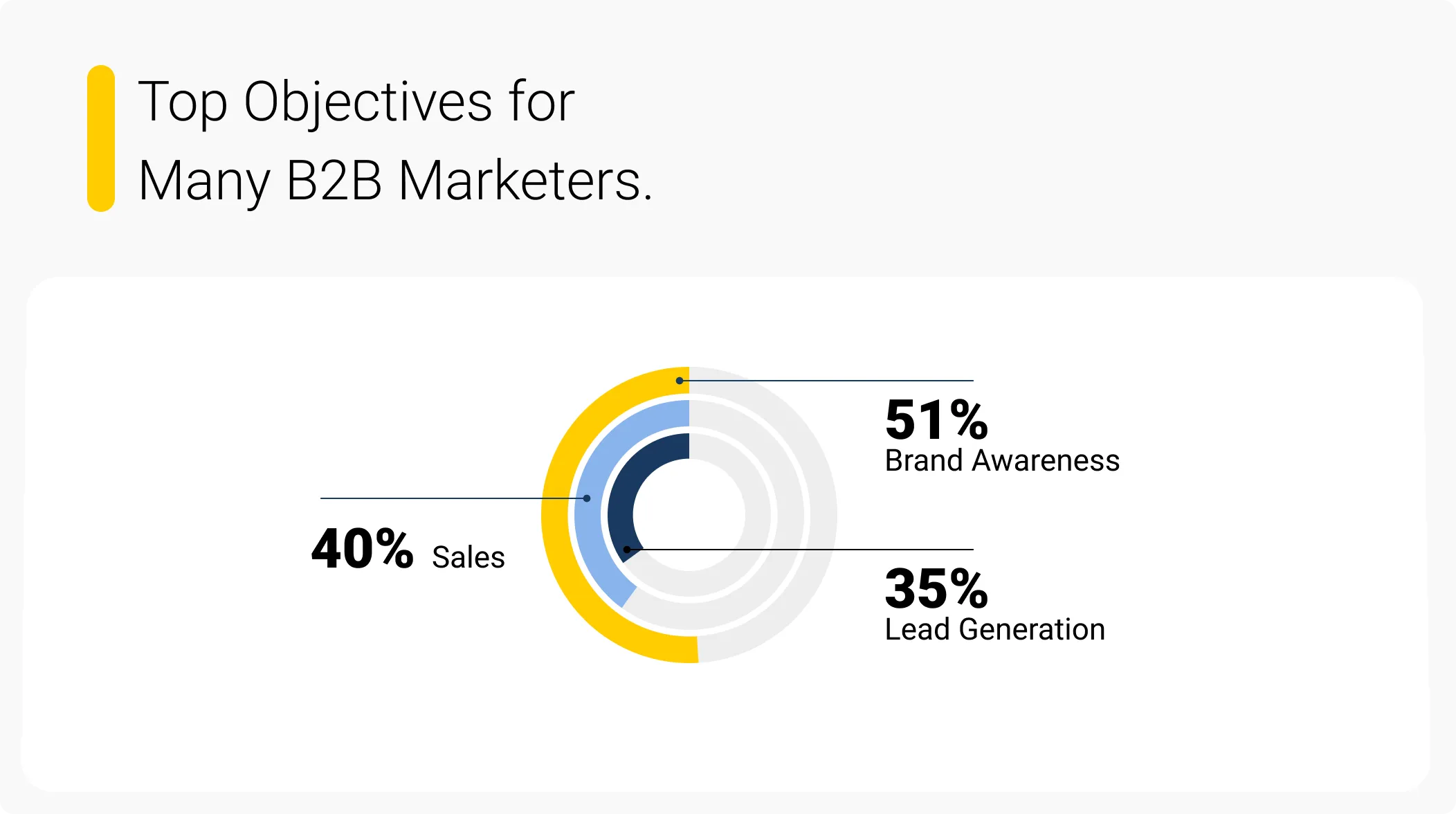
Brand awareness is a key objective for about 51% of B2B marketers, according to recent research.
In today's world, businesses must ensure that people know about their brand. Brand awareness is not just about getting someone's attention. It is about leaving a lasting impression on them so they trust your business when you solve their problems. The following things work well in building brand awareness:
- Creating helpful content
- Ensuring your website is in the search results
- Using social media to deliver your message
Create a Content Plan
To ensure successful demand generation, you must establish your business as an industry expert and build brand awareness.
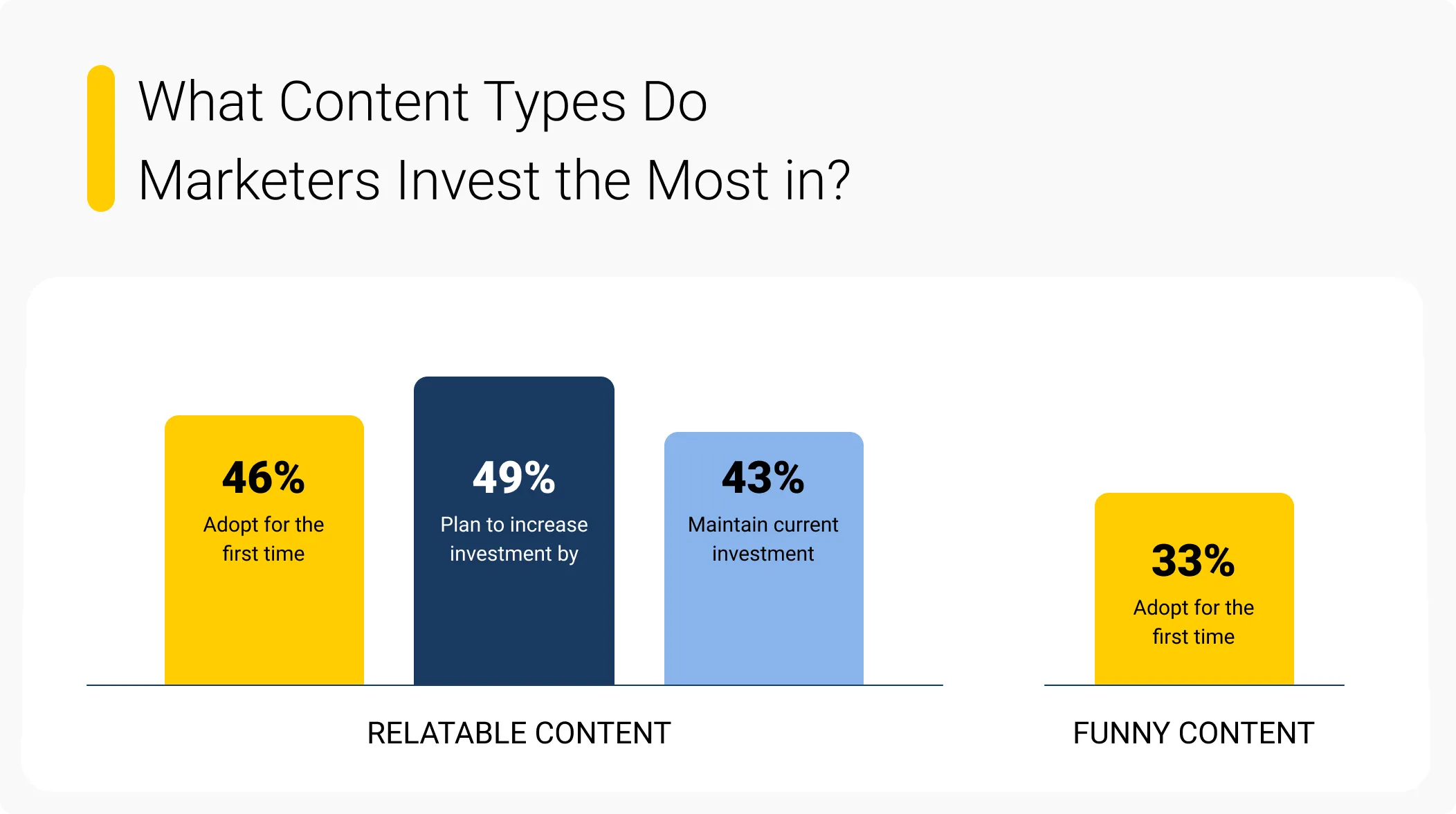
Relatable content is set to experience substantial growth as 46% of social media marketers adopt it for the first time, with 49% planning to increase their investment and 43% maintaining their current investment.
Furthermore, funny content will receive the second-highest investment among content types, with 33% of marketers planning to utilize it for the first time next year.
It builds trust, which is crucial in starting conversations about customer pain points.
To create industry expertise, you need a content marketing strategy that provides valuable and timely insights at every stage of the buyer's journey. Your content should offer solutions that address your customers' challenges. Always remember the primary reasons buyers choose a product or service provider.
Engage with High-Quality Leads
79% of marketers identify generating high-quality leads as their primary objective, emphasizing its crucial role in driving online business growth.
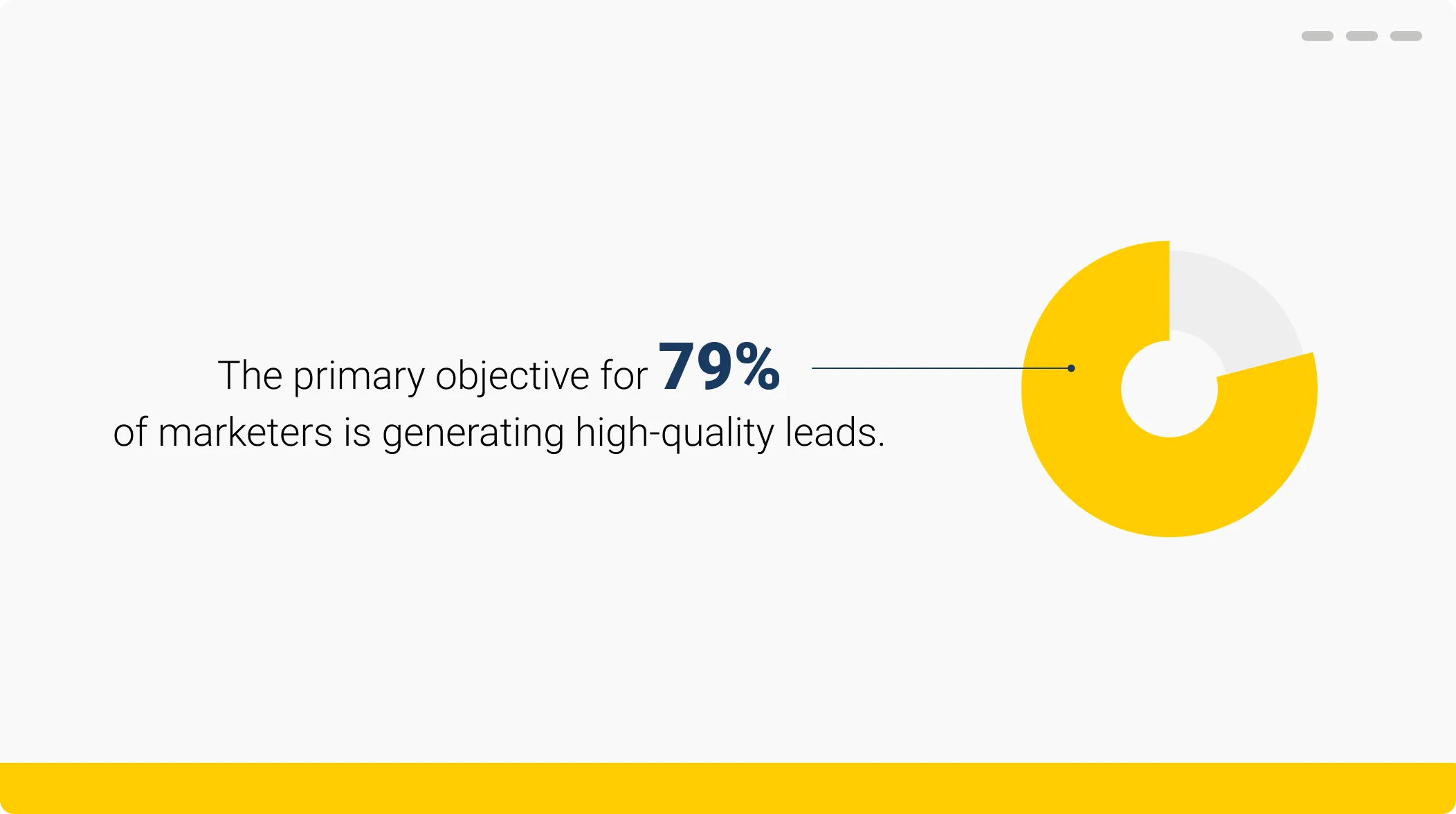
When generating sales and revenue, you should focus on finding high-quality leads ready to make a purchase. It is much easier to convert already-interested leads into paying customers.
This is done by establishing continued relationships with existing customers even after their purchase to turn them into outspoken brand ambassadors to promote your business.
The following strategies will help you in lead nurturing and developing long-term relationships:
- Lead scoring
- Personalized email campaigns
- Content marketing that provides value to the customer in each stage of the sales funnel.
Implement Account-Based Marketing
When you start getting steady leads through demand generation, you should focus on your most valuable leads to speed up sales.
That is where account-based marketing comes in handy.
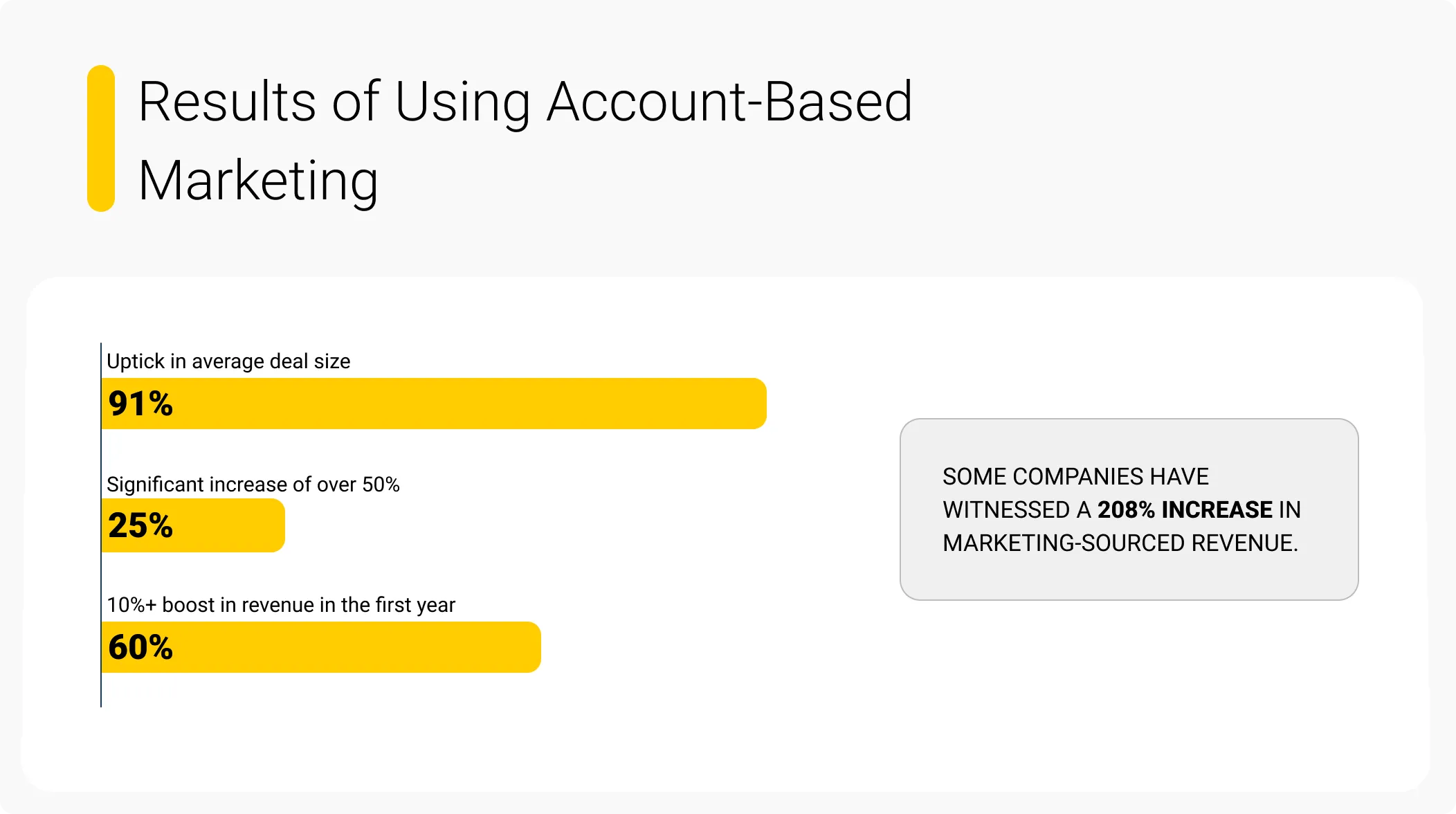
According to more recent research, companies using ABM continue to see significant deal-size growth: Forrester reports that roughly one-third of companies saw a 21–50% increase in deal size, and in some regions like Asia-Pacific, as many as 51–100% uplift was reported.
According to recent data, 60% of companies implementing ABM report at least a 10% increase in total revenue within the first year, and many also see a 200–208% boost in marketing-sourced revenue.
Account-based marketing focuses on building relationships with specific accounts instead of individual leads. By providing a personalized experience, the aim is to generate more revenue from fewer customers.
You must understand your target accounts and their needs to create a successful account-based marketing strategy. This involves selecting high-value customers and nurturing them through customized engagement and support.
One way to do this is by creating target company personas based on the ideal customers you want to attract. Find out their business goals, values, and the steps they take before making a purchase.
Once armed with this valuable data, you can customize your marketing content to address their pain points and inquiries.
This helps build trust and validation with your target accounts, making them more likely to convert into customers.
Collaborate with Strategic Partners
In-person business interactions have decreased, and digital marketing has become increasingly important. This means online interactions will continue growing, making online marketing essential for companies. However, managing pay-per-click (PPC) campaigns can be challenging, especially for newcomers.
One way to make that easier is by partnering with a third-party provider who can help you reach a curated, pre-screened audience. When PUMA partnered with Rihanna on the FENTY PUMA by Rihanna line, for instance, the company said it saw strong momentum in its women's business and cited the FENTY PUMA by Rihanna Creeper being called "Shoe of the Year 2016." In 2016, PUMA said its full-year sales increased about 10% on a currency-adjusted basis to around €3.63 billion.

Many businesses start on popular search or social media platforms, but may struggle to refine their messaging to target the right audience.
Working with a partner with an established audience can help you reach the right people more quickly. No matter what product or service you offer, potential customers are out there, and the right third-party partner can help expose your brand to those buyers.
Demand Generation Examples
It is important to have a solid demand generation strategy in place.
The following eight real-life examples are about companies that have done a great job with demand generation.
Provide Giveaway Products or Services
One of the best ways to attract people to your products or services is to offer something for free. Using this approach, you can effectively capture the interest of potential customers who may have reservations about investing in a product or service they have yet to experience.
Everyone loves getting something for free, after all!
You should not give away your full product for free. But rather, you can offer a free trial, a sample, or a discount to get people interested.
For example, Dropbox offers a free trial of its paid subscription so that users can test all the features before purchasing. This is an excellent way to get people interested in their service and show them what they offer.
Writing Guest Posts
Writing posts for other websites is a great way to increase your brand's reach and attract new leads. When you create articles for another site, you introduce yourself and your brand to a new audience.
For example, a well-known marketer, Neil Patel, writes guest posts for websites like Entrepreneur, Forbes, and The Huffington Post. According to him, guest posting is one of the most effective inbound marketing strategies.
Social Media Advertising
Social media is a fantastic way to interact with potential clients and create interest in your product or service. You can bring in new leads by sharing engaging content on social platforms like Facebook, Twitter, and Instagram.
By crafting compelling and valuable content with a clear call to action (CTA), you motivate your target audience to move forward and engage with your brand.
With social media marketing, you can successfully target specific demographics and extend your message to a larger, genuinely interested audience.
An example of a company that does this well is Buffer, a social media management tool.
They use their Twitter account to share articles and blog posts that are relevant and interesting to their audience, which helps to build their brand and attract new leads.
Engaging Content
It is an engaging way to get your audience involved with your brand. This type of content requires readers to participate in some way, whether by answering a question or polling. Many types of engaging content include quizzes, surveys, infographics, and games.
Advertising Campaign
A strategy that can effectively expand your customer base and increase brand awareness is to launch advertising campaigns.
You can reach many potential buyers by creating advertisements on well-known platforms like Google and Facebook.
Think twice about who you want to target and what message you want to deliver. Ensure your ads are interesting and relevant to your audience, and do not forget to include a clear call-to-action, like Get started now! or Learn more.
For example, Nike runs ad campaigns across different media channels, such as radio, TV, and the internet, to present its products to a larger audience.
Email Campaigns
Email marketing is an efficient way to keep potential and existing customers informed and engaged with your brand. Sending regular emails helps you build relationships and trust with your audience and eventually turn leads into loyal customers.
Personalizing your messages and including a clear call-to-action (CTA) that motivates readers to take action helps you create a more efficient email marketing campaign.
You can also categorize your email list based on demographics or past behavior to ensure you send the right message to the right people at the right time.
For example, Amazon uses email marketing to inform its customers about new products and promotions.
Webinars
Webinars are like online events where you can share information and interact with your audience in real time. They are a great way to advertise your business and attract new clients by providing valuable information about your product or service.
To ensure your webinar succeeds, you must choose a topic your target audience will find interesting and create an engaging presentation that keeps them interested. You must also promote your webinar beforehand so people can sign up and attend.
An excellent example of a company that uses webinars to reach and engage its audience is HubSpot, a famous marketing software company. They host webinars regularly to educate their audience about the latest marketing trends and tools.
Influencer Outreach
Influencer marketing is when you work with individuals with a lot of followers on social media or other platforms to advertise your brand. Leveraging this approach enables you to expand your reach and reach people with a genuine interest in what you have to offer them, boosting your brand visibility.
Similarities: Growth Marketing vs. Demand Generation
Growth marketing and demand generation are all about being innovative and targeted in your marketing efforts. Instead of sending your message to everyone, you focus on specific groups most likely to be interested in your offer.
To do this, you create content and lead magnets tailored explicitly to those customer segments so they are more likely to engage with your brand.
After capturing their interest, the key is to establish a meaningful connection, nurturing and qualifying leads to prioritize your efforts on converting the most promising buyers who are highly likely to make a purchase.
But all of this is not just based on guesswork.
Growth marketing and demand generation are data-driven strategies.
This means that you measure your progress using specific metrics and KPIs and use that information to optimize and experiment with your marketing tactics. It is not just about looking good for your boss. It is about making informed decisions to help your business grow.
Differences: Growth Marketing vs. Demand Generation
Growth marketing and demand generation have several differences.
Take a look at them below.
Referral
For growth marketing teams to achieve profitable customer acquisition and growth, they need to build a referral engine. This means generating leads through customer referrals, a cost-effective way to acquire new customers.
Let's examine the AAARRR framework for growth marketing to understand how this fits into the overall strategy.
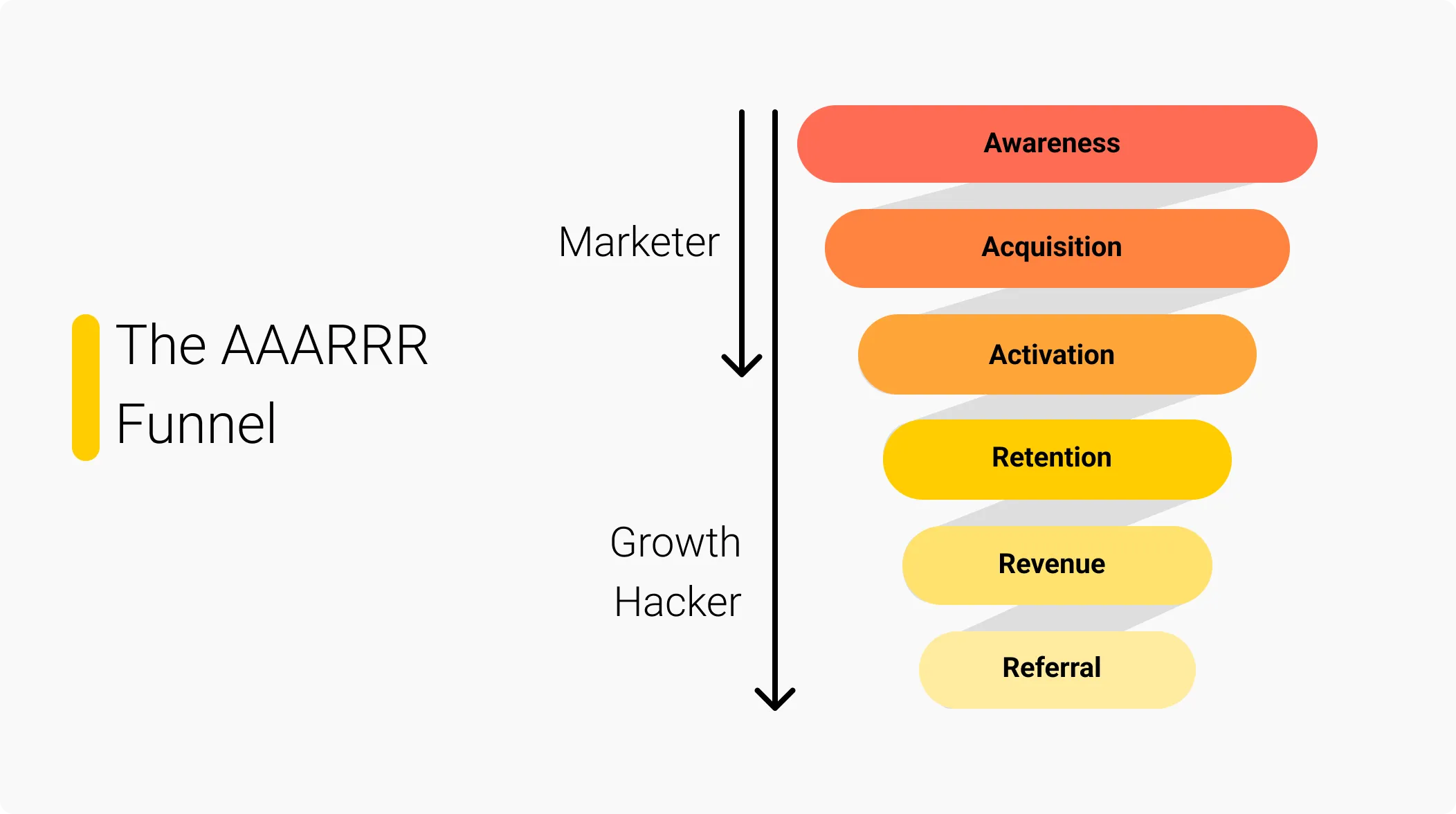
The first three stages (awareness, acquisition, and activation) focus on changing a prospect's beliefs to make a sale. But the last three stages (retention, revenue, and referral) aim to maintain those beliefs and turn customers into fans of your company.
Building a referral engine is a key part of the referral stage and is integral to the growth marketing strategy. While demand-generation programs may also focus on building referrals, they focus more on the traffic-led nurturing-sales flow. However, individual teams and companies may have different approaches to generating demand.
Growth vs. Revenue Focuses
While both growth marketing and demand generation aim to increase revenue, they have different focuses. Growth marketing is about optimizing every aspect of customer acquisition to achieve profitable growth, whereas demand generation is more focused on driving sales and revenue. You must note that while revenue is a critical part of growth, it is not always a reliable indicator. Growth marketing focuses on optimizing all the factors contributing to growth, which sets it apart from demand generation.
Objectives and Simulation
Growth marketing is all about numbers and hitting specific targets. Start with an endpoint, work backward from there, and ensure you meet those numbers. For example, if increasing website traffic is key to your business's growth, you may set an objective of increasing it tenfold over the next three years. With baseline data and the target number in mind, you can create a transparent growth model and know the monthly numbers you need to hit to reach your goal.
On the other hand, demand generation is more focused on the overall business plan and goals. For instance, demand generation may aim to retain or upsell a certain percentage of customers or set goals for marketing-influenced revenue. Unlike growth marketing, demand generation teams often have a broader focus and may work towards multiple goals simultaneously.
Organization Chart
Different teams often handle demand generation programs, such as the creative, strategy, content, and lead nurturing teams. In contrast, growth marketing teams are structured differently. They consist of a single cross-functional team that includes a growth marketer, designer, developer, and operations manager. Some companies build their growth teams in-house, while others outsource the work to a team that builds growth engines.
Outsourcing: Growth Marketing vs. Demand Generation
When considering hiring a marketing agency, many important questions arise, such as the cost, time frame for results, and potential risks. These concerns are valid.
But the most crucial question is:
How will you help us achieve our growth goals?
Because ultimately, if the agency can not deliver results, everything else does not matter.
Whether you are searching for a growth marketing or a demand generation marketing agency, the structure, costs, and capabilities of the two will not differ much. Instead, what sets agencies apart is their methodologies.
The best agencies will have a structured growth marketing or demand generation framework. These frameworks are systematic approaches to achieving results that have been battle-tested and proven to work. Avoid agencies with generic strategies or a repeating monthly menu of marketing tactics; instead of looking for those with winning strategies.
Which is Right for You?
When deciding which marketing strategy to go with, you should consider your business and where you are in terms of growth. Growth marketing is usually a good fit for companies in their early stages or startups looking to achieve high growth. On the other hand, demand generation can work for many businesses, but keeping customer acquisition costs low is crucial. Therefore, it might be more suitable for companies that are already established and have a bigger marketing budget.
Choosing the Right Path with AI bees: Growth Marketing or Demand Generation?
As an AI-powered company, AI bees understands the importance of making informed decisions regarding growth marketing and demand generation strategies. Both approaches have unique advantages and can contribute to the success of your business. We can help you navigate this decision-making process using AI technologies and data-driven insights.
Whether you choose growth marketing to drive rapid expansion or demand generation to foster long-term customer relationships, our AI solutions can help you achieve your goals.
Remember, your choice of strategy needs to be aligned with your particular business objectives, target audience, and resources at your disposal.
With AI bees by your side, we provide the expertise to make informed decisions and unleash the true power of your marketing strategies for remarkable results.
Let us guide you toward sustainable growth in the evolving digital marketing landscape.
FAQs About Growth Marketing vs Demand Generation
1. What makes demand generation different from growth marketing?
While demand generation focuses on awareness and interest gained through paid channels, growth marketing is about maximizing the end-to-end customer journey through data, psychology, and scalable strategies such as content, SEO, and retention tactics.
2. What are the 6 levers of growth in growth marketing and why do they matter?
The AAARRR framework-Awareness, Acquisition, Activation, Revenue, Retention, and Referral-guides growth teams in the performance optimisation of each stage of the funnel. These stages help businesses achieve sustainable long-term growth rather than short-term wins.
3. Why does demand generation rely more on paid channels than growth marketing?
Demand generation is designed to accelerate pipeline growth through PPC, paid social, retargeting, PR, and lead magnets. These various paid activities quickly drive high-intent leads; in contrast, growth marketing leans on compounding and organic tactics like content and email in its pursuit of growth over time.
4. What KPIs should businesses track when comparing growth marketing and demand generation?
Growth marketing focuses on metrics related to growth rate, MQL-to-SQL conversion, retention, churn reduction, and referrals. Demand generation tends to prioritize cost per lead, cost per acquisition, close rate, deal size, customer lifetime value, and marketing-influenced revenue.
5. How do I decide whether my business needs growth marketing or demand generation?
Growth marketing is best for startups or early-stage companies that want scalable, long-term growth. Demand generation fits larger, established businesses with bigger budgets that require predictable pipelines with higher lead volume and faster revenue impact.

Make Loss Impossible
with Performance-Based Marketing

Personalized Campaigns with
Precisely Selected Prospects
.svg)
Analysis From Your Dedicated
Account Manager

with a Team of Growth Hackers
we Develop your Tailor-Made Strategy

.webp)


%201.svg)
.svg)


.svg)
.svg)


.webp)