
.svg)


.webp)


In the modern competitive business world, each company is struggling to grow and make strides ahead of its rival companies. The competition is an endless struggle to acquire market share and stay competitive.
But then why do some businesses skyrocket to greater heights whilst others seem to struggle with keeping pace?
And here is where the growth marketing strategies come in. With these structures in place, you will know what the channels to target, trace your customer journey and explore various strategies to grow.
This article provides an insight into some of the best growth marketing frameworks and how you can implement them to grow your business. Thus, whether you are a startup that wants to scale up or a well established business that wants to grow in new ways, read on to know how to accomplish what you want to do via strategic growth marketing.
Understanding Growth Marketing
Growth marketing is a marketing approach that relies on data to identify and capitalize on growth opportunities without overspending. You can achieve this through rapid experimentation and learning. Unlike traditional marketing, growth marketing is not about finding quick fixes to boost short-term revenue.
Instead, it borrows a concept from the lean startup methodology, which starts with the assumption that the ideal strategy or messaging is unknown, and the only way to establish it is through testing. Growth marketers typically follow a three-step process to drive their campaigns forward.
First, they develop a hypothesis, then develop and execute an experiment, and finally, analyze the results to inform future investigations. This helps identify growth opportunities and focus efforts on them in the short and long term.
An example of this would be: a growth marketer may hypothesize that through the use of a promotional email campaign focused on millennials they could reach a 5% conversion rate which is within the SaaS email benchmark norms.
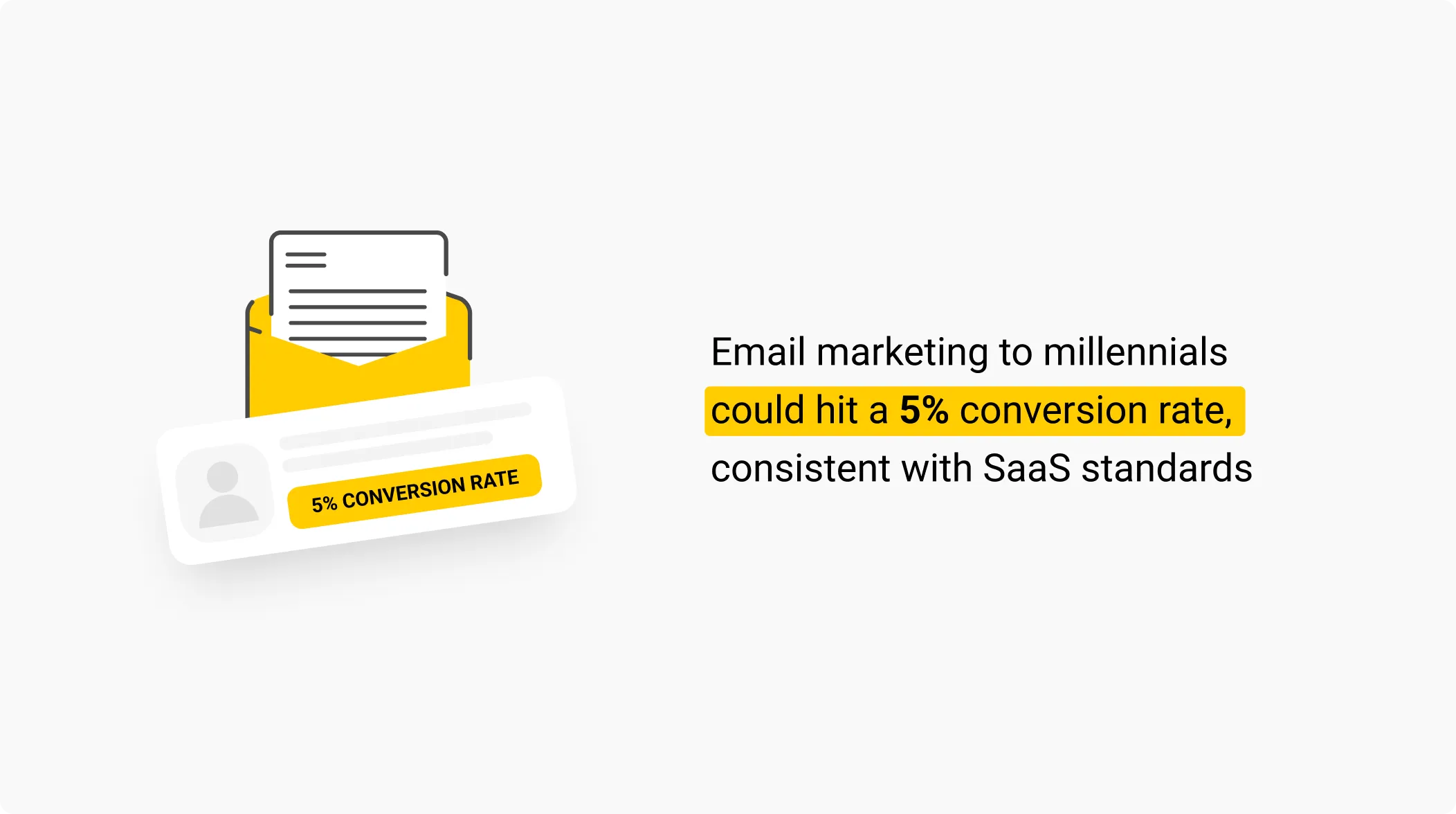
They would then design and run an experiment to test this hypothesis, reviewing the data to confirm or disprove it. If the hypothesis is correct, the growth marketing team will have influenced an increase in new subscriptions within the target segment. If not, they will know that promotional emails do not have an impact and avoid wasting resources on similar campaigns in the future.
Growth marketers can use audience segmentation and multivariate testing to determine what resonates best with different sub-segments, informing more personalized communication.
Growth marketing is applied to the entire marketing funnel, not just the top-of-the-funnel-like traditional marketing efforts. Successful growth marketers must understand various digital marketing strategies and tactics to efficiently achieve organizational goals and objectives without overspending.
Growth Marketing vs Traditional Marketing
Traditional marketing focuses primarily on the product and the top of the funnel. Its goal is to build awareness and create emotional connections with the audience.
Growth marketing, on the other hand, takes a broader view, it looks at the entire customer journey, optimizing every stage from awareness to retention and referrals.
Key Differences
Focus
- Traditional marketing: Product-centric, aimed at creating brand awareness.
- Growth marketing: Customer-centric, improving every part of the funnel, awareness, activation, retention, and referrals.
Approach
- Traditional: Sets a goal and invests heavily in one or two channels.
- Growth: Relies on continuous experimentation to find what works best.
Why Experimentation Matters
Traditional marketing campaigns can be expensive and hard to measure. It’s often unclear whether increased brand recognition is due to the campaign or other factors.
Growth marketing, on the other hand, applies data-driven testing to decide. For example:
- In one of the regions, a growth marketer may use LinkedIn ads geotargeted.
- They would then use the metrics of awareness as a measure of impact with other markets.
- Depending on the findings, they would be able to test new messaging or media, and improve the strategy with the help of constant experiments.
Finally, growth marketing is not a guessing game, it is learning quickly and replicating what is working. It makes marketing a continuous process of exploration, enhancement and quantifiable influence. It is what makes it much more flexible and efficient in the modern information-based world.
Traditional Growth Marketing Frameworks
It is hard to say whether cavemen were practising marketing, but we know that marketing has been an important part of business for a long time. As time has passed, marketers have developed different models and frameworks to help them do their jobs better.
In the following paragraphs, we will explore some old models.
7Ps Marketing Mix
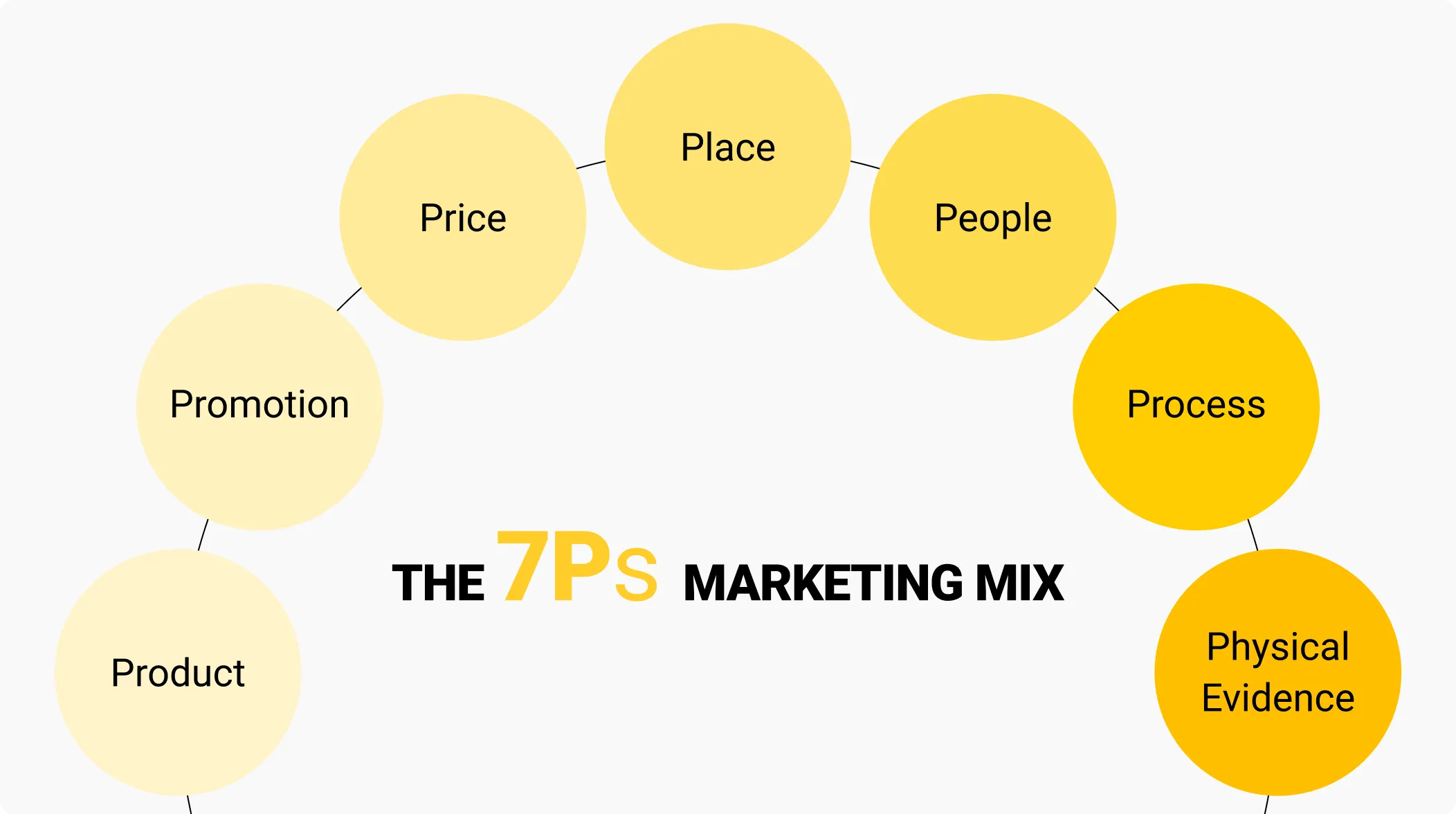
This business model has been used for a long time and is a way to think about every step of your business strategy.
- The model is called the 7P model, and each "P" stands for something important:
- The initial P means product, and this implies that you have to think of what you are selling.
- The second one is the price P, and it was determined that you need to calculate how much it will cost.
- The third "P" is place which means where will you sell your product.
- The fourth P is the P of promotion that implies that you should consider the way you are going to approach people to attract their attention to your product.
- The fifth "P" here is the people and it entails that you should be able to take into consideration the people who will be involved in the process of making, promoting, and selling your product.
- The sixth "P" is process, which implies that you must determine how to deliver your product to the customers.
- And the seventh "P" is that of physical evidence that is, you should consider how you will demonstrate to people that your business is real and worthy of trust.
When using this model, you can closely examine every aspect of your business and ensure you are doing everything possible to make it successful!
STP Marketing Model
Have you ever wondered how companies deliver personalized and relevant messages to their audiences?
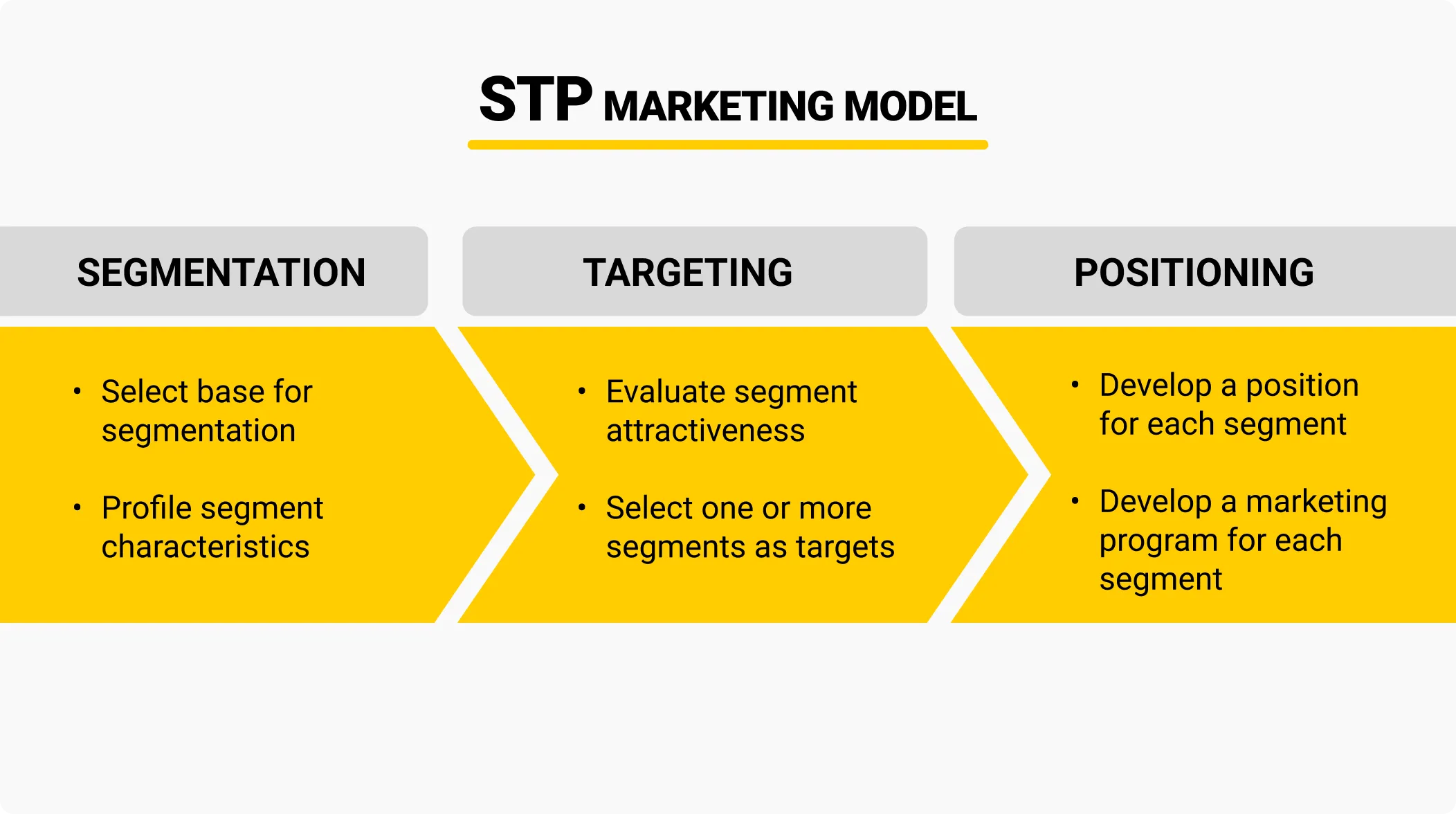
One approach they use is the SPT model. It is a top-down approach that focuses on how a company addresses customers. By using this model, companies can divide their audience into different sections, identify who will be most receptive to their product, and determine how to make it the most appealing to that audience.
This approach has been instrumental in helping many companies shift to utilizing social media to deliver content.
Porter's Five Forces
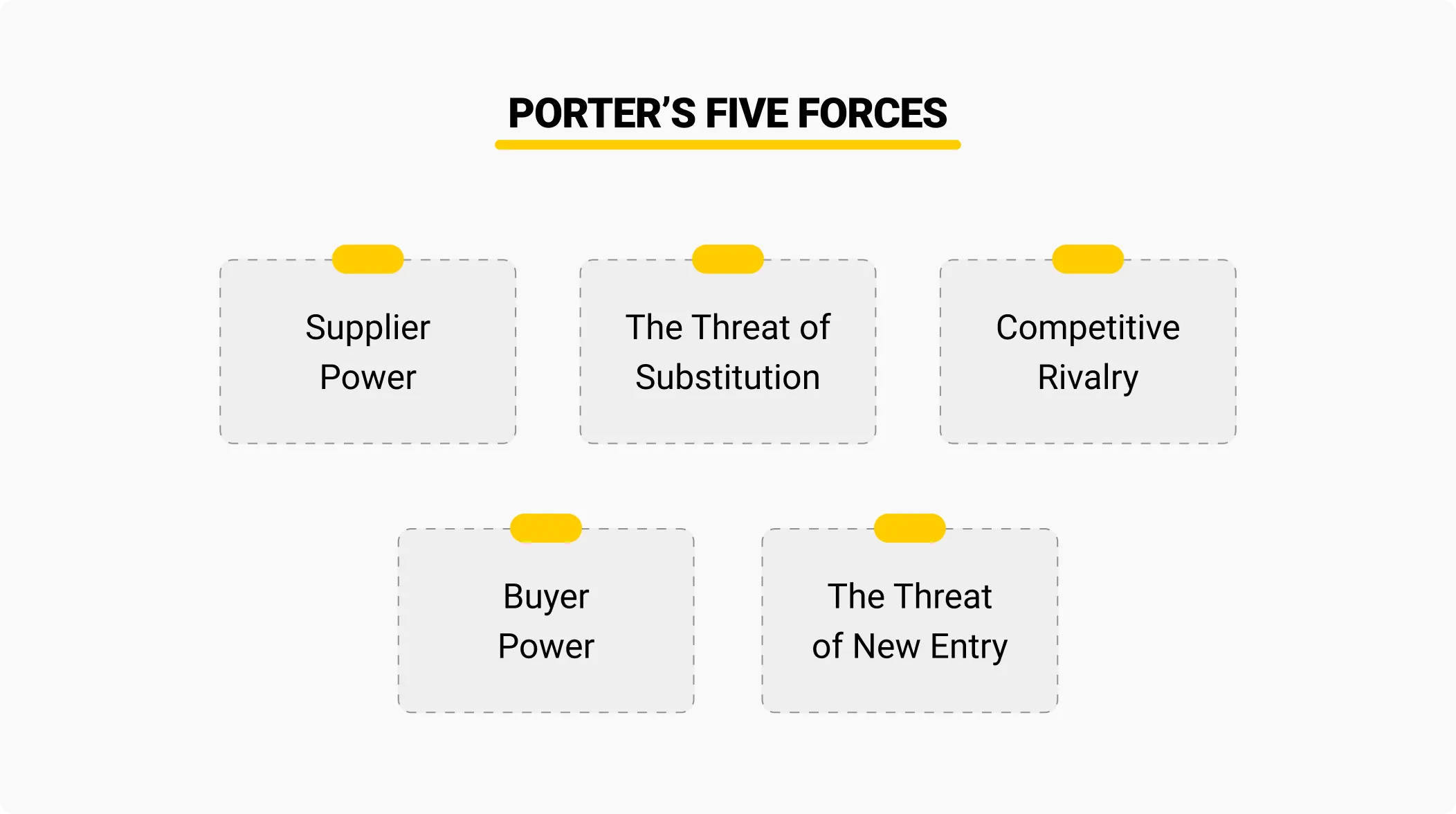
It is different from the other models because it focuses on factors outside the company that can impact how much money the business makes. It looks at five main things that can affect profitability:
Supplier Power
- How many other suppliers are in the market?
- What makes them different?
- How much do they charge for their products?
Buyer Power
How much influence the customer has on the decisions made by the company?
The Threat of Substitution
How does your product compare to similar products available in the market?
The Threat of New Entry
It refers to any obstacles you might face when entering a new market.
Competitive Rivalry
It refers to any outside forces that can impact how well your product performs compared to the competition. By analyzing these five factors, you can determine your business environment's competitiveness and make better decisions accordingly.
Modern Growth Marketing Frameworks
Let's focus on some of the more recent marketing models.
These models may not have been around as long as the traditional ones, but they provide the current marketing climate and are particularly relevant to startups.
Pirate Metrics or "AAARRR!"
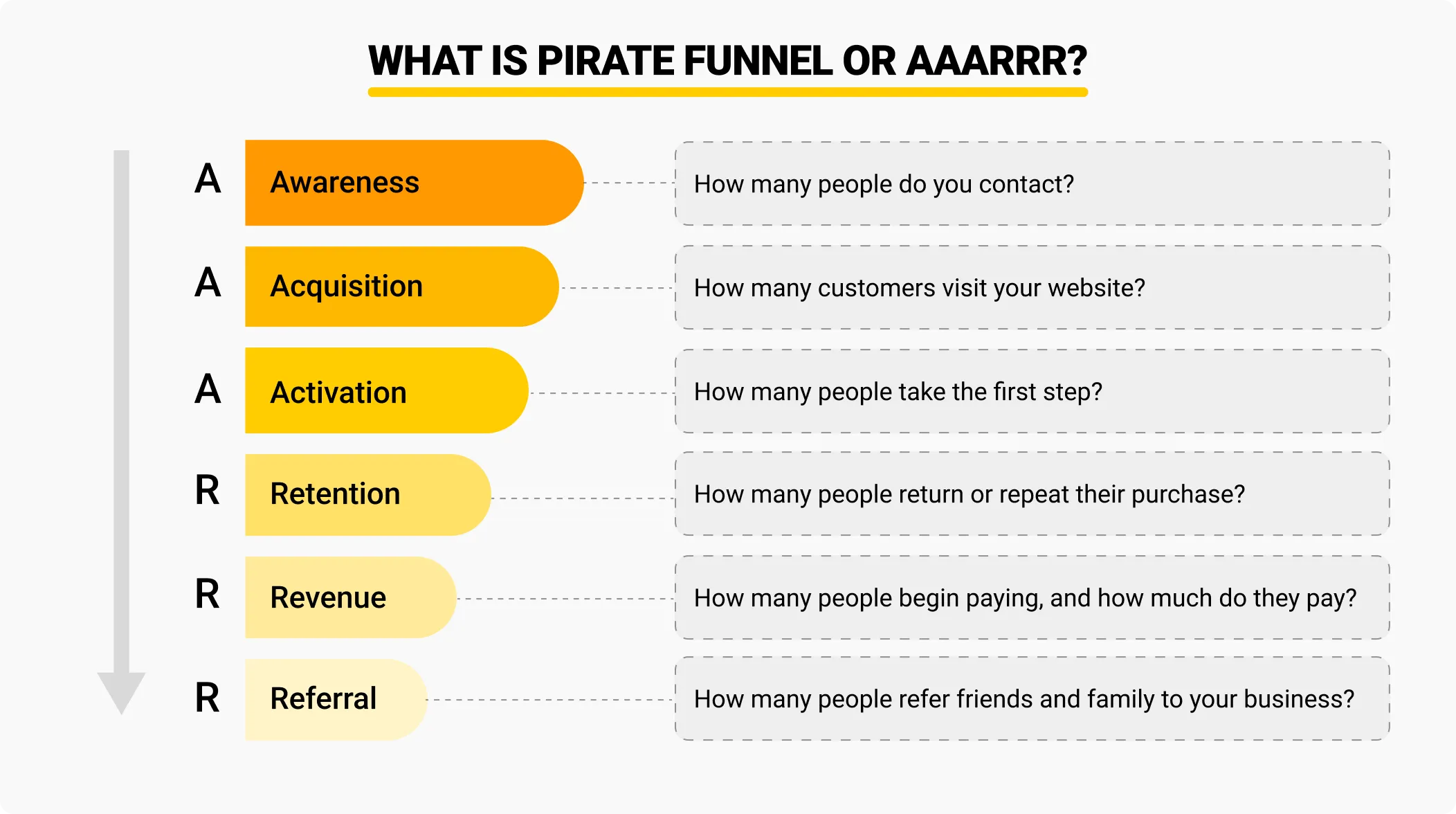
The Pirate Funnel, or the AAARRR framework, is a methodology to obtain insights and answers for each funnel stage. Let’s understand what each letter means:
Awareness
The first stage of the funnel is crucial, as it sets the tone for the entire process. This is where you generate awareness and attract new customers to your brand. To do this effectively, you must understand which advertising channels work best for your business. For example, you might focus on social media, landing pages, or email marketing.
To measure the success of an advertising campaign, you must track certain metrics or "vanity metrics" like the number of visitors to your website, social media impressions, click-through rates, and session length.
These metrics can vary depending on the channel used, but the ultimate goal is to enhance brand awareness and drive traffic to your website. The behavior and preferences of customers can be learned as they pass through each funnel stage, i.e. the awareness, conversion, retention and referral. With this information obtained and a marketing approach adjusted to this data, you will be able to generate a virtuous cycle resulting in a sustainable growth and profitability.
Acquisition
In the second stage of the funnel, the goal is to get customers to interact with your business, but it is not just about getting as many customers as possible. Quality is more important than quantity here because if customers do not move through the rest of the funnel, all the effort put into acquiring them goes to waste.
So, we must ensure we attract the right customers to our business. To do this, we use buyer personas. These are profiles of the ideal customer that we create based on research and data analysis. Once we understand our target audience, we can develop growth experiments and strategies tailored to their needs and preferences.
Activation
In the third stage of the funnel, the goal is to create a strong connection between your product or service and the customer. You want to ensure they are impressed with your offer and eager to engage further. To achieve this, you can again turn to buyer personas to understand your customers' pain points and how your product can help them.
You can also ask for feedback from your customers to know what they value most about your product and focus on strengthening those areas. Most digital products or services have an onboarding process, so examining this process and seeing how customers respond is essential. By doing so, you can make any necessary changes to improve performance and increase customer engagement.
Retention
Customer churn refers to when a company loses customers.
According to Forbes, “the difference between a 2.5% churn and a 5.0% churn could be the difference in building a 50% larger business in a five-year period of time.
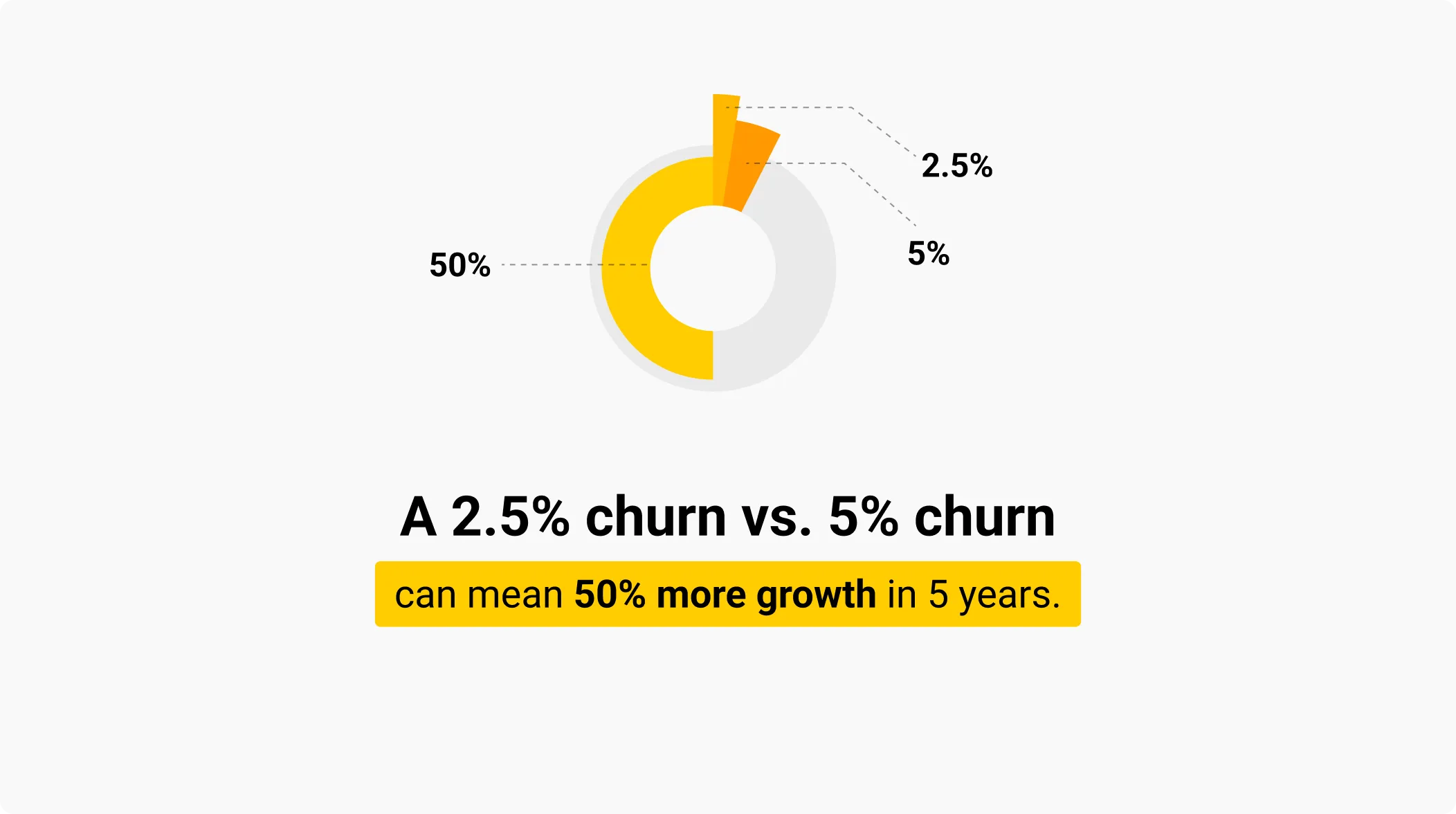
This is an important metric for marketers to track because acquiring new customers can be costly. That is why focusing on strategies that retain existing customers is crucial. Marketers can improve retention rates and prevent customer churn by understanding what is most important to customers.
Revenue
This part covers the customer lifetime value (CLTV) which quantifies an amount of revenue a company would obtain out of a customer within the time of relationship between the customer and the company. Customers that continue to spend money with a firm have a higher CLTV than those that do not.
The reason why it is important to know the CLTV is that it assists companies to know the customers who are most valuable to them in the long run. Through this information you will be able to better target such customers and conduct marketing activities that are more responsive to their needs. Companies can maximize their profits and grow their business by focusing on the customers who will likely stick around and generate revenue.
Referral
In the last stage of the Pirate Funnel, the focus is on creating happy customers who will refer others to the business. This can lead to more sales and long-term customers.
The Net Promoter Score (NPS) is a popular measure of customer feedback. For example, you might ask a customer to rate the likelihood of recommending the business to friends or family on a scale of 1 to 10.
Other ways to encourage referrals include social media sharing buttons, reviews, and testimonials and inviting friends to use the service.
The G.R.O.W.S. Framework
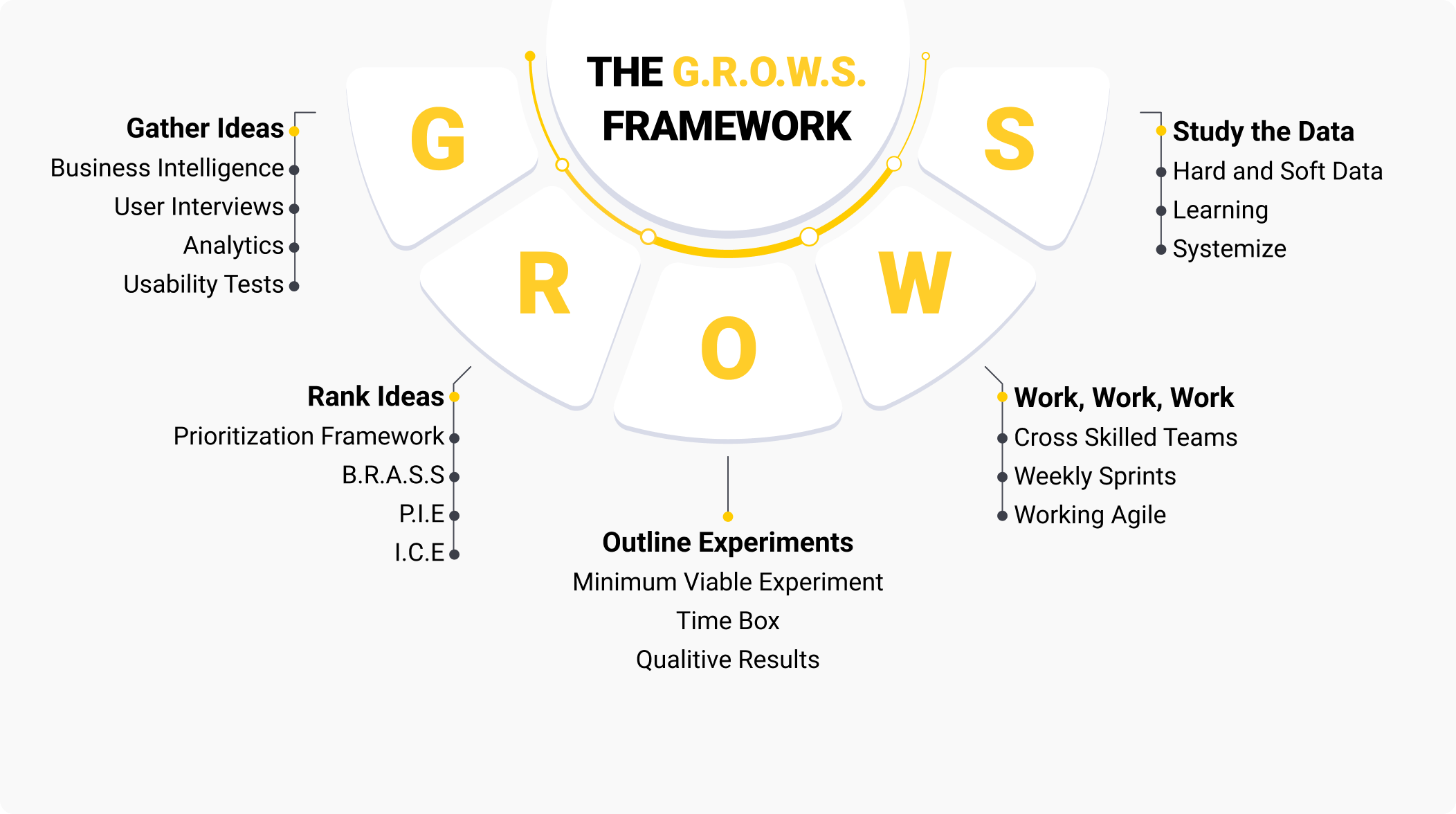
The G.R.O.W.S. process is a handy tool for growth marketers and hackers to conduct marketing experiments. A five-step loop guides teams to develop, execute, and analyze experiments. Here are the five steps in the G.R.O.W.S. process:
- Gather Ideas
After analyzing the Pirate Funnel data, you can see what needs to be done to solve your business's growth issues. To tackle this problem, you should identify the One Metric That Matters (OMTM), which is the primary objective of your first experiment using the G.R.O.W.S. process.
To gather ideas for your experiment, involving people from various departments and perspectives, not just the marketing team, is helpful. Doing so allows you to compile a backlog of potential solutions for future experiments.
When generating ideas for experiments, consider analyzing your competitors' marketing funnels, getting customer feedback through user testing, and utilizing software tools like Hotjar to gather data on customer behavior. With these tactics, you can create experiments with the best chance of success.
- Rank Ideas
Growth marketing can be tricky because you usually try to make things happen quickly without spending too much money. You must review your ideas list to succeed and determine which will work best. A couple of frameworks can help you with this process:
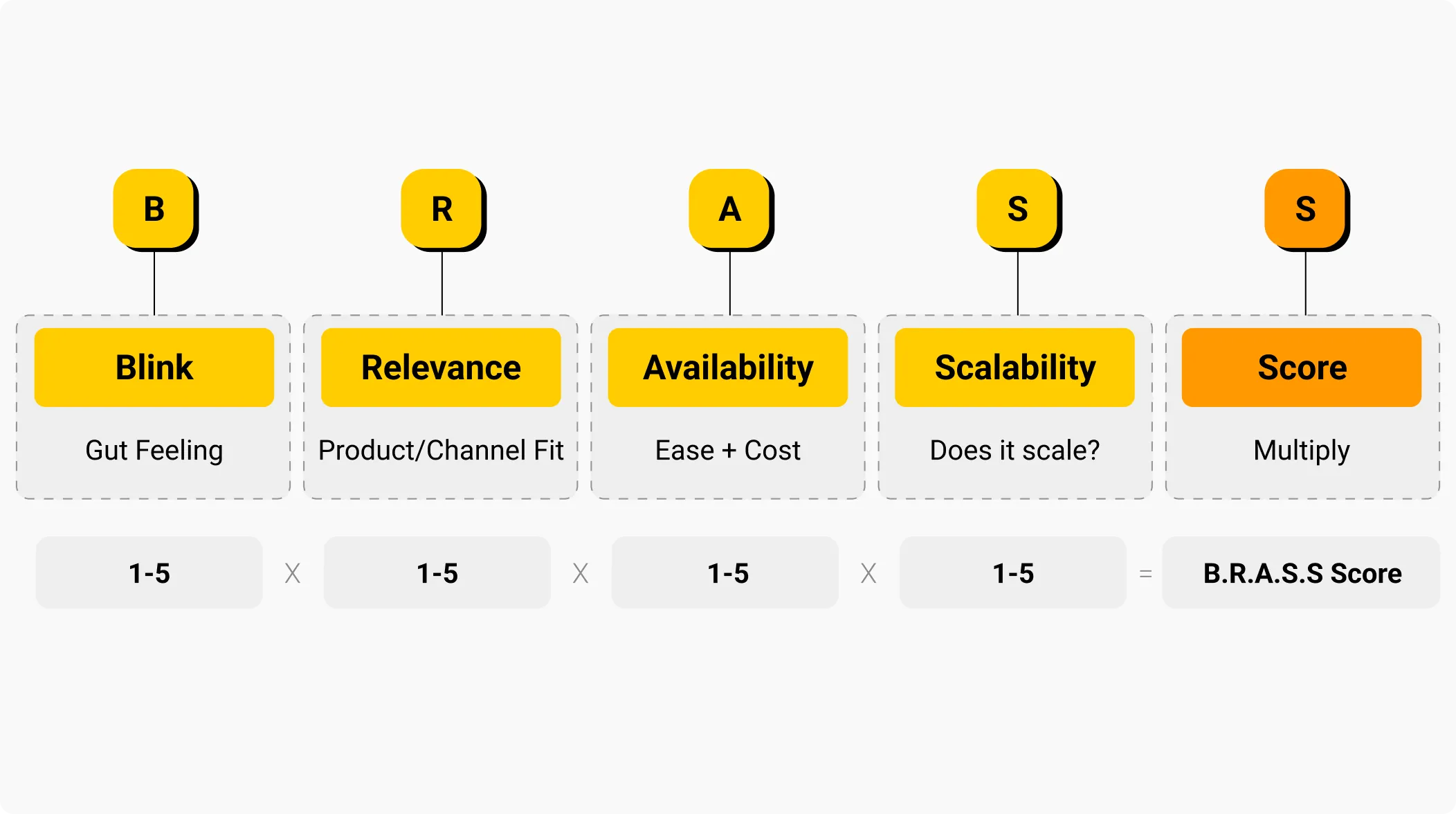
1. The B.R.A.S.S. Framework: This framework looks at Blink, Relevance, Availability, Scalability, and Score. It helps you figure out which acquisition channels you should test first. The image provided illustrates how to evaluate and rank ideas, with the highest-scoring idea being the one to focus on first.
2. The P.I.E. or I.C.E. Frameworks: They help you evaluate retention, referral, and conversion optimization ideas. P.I.E. stands for Potential, Importance, and Ease. I.C.E. stands for Impact, Confidence, and Effort.
Using these frameworks, you can prioritize your ideas and focus on the ones with the best chance of success. This will save you time and money in the long run and help you achieve your growth goals.
- Outline Experiments
This is the experimental planning part of the process. There are several things to consider at this stage. We must first of all determine when the experiment is to be done. Normally, this translates to 2-4 weeks, and we must make sure that we have sufficient time to handle the investigation and data analysis process.
We must also ensure we have the necessary tools and resources to experiment. If we need additional software, a bigger budget, or specialized skills, we must ensure we have those lined up before we start.
One should also wonder who should be involved in the experiment. Is it necessary to consult the higher-ups or can we begin off fast and with minimum supervision?
We would prefer growth marketing experiments that you can execute to be quick and cheap and unrelated to the lengthy approval process and new tools.
- Get to Work
And now it is the moment of action: You want to implement your strategy and make everybody involved! Growth hacking frequently entails sprints, which divide the process into brief and manageable cycles to experiment with ideas. In order to make the most of your time and not to spend an extra hour on the pointless delays, it is significant to maintain the channels of communication active in your team. Make them all understand what is required and what they should do so that later you do not have to repeat or explain things again. This will assist you in proceeding with your experiment in a fast and efficient manner.
- Study the Data
After running the experiment, you must gather all the data and present it in a way that is easy to understand. Graphs and pie charts are great visual aids to make the information more accessible.
Congratulations if the experiment was successful and the data support it! But if it did not work out, do not worry. Simply go back to step one and start the process all over again.
The Bullseye Framework
Weinberg and Mares created this framework, a tool you can use to determine the most promising strategies for your business. Let’s look at its steps:

Brainstorm:
Before ruling out any traction channel, brainstorm reasonable ways to use each one. Even if you initially think a particular channel will not work for your company, try to develop ideas to make it work. Create a spreadsheet listing all the traction channels and your ideas for each.
Include a scale of 1-5 to rate the potential, cost to acquire new customers or users, estimated reach, and duration for a cheap test on each channel. This will guide your thinking and help you determine which channels are worth pursuing.
Rank
After you have listed all the traction channels and come up with some ideas on how to use them, it is time to sort them out. The Bullseye Framework uses three rings to categorize the channels. The outer ring represents the long shots, which are unlikely to work but worth a try. The middle ring is for the channels with potential that might work if you execute them correctly. The inner circle represents your best options that are likely to be successful. Place each channel into one of these three categories based on how promising you think they are.
Prioritize
So, now that you have ranked all the traction channels into three categories based on their potential, it is time to focus on the innermost circle. If you have more than three options in this circle, it is time to narrow them down to the top three that will significantly impact your business. Doing this lets you prioritize and focus on the most promising traffic channels.
Test
Once you have picked your top three channels, it is time to experiment with them to see how effective they are. However, you should do these tests quickly and inexpensively to avoid wasting resources.
During the testing phase, you should be trying to answer questions like:
- How much does it cost to acquire customers through this channel?
- How many customers can you reach through this channel?
- Are the customers you attract through this channel the right ones for your business?
If none of the three channels produces the desired results, return to the drawing board and test some new ones. But if one of the channels shows promise, it is time to double down and focus your efforts on it.
Focus
Once you have found a traction channel that works well, you need to focus on it and try to get the most out of it. Remember that different channels may work better at your product's lifecycle stages. For example, it may be hard to get a viral effect when your user base is small, or sales may be harder to achieve when you have a large user base.
But once you have reached a plateau in a certain channel, it is time to start exploring new options and returning to the bullseye to find the n
ext best traction channel.
RACE Marketing Framework
The RACE framework offers a four-step approach that assists brands to connect with their customers through different online marketing efforts. Before diving into the four steps initial planning involves crafting a unified digital strategy defining goals, and setting up governance. This stage might also include assigning resources to bring about digital change.
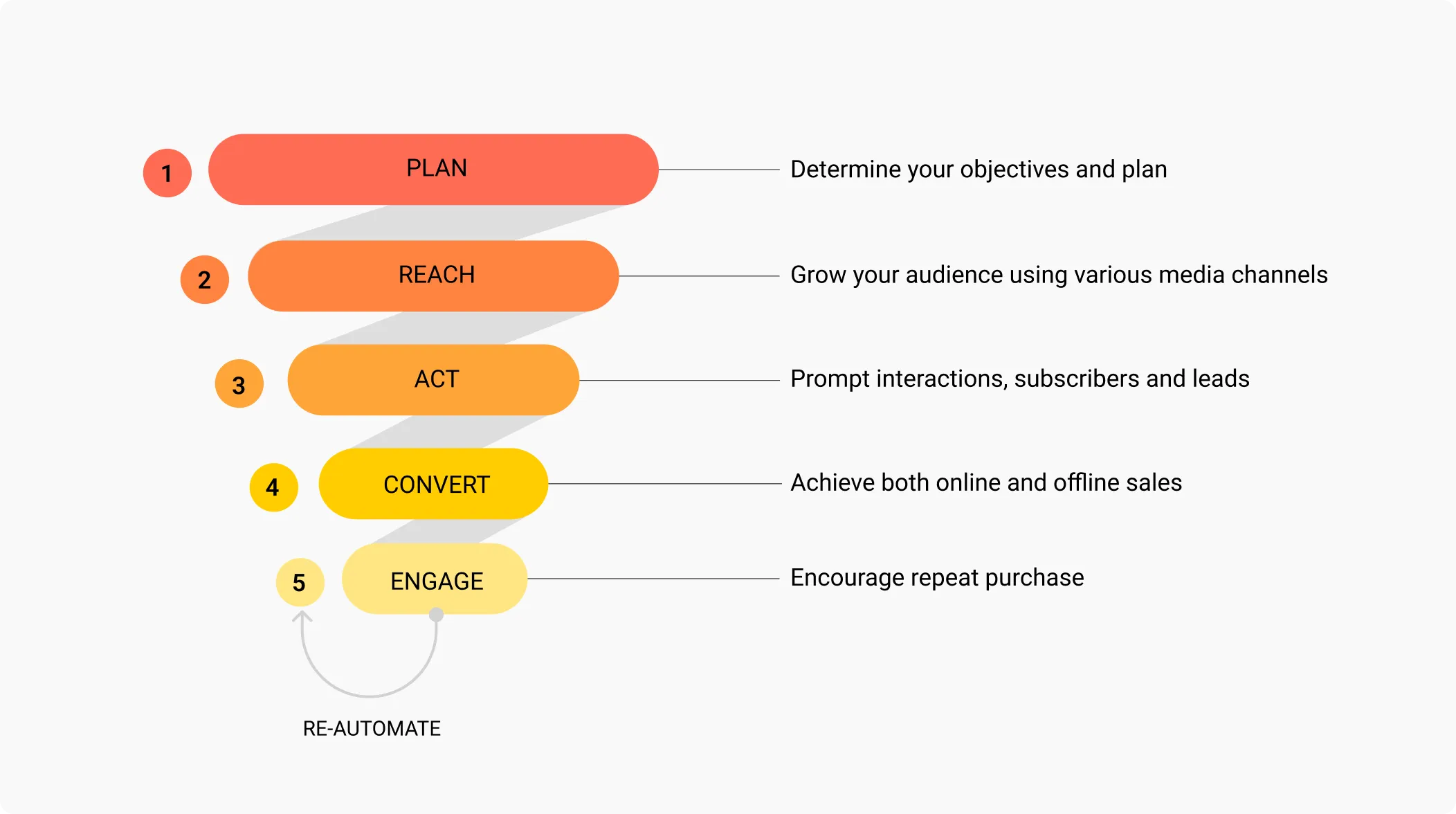
- Reach:
The Reach step of RACE focuses on exposing your brand and products to the widest audience possible. This step involves using different online and offline channels to attract visitors to your website social media profiles, or other online platforms, typically with the help of crosslisting solutions like ExportYourStore. By combining paid, owned, and earned media touchpoints, you can expand your reach and create several interactions with potential customers over time. To stand out and have an impact on today's busy online scene, it's crucial to use inbound marketing strategies like search social media, content, and email marketing.
- Act:
The Act step in the RACE framework focuses on encouraging people to engage with your brand online. This proves challenging in today's busy digital world so it stands as a separate stage from the conversion phase in other marketing models. During Act, the aim is to prompt individuals to take steps on their customer path such as discovering more about your business or products looking for a particular item, or checking out your blog. You can monitor these actions as high-priority objectives in your analytics, like Product Views or E-newsletter Subscriptions. Act also promotes involvement such as spreading your content on social platforms or submitting customer feedback.
- Convert:
The idea behind this step is to turn your audience into paying customers either online or through the offline medium. RACE is a marketing structure that emphasizes online and offline sales channels thus it is necessary to take both into account. The idea is to make your audience make that extra purchase via an online e-commerce transaction or in-store.
- Engage:
The following part of the RACE model is aimed at establishing long-term customer relationships by communicating with them via different channels such as your site, social media, email, and personal communication. The eventual objective is to convert first-time buyers into loyal clients who will be able to buy your product more than once and spread your content on social media. The metrics that you will need to determine the success of this phase will include repeat sales, active customers or email subscribers, customer satisfaction, and customer recommendation using other systems.
Lean Analytics Stages
Alistair Croll and Ben Yoskovitz created the Lean Analytics Stage framework, a great way to enhance startup growth. The model has five main components:
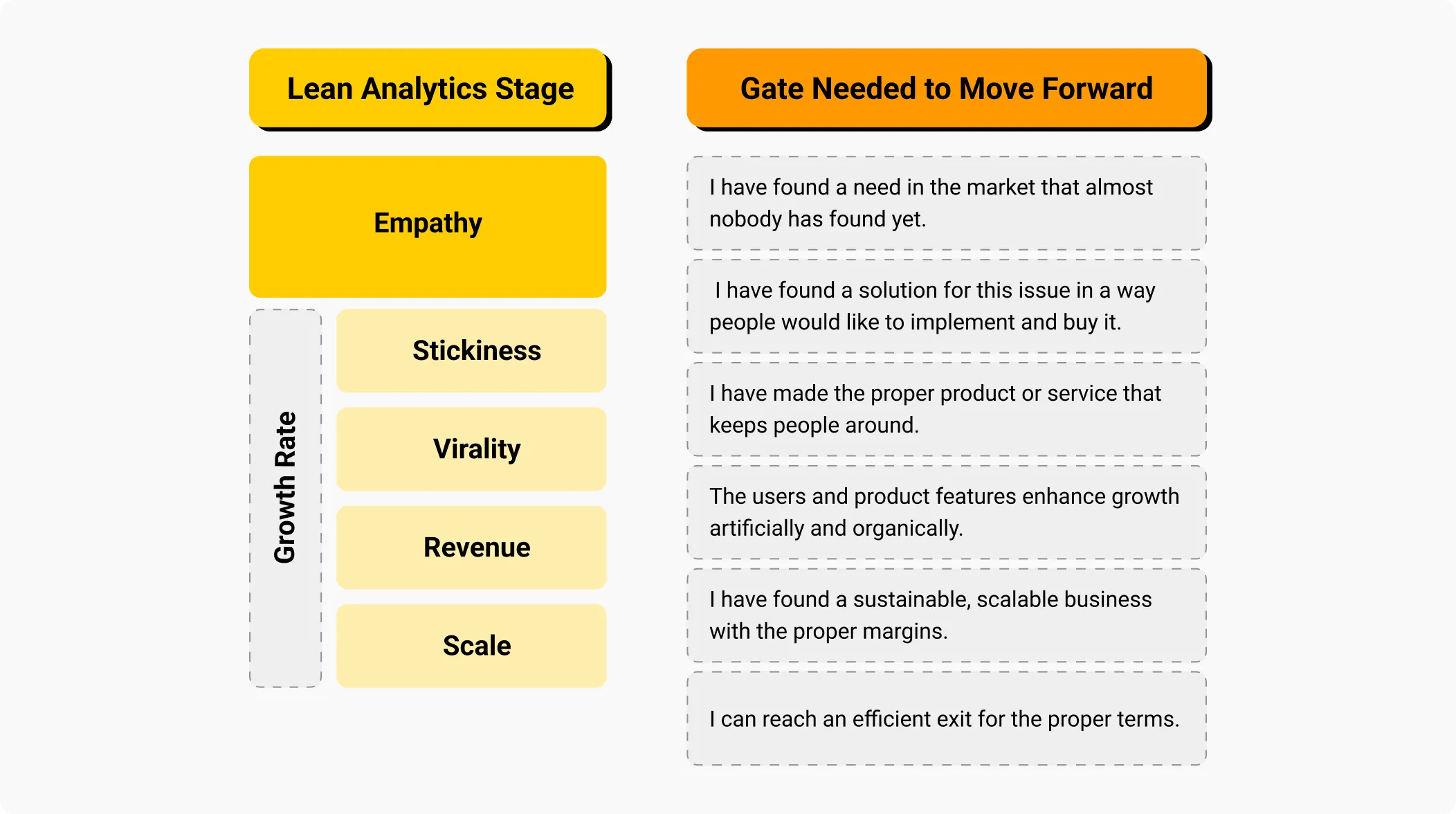
1. Empathy: Understand Your Customers
Empathy is the beginning of all amazing products.
Now you need to learn the lesson of listening to your customers and know what they need. Get their comments, watch them when they have a problem and put yourself in their shoes.
Ask yourself:
- What am I fighting specifically with my customers?
- What does my product offer to facilitate their lives?
Once you have finally understood their pain points, design a Minimum Viable Product (MVP), a draft version of your product that makes it clear where the most pressing problems of the user lie. In case you have something that is appealing to actual users, it is possible to continue.
2. Stickiness: Keep Them Coming Back
When your product is already being utilized by individuals, the time has come to change to retention, not attraction. The Stickiness stage is completely about keeping clients and making them happy.
Prioritize:
- Creating a great user experience
- Building strong relationships with your customers
- Delivering ongoing value that brings them back
Once clients are satisfied with utilizing your item and derive value from it, they'll remain by themselves, and that loyalty becomes the foundation of your future growth.
3. Virality: Grow Through Your Customers
Before pouring money into ads or marketing campaigns, focus on your existing users.
In the Virality stage, your goal is to turn your customers into advocates.
That means:
- Encouraging word-of-mouth referrals
- Making your product easy (and exciting) to share
- Rewarding users for inviting others
When your product spreads naturally through recommendations and organic growth, you’ll reach more people without relying heavily on paid marketing.
4. Revenue: Achieve Financial Stability
At this point, it’s time to focus on monetization.
The Revenue stage is all about ensuring your business model is profitable and sustainable.
Keep a close eye on your Customer Acquisition Cost (CAC) and make sure your revenue exceeds your expenses. This is also when you start refining your pricing strategy and optimizing your sales funnel.
When you’ve hit your revenue goals and built a financially stable foundation, you’re ready to grow even bigger.
5. Scale: Expand and Optimize
With a proven product and a stable revenue model, the final stage is scaling.
Now’s the time to:
- Explore new markets or customer segments
- Increase revenue from your existing customers (through upselling or cross-selling)
- Optimize your processes for efficiency and growth
Scaling isn’t just about getting bigger, it’s about getting smarter. Keep improving your product, refining your operations, and expanding in ways that make sense for your business.
The Hook Model
The Hook Model is a concept developed by Nir Eyal, the author of Hooked: How to Build Habit-Forming Products. It is not the same as the Pirate Metrics we discussed earlier, but it goes hand in hand with the ideas of stickiness and virality we discussed during Lean Analytics. Nir Eyal's theory is that the products we use most frequently and depend on the most become a part of our daily routines.
As marketers, we can tap into this by understanding the four stages of the Hook Model cycle:
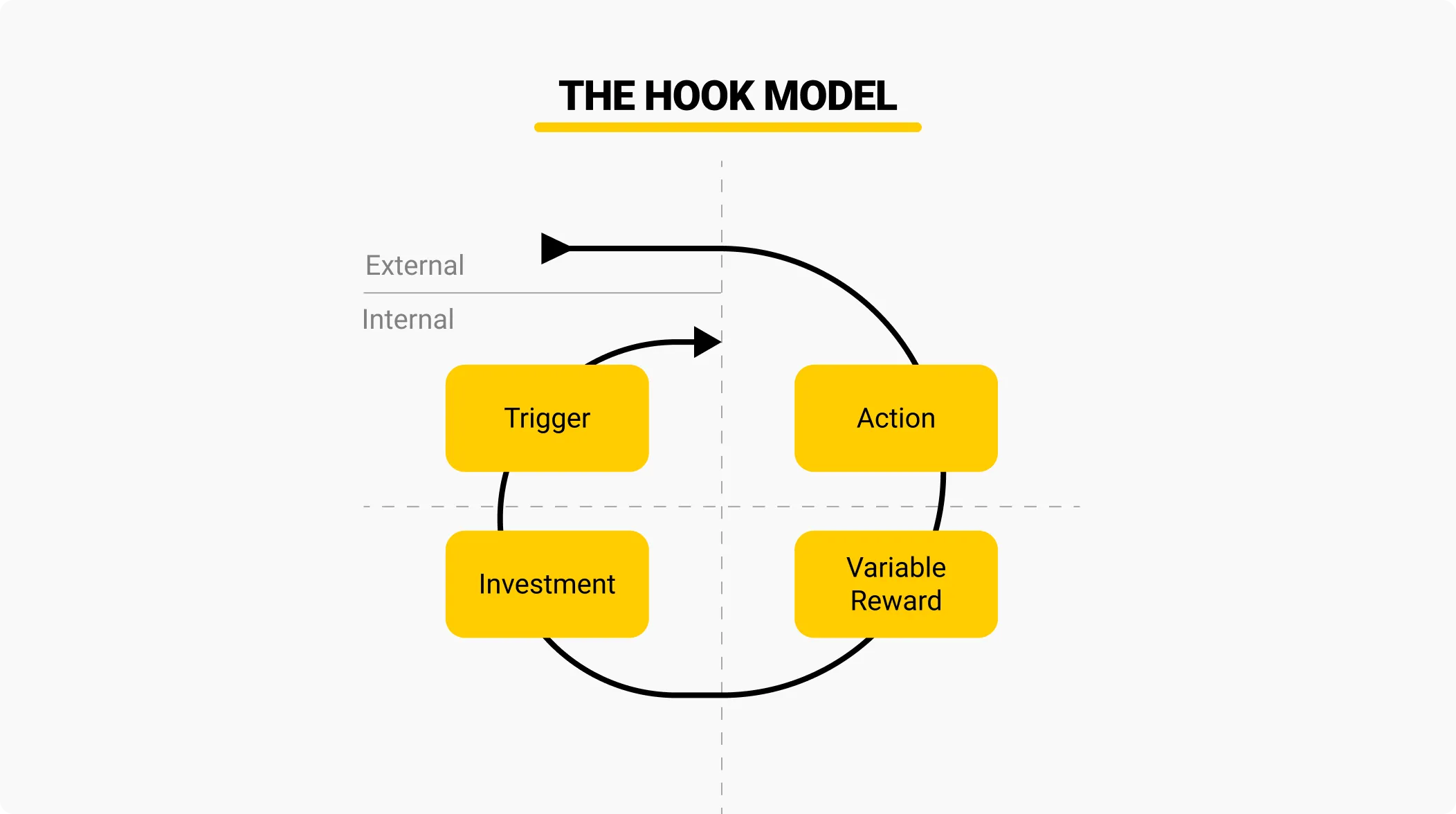
- Trigger:
It is initiated by some external stimulus, which is the notification and provides us with the motivation to act. As we continue to associate ourselves with the product, we might end up with having negative internal feelings (e.g. boredom or anxiety) that can be taken as stimuli to perform an act that will at least get us to release the negative feelings.
- Action:
When something requires less effort, people tend to be more likely to do it. Products that form habits are designed to make taking action simple and easy.
- Variable Reward:
When people anticipate getting rewarded for doing something, it can motivate them to take action. And if the reward is unpredictable or varied, it can create even more excitement and anticipation, which makes people more likely to take action that leads to that reward.
- Investment:
When customers have invested time, money, or effort in a product or service, they are likelier to stick with it rather than abandon it.
The ICE Score
Sean Ellis, a well-known marketer, has developed a simple and effective method called the ICE score to assess potential channels for business growth.
Instead of using a complicated system, Ellis suggests asking three straightforward questions before making any move:
- What will be the impact of this decision if it turns out to be successful?
- How confident are we that this plan will work?
- How much time, money, and effort will be required to implement this plan?
Answering these questions helps you and your team quickly evaluate an idea and decide whether or not to pursue it.
STEPPS
The STEPPS model, created by Jonah Berger, who authored the book "Contagious: Why Things Catch On," offers a framework for producing viral content that generates conversation and sharing among people.
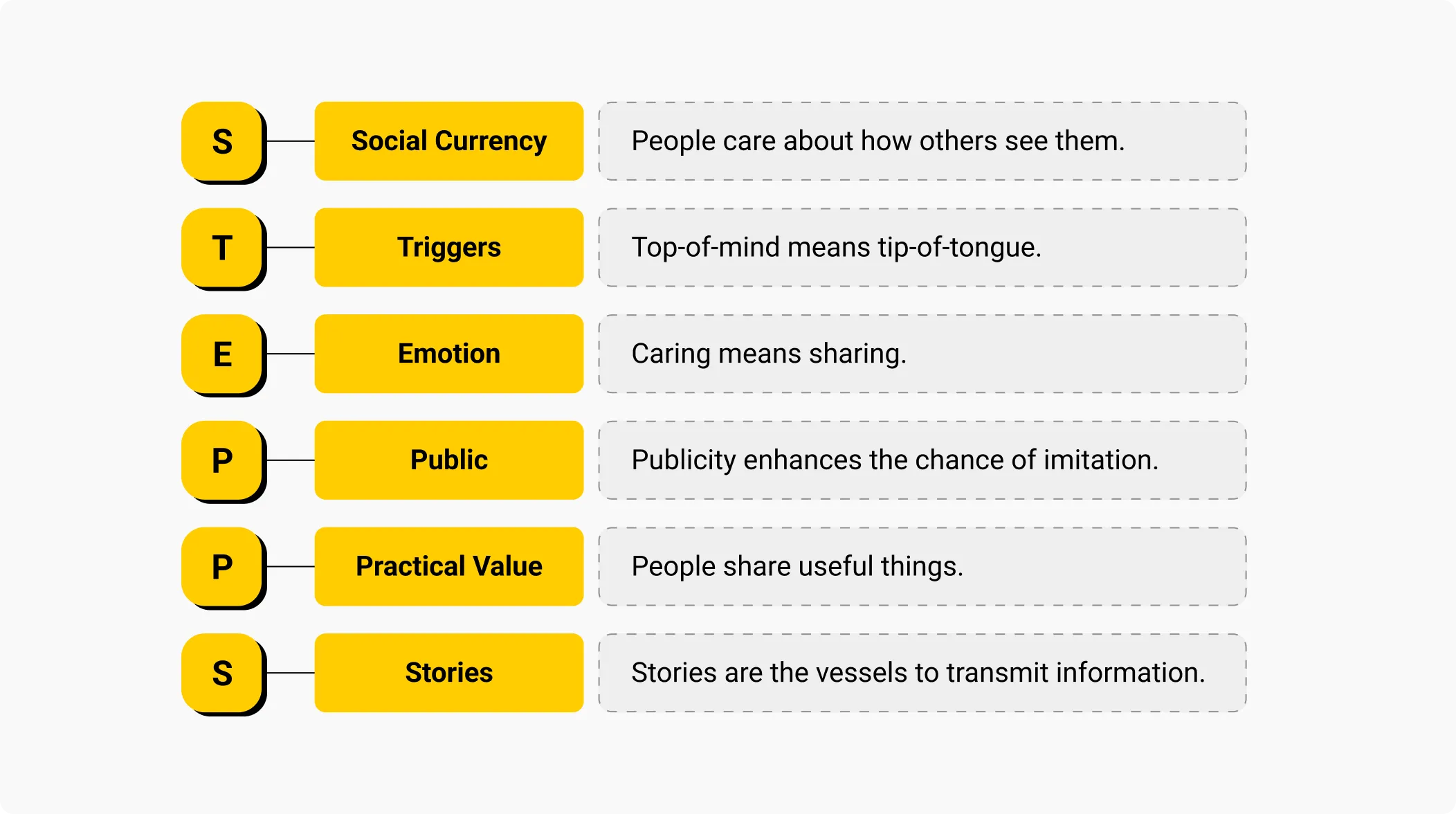
- Social Currency: The idea is to make your customers feel like they are part of a unique group, like insiders. As social creatures, we care about how others perceive us, and this technique uses that desire to create positive associations with your product and stimulate discussion about it.
- Triggers: A way to encourage people to talk about your product more is to remind them of it frequently using triggers.
- Emotion: Prioritize developing emotionally stimulating content to raise the possibility of your content becoming viral. Nevertheless, it is noteworthy that content arousing intense emotions such as anger is more likely to be shared compared to content that stimulates milder emotions such as sadness.
- Public: By making it public, you can stimulate people to discuss and distribute your product.
- Practical Value: If you offer helpful information or resources, people are more inclined to spread them among their network.
- Stories: One effective way to capture people's attention is through storytelling. Our brains are naturally wired to process information in the form of narratives. If you can create a story that resonates with your audience, is memorable, and is easy to share, it can be an effective tool for spreading your message.
The Benefits of a Growth Marketing Strategy
Implementing a growth marketing framework can be a highly effective strategy for boosting revenue while minimizing costs. There are numerous benefits associated with adopting a growth mindset, including:
1. Data-Driven Decision Making
Traditional marketing often depends on assumptions or creative instincts, but growth marketing is different.
It relies on data and measurable results to determine what works and what doesn’t.
By tracking performance metrics across channels and campaigns, marketers can:
- Identify high-performing strategies
- Eliminate tactics that waste time or money
- Make confident, evidence-based decisions
This data-driven mindset replaces guesswork with clarity, leading to smarter and faster growth.
2. Stronger Brand Image
Growth marketing doesn’t just focus on numbers; it also enhances your brand’s reputation.
By understanding the customer journey and delivering personalized, meaningful experiences, brands can:
- Build deeper emotional connections
- Improve customer satisfaction
- Strengthen loyalty and advocacy
The result? A brand that customers trust, remember, and recommend.
3. Greater Flexibility and Scalability
Growth marketing gives you the ability to scale your efforts strategically.
Instead of committing large budgets upfront, you can test, measure, and adapt based on real results.
This flexibility means:
- You can increase investment when campaigns show strong ROI
- Pull back or pivot quickly when something isn’t working
- Allocate resources efficiently to maximize returns
It’s a smarter, leaner way to grow, without unnecessary risk.
4. Better Cross-Functional Collaboration
Growth marketing thrives on integration across teams.
It brings together marketing, sales, product, customer success, and data analytics, all working toward shared goals.
This collaborative approach ensures that:
- Campaigns align with product updates and user feedback
- Sales and marketing share insights to improve conversions
- Data informs every decision, from product design to retention strategies
In short, growth marketing creates a culture of teamwork that fuels sustainable success.
5. Aligned and Achievable Sales Goals
At its core, growth marketing is about sustainable, measurable growth.
It focuses on setting agile goals that align directly with revenue targets, and adjusting them as new data emerges.
Rather than guessing what might work, teams can:
- Identify the most promising growth opportunities
- Prioritize them based on potential impact
- Execute strategies that directly drive revenue
This approach transforms marketing from a cost center into a revenue-generating engine.
How to Build a Growth Marketing Strategy
Growth marketing is a practical approach compared to traditional marketing. As a result, growth marketing is strategic in different ways than traditional marketing. However, too focused on strategy can make you stuck in the testing phase. So, growth marketers must set up their experiments and start quickly.
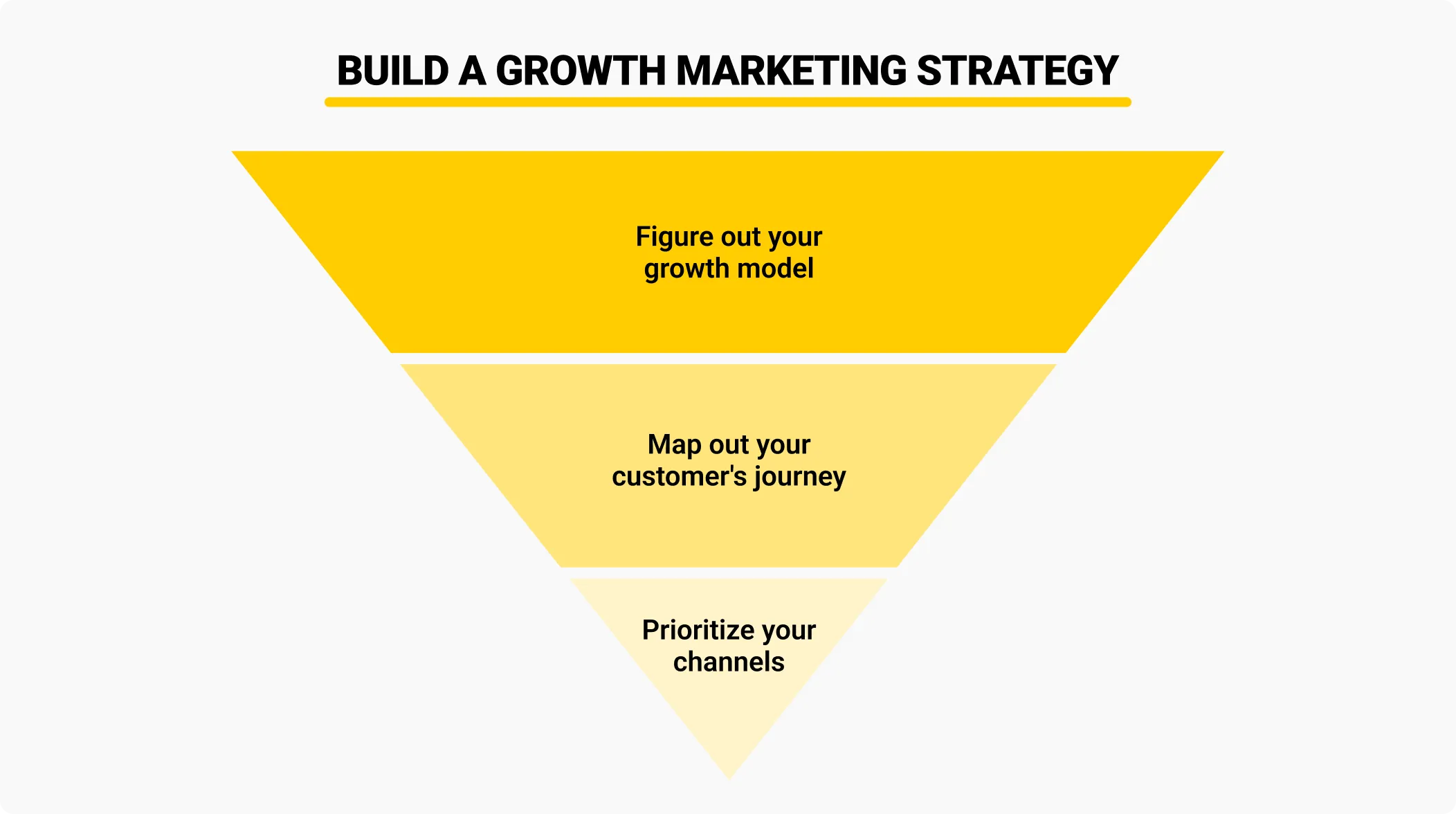
Before running your first experiment, there are three things you should do:
- Figure out your growth model
- Map out your customer's journey
- Prioritize your channels
This will help you get started on the right foot and ensure that you're making progress toward your goals.
Define Your Growth Model
When trying to achieve important business goals, it is important to have a plan in place. To make that plan, you must determine which metrics, activities, and customer interactions impact achieving those goals most. For example, let's say you want to make more money.
You will need to find experiments to help improve things like how many people buy your product or how long they use it. This is like a chain reaction. If you can improve one thing, it can lead to enhancing another.
To determine which metrics matter most, you must ask questions like:
- How much money does each user spend?
- How many people are buying our product?
- How many people are leaving us?
- And how many new customers are we getting?
You will also want to determine how people discover your product, what makes them want to sign up, and what keeps them returning. By collecting and analyzing data, you can better understand your customers and how to make your business more successful.
Map Out the Customer Journey
To better understand how your customers move from awareness to purchase to advocacy, it is helpful to think about things from their perspective. Look at the different channels and touchpoints they encounter along the way and how they might be influenced by each one.
For example, when someone first becomes aware of your product, they might find you through search engines, social media, or other channels. Then, once they are interested, you might use email marketing or push notifications to encourage them to sign up or purchase. Finally, if they have a positive experience, they might tell their friends and family about your product or leave a positive review.
One company that does a great job of mapping out this customer journey is Spotify. They have created a visual representation of how their users share music, which helps them understand how to improve the overall experience.
In simpler terms, Spotify talks to its customers to understand how they feel when they use the app and share music with others. By doing this, they can map the entire user journey, including how customers feel at each stage. This helps them figure out which channels they should test to improve the experience for their users.
Identify and Prioritize Key Growth Channels
It is important to determine the mediums that prove to be effective in encouraging customers to your goals in the process of expanding your business. To take an example, in the situation where you are running a music sharing program like Spotify and would want more people to spread the word, review how to make the experience that clients undergo when sharing music with others more enjoyable.
This may entail experimenting with various means of playing songs once they have been sent to determine whether it would make a difference in people sharing music with their friends.
Another example might be if you get many visitors to your website, but not many sign up for your product or service. In this case, you should prioritize channels that can help improve your conversion rate, such as creating more content that resonates with your audience or testing new calls to action.
To determine which channels are worth focusing on, you will want to look for ones that offer a high return on investment and can scale up quickly. For example, you use LinkedIn to reach potential customers and get many responses. That might be an excellent channel to focus on because it is practical and has much potential to grow. But if you are sending cold emails and getting a decent response rate but not many demos, that channel might not be as good a fit because it does not scale either.
Choosing the Best Growth Marketing Framework
Different models for business frameworks exist, but they are not all equally effective.
To determine which framework best fits your organization, consider a few key factors:
- What are the primary objectives of the business?
- What is the marketing department's role in achieving these objectives?
- How does marketing success get defined and measured within your organization?
- What is your marketing department capable of, and what are some potential areas for improvement?
- Which area(s) would benefit the most from marketing efforts, and what strategies can you use to ensure success?
Revamp Your Marketing Strategy with Growth Marketing Frameworks at AI bees
Knowing where to focus your efforts to achieve growth can be challenging as a marketer. You can gain insights and drive significant results by implementing growth marketing frameworks and testing strategies. You can take your marketing efforts to the next level with AI bees!
Our AI-powered platform provides comprehensive data analysis, allowing you to make informed decisions and run successful experiments. Whether you want to improve email engagement, optimize your website, or drive more conversions, AI bees has the tools you need to succeed.
So why wait?
Sign up for AI bees today and start achieving your growth goals!
FAQs on Growth Marketing Frameworks
1. What is a growth marketing framework and why is it important?
A growth marketing framework is a structured model that assists businesses in systematically surfacing, testing, and scaling marketing strategies that drive measurable growth. It differs from traditional marketing in its focus on the entire customer journey-from awareness to retention and referral-powered by data-driven experimentation. This approach lets businesses make informed decisions, optimize spending, and drives results that are both sustainable and scalable.
2. Which are the most effective growth marketing frameworks today?
Some of the most powerful and widely used growth marketing frameworks include:
- Pirate Metrics (AAARRR): for analyzing the customer funnel from awareness to referrals.
- G.R.O.W.S. Framework: for structuring rapid growth experiments.
- RACE Framework: to manage digital marketing activities across reach, act, convert, and engage stages.
- Bullseye Framework: for prioritizing and testing marketing channels.
- Lean Analytics Stages: to understand product-market fit and how to scale effectively. Each framework serves different business stages and helps marketers in strategically focusing their efforts.
3. How do growth marketing frameworks differ from traditional marketing models?
Traditional marketing models, such as the 7Ps or STP, are hugely focused on creating awareness and promoting the brand at the top of the funnel. Growth marketing frameworks, on the other hand, look more holistically and iteratively at testing, measuring, and optimizing throughout the entire funnel. They prioritize customer retention, referrals, and long-term value rather than one-time conversions.
4. How can a business choose the right growth marketing framework?
The choice of framework depends on business objectives, available resources, and stages of growth.
- Startups may benefit from fast experimentation via the Lean Analytics or G.R.O.W.S. frameworks.
- Established companies might want to use RACE or Pirate Metrics to manage full-funnel growth.
Assess where your biggest opportunities or bottlenecks lie: awareness, conversion, retention, or referral, and choose the model that best aligns with your marketing maturity and goals.
5. What are the key benefits of implementing a growth marketing framework?
A good growth marketing framework provides numerous benefits including:
- Data-driven decisions replace guesswork with measurable insights.
- Faster experimentation to find out what works best across channels.
- Improved customer retention and lifetime value.
- Cross-functional collaboration between marketing, sales, and product teams.
Less risk and higher ROI, combined with scalable growth. Essentially, it turns marketing into a business growth engine rather than simply a cost of doing business.
.webp)
Make Loss Impossible
with Performance-Based Marketing

Personalized Campaigns with
Precisely Selected Prospects
.svg)
Analysis From Your Dedicated
Account Manager

with a Team of Growth Hackers
we Develop your Tailor-Made Strategy

.webp)


%201.svg)
.svg)


.svg)
.svg)


.webp)